Und dann auf "Zum Home-Bildschirm [+]".

Stöbern
genialokal zum Startbildschirm hinzufügen
Installieren Sie die genialokal App auf Ihrem Startbildschirm für einen schnellen Zugriff und eine komfortable Nutzung.
Installieren Sie die genialokal App auf Ihrem Startbildschirm für einen schnellen Zugriff und eine komfortable Nutzung.
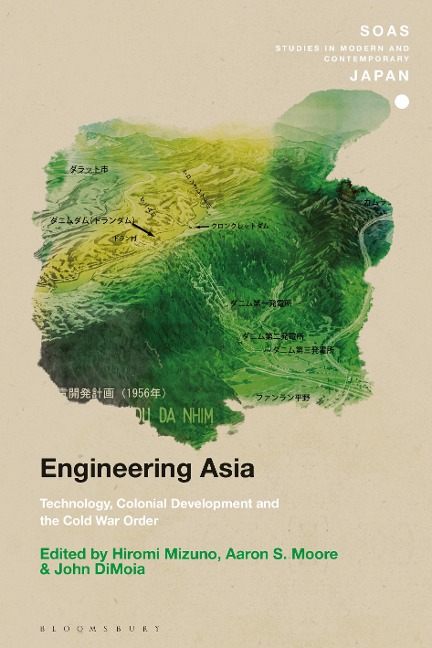
Weaving together chapters on imperial Japan's wartime mobilization, Asia's first wave of postwar decolonization, and Cold War geopolitical conflict in the region, Engineering Asia seeks to demonstrate how Asia's present prosperity did not arise from a so-called 'economic miracle' but from the violent and dynamic events of the 20th century. The book argues that what continued to operate throughout these tumultuous eras were engineering networks of technology. Constructed at first for colonial development under Japan, these networks transformed into channels of overseas development aid that constituted the Cold War system in Asia.
Through highlighting how these networks helped shape Asia's contemporary economic landscape, Engineering Asia challenges dominant narratives in Western scholarship of an 'economic miracle' in Japan and South Korea, and the 'Asian Tigers' of Southeast Asia. Students and scholars of East Asian studies, development studies, postcolonialism, Cold War studies and the history of technology and science will find this book immensely useful.
Hiromi Mizuno is Associate Professor of History at the University of Minnesota, USA. She is the author of Science for the Empire: Scientific Nationalism in Modern Japan (2009).
Aaron S. Moore is Associate Professor of History at Arizona State University, USA. He is the author of Constructing East Asia: Technology, Ideology, and Empire in Japan's Wartime Era, 1931-1945 (2013).
John DiMoia is Associate Professor of Korean History at Seoul National University, South Korea. He is the author of Reconstructing Bodies: Biomedicine, Health, and Nation-Building in South Korea since 1945 (2013).
1. Introduction: A Kula Ring for the Flying Geese: Japan's Technology Aid and Postwar Asia, Hiromi Mizuno (University of Minnesota, USA)
Part 1: Engineering Asia at Home - Japan's Institutional Infrastructure for Asian Development
2. Tokyo's Vision of Southeast Asia: Private Interests and Economic Cooperation in the 1950s, Jin Sato (University of Tokyo, Japan)
3. Itagaki Yoichi and the Formation of the Postwar Knowledge Infrastructure for Japan's Overseas Development Assistance in Asia, Masato Karashima (Kobe University, Japan)
Part 2: Engineering Asia on the Ground
4. From 'Constructing' to 'Developing' Asia: Japanese Engineers and the Formation of the Post-Colonial, Cold War Discourse of Development in Asia, Aaron S Moore (Arizona State University, USA)
5. The Hydrocarbon Ring: Indonesian Fossil Fuel, "Japanese Cooperation," and American Neo-Imperialism, 1941-1975, Eric Dinmore (Hampden-Sydney College, USA)
6. Colonial Seeds and Imperialist Genes: Japanese Colonial Agricultural Development and the Cold-War Green Revolution, Tatsushi Fujihara (Kyoto University, Japan)
Part 3: South Korea - Engineering Asia as a Developing Nation
7. Postcolonial Desire and the Tripartite Alliance in East Asia: the Hybrid Origins of a Modern Scientific and Technological System in South Korea, Manyong Moon, (Chonbuk National University, South Korea)
8. Making Miracle Rice: Tongil and Mobilizing a Domestic "Green Revolution" in South Korea,
Tae-ho Kim, (Chonbuk National University, South Korea)
9. In Pursuit of "Peace and Construction": Hyundai Construction and Infrastructure in Southeast Asia, 1965-1973, John P DiMoia, (Seoul National University, South Korea)
Dieses eBook wird im PDF-Format geliefert und ist mit einem Adobe Kopierschutz (DRM) versehen. Sie können dieses eBook mit allen Geräten lesen, die das PDF-Format und den Adobe Kopierschutz (DRM) unterstützen.
Zum Beispiel mit den folgenden Geräten:
• tolino Reader
Laden Sie das eBook direkt über den Reader-Shop auf dem tolino herunter oder übertragen Sie das eBook auf Ihren tolino mit einer kostenlosen Software wie beispielsweise Adobe Digital Editions.
• Sony Reader & andere eBook Reader
Laden Sie das eBook direkt über den Reader-Shop herunter oder übertragen Sie das eBook mit der kostenlosen Software Sony READER FOR PC/Mac oder Adobe Digital Editions auf ein Standard-Lesegeräte mit epub- und Adobe DRM-Unterstützung.
• Tablets & Smartphones
Möchten Sie dieses eBook auf Ihrem Smartphone oder Tablet lesen, finden Sie hier unsere kostenlose Lese-App für iPhone/iPad und Android Smartphone/Tablets.
• PC & Mac
Lesen Sie das eBook direkt nach dem Herunterladen mit einer kostenlosen Lesesoftware, beispielsweise Adobe Digital Editions, Sony READER FOR PC/Mac oder direkt über Ihre eBook-Bibliothek in Ihrem Konto unter „Meine eBooks“ - „online lesen“.
Schalten Sie das eBook mit Ihrer persönlichen Adobe ID auf bis zu sechs Geräten gleichzeitig frei.
Bitte beachten Sie, dass die Kindle-Geräte das Format nicht unterstützen und dieses eBook somit nicht auf Kindle-Geräten lesbar ist.