Und dann auf "Zum Home-Bildschirm [+]".

Stöbern
genialokal zum Startbildschirm hinzufügen
Installieren Sie die genialokal App auf Ihrem Startbildschirm für einen schnellen Zugriff und eine komfortable Nutzung.
Installieren Sie die genialokal App auf Ihrem Startbildschirm für einen schnellen Zugriff und eine komfortable Nutzung.
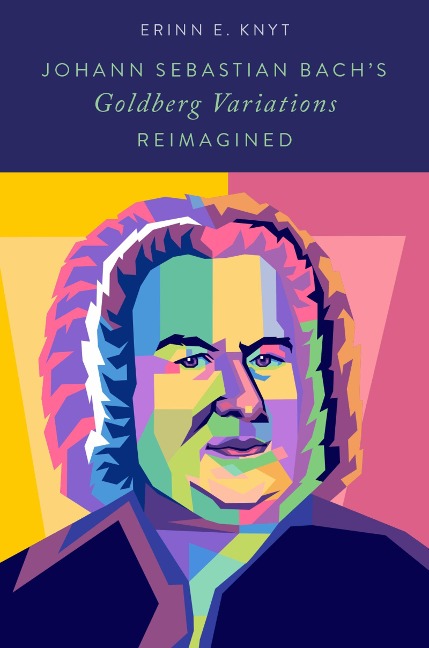
This book provides the first detailed reception history of adaptations of Johann Sebastian Bach's Aria mit 30 Veränderungen (Goldberg Variations, BWV 988). It documents multiple ways Bach's work has appeared in arrangements, transcriptions, and re-compositions from 1800 to 2020. It examines adaptations for the traditional concert hall as well as for dance, theater, cinema, literature, digital media, and visual art. Overall, the book reveals a dramatic increase in adaptations of the piece in the late twentieth and early twenty-first centuries. In addition, it brings the reception history of Bach's Goldberg Variations into dialogue with broader scholarly discourse about performance practice issues. The piece was often performed in transcribed or arranged versions in the nineteenth century and then again in the late twentieth and early twenty-first centuries. Yet if nineteenth-century adaptations of this piece were usually created out of necessity, as a means of performing a lengthy piece without access to the original instrument, many twenty-first century adaptations, which have developed alongside historically informed performances, were motivated by deconstructionist ideologies. This contrasts with the middle part of the twentieth century, when there was a prevalence of historically informed performances and a dearth of adaptations. Comparisons to other works by Bach reveal similar performance practice trends. The reception history documented in the book also considers the musical work concept. It shows that, particularly since the late 1980s, there has been a loosening of the regulative hold of the modernist work concept associated with single authorship, structural unity, and an autonomous score. It reveals that many recent adaptations are not direct interpretations of an authoritative text, but engage in multivalent dialogues as Bach's score becomes an infinite or open text in which multiple people, including subsequent (re)-composers, performers, directors, and audience members enter into inter- and intra-textual conversations. In the process, the book contributes to recent studies about adaptations, the role of musical authorship, and changing notions of Bach and the work concept in the twenty-first century. At the same time, it discusses many recently composed pieces, including ones by underrepresented composers.
Erinn E. Knyt is Professor at the University of Massachusetts Amherst. Knyt specializes in nineteenth- and twentieth- century music, aesthetics, music history pedagogy, Bach Reception, and performance studies. Her first book (2017), explores Ferruccio Busoni's pedagogical practices and his relationship with early and mid-career composition mentees. It was awarded an AMS 75 Pays Endowment Book Subvention. Knyt's second book, Ferruccio Busoni as Architect of Sound (2023), which also received an American Musicological Society Book Subvention, discusses Busoni's innovations as a composer in relation to contemporaneous architectural trends. Knyt was also awarded the 2018 American Musicological Society Teaching Award.
Dieses eBook wird im PDF-Format geliefert und ist mit einem Adobe Kopierschutz (DRM) versehen. Sie können dieses eBook mit allen Geräten lesen, die das PDF-Format und den Adobe Kopierschutz (DRM) unterstützen.
Zum Beispiel mit den folgenden Geräten:
• tolino Reader
Laden Sie das eBook direkt über den Reader-Shop auf dem tolino herunter oder übertragen Sie das eBook auf Ihren tolino mit einer kostenlosen Software wie beispielsweise Adobe Digital Editions.
• Sony Reader & andere eBook Reader
Laden Sie das eBook direkt über den Reader-Shop herunter oder übertragen Sie das eBook mit der kostenlosen Software Sony READER FOR PC/Mac oder Adobe Digital Editions auf ein Standard-Lesegeräte mit epub- und Adobe DRM-Unterstützung.
• Tablets & Smartphones
Möchten Sie dieses eBook auf Ihrem Smartphone oder Tablet lesen, finden Sie hier unsere kostenlose Lese-App für iPhone/iPad und Android Smartphone/Tablets.
• PC & Mac
Lesen Sie das eBook direkt nach dem Herunterladen mit einer kostenlosen Lesesoftware, beispielsweise Adobe Digital Editions, Sony READER FOR PC/Mac oder direkt über Ihre eBook-Bibliothek in Ihrem Konto unter „Meine eBooks“ - „online lesen“.
Schalten Sie das eBook mit Ihrer persönlichen Adobe ID auf bis zu sechs Geräten gleichzeitig frei.
Bitte beachten Sie, dass die Kindle-Geräte das Format nicht unterstützen und dieses eBook somit nicht auf Kindle-Geräten lesbar ist.