Stöbern
genialokal zum Startbildschirm hinzufügen
Installieren Sie die genialokal App auf Ihrem Startbildschirm für einen schnellen Zugriff und eine komfortable Nutzung.
Installieren Sie die genialokal App auf Ihrem Startbildschirm für einen schnellen Zugriff und eine komfortable Nutzung.
Tippen Sie einfach auf Teilen:
 Und dann auf "Zum Home-Bildschirm [+]".
Ihr gewünschter Artikel ist in 0 Buchhandlungen vorrätig - wählen Sie hier eine Buchhandlung in Ihrer Nähe aus:

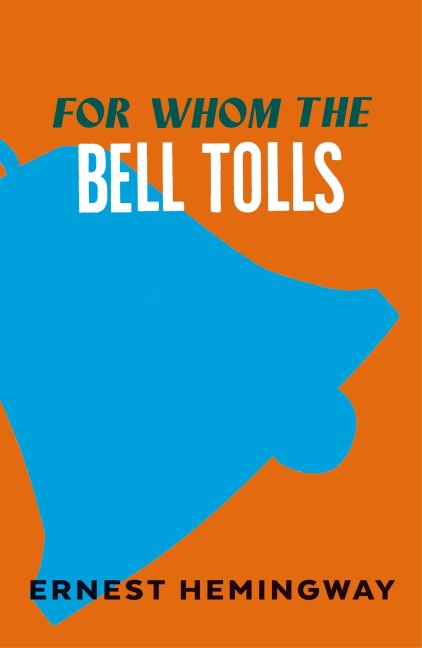
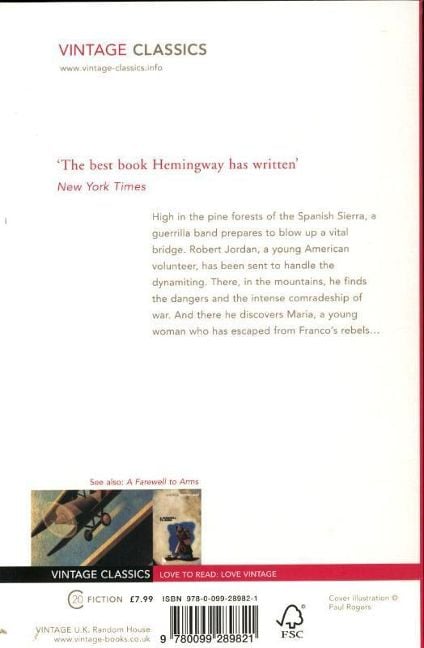
In the Spanish Sierra, an American volunteer prepares to risk his life for a cause larger than himself. Hemingway's great novel of the Spanish Civil War. High in the pine forests of the Spanish Sierra, a guerrilla band prepares to blow up a vital bridge. Robert Jordan, a young American volunteer, has been sent to handle the dynamiting. In the mountains he finds danger, discipline and the intense comradeship of war. He also meets Maria, a young woman who has escaped from Franco's rebels, and whose presence brings love into a world shaped by violence. For Whom the Bell Tolls is a classic war novel about courage, ideology, loyalty, love and death. Written with Hemingway's clarity and restraint, it turns a military operation into a profound test of what a person believes, what they will fight for and what they are prepared to lose. Set during the Spanish Civil War, it remains one of Hemingway's most powerful works of literary and historical fiction. One of the BBC's 100 Novels That Shaped Our World 'A sparse, masculine, world-weary meditation on death, ideology and the savagery of war in general' Sunday Telegraph 'One of the greatest novels which our troubled age will produce' Observer
Ernest Hemingway was born in Chicago in 1899, the second of six children. In 1917, he joined the Kansas City Star as a cub reporter. The following year, he volunteered as an ambulance driver on the Italian front, where he was badly wounded but decorated for his services. He returned to America in 1919, and married in 1921. In 1922, he reported on the Greco-Turkish war before resigning from journalism to devote himself to fiction. He settled in Paris, associating with other expatriates like Ezra Pound and Gertrude Stein. He was passionately involved with bullfighting, big-game hunting and deep-sea fishing. Recognition of his position in contemporary literature came in 1954 when he was awarded the Nobel Prize for Literature, following the publication of The Old Man and the Sea. He died in 1961.