Und dann auf "Zum Home-Bildschirm [+]".

Stöbern
genialokal zum Startbildschirm hinzufügen
Installieren Sie die genialokal App auf Ihrem Startbildschirm für einen schnellen Zugriff und eine komfortable Nutzung.
Installieren Sie die genialokal App auf Ihrem Startbildschirm für einen schnellen Zugriff und eine komfortable Nutzung.

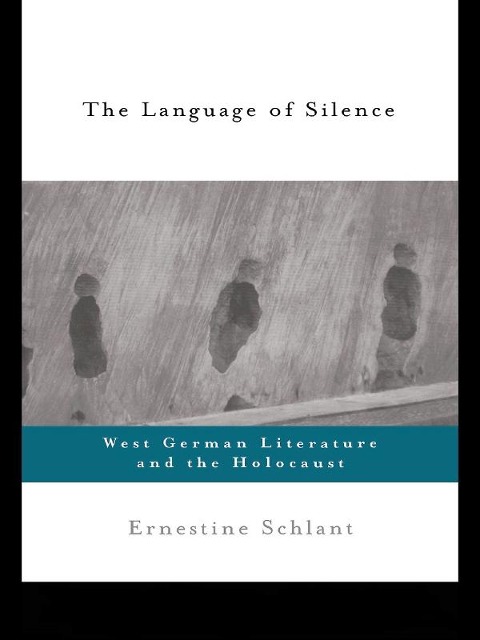
Focusing on individual authors from Heinrich Boll to Gunther Grass, Hermann Lenz to Peter Schneider, The Language of Silence offers an analysis of West German literature as it tries to come to terms with the Holocaust and its impact on postwar West German society. Exploring postwar literature as the barometer of Germany's unconsciously held values as well as of its professed conscience, Ernestine Schlant demonstrates that the confrontation with the Holocaust has shifted over the decades from repression, circumvention, and omission to an open acknowledgement of the crimes. Yet even today a 'language of silence' remains since the victims and their suffering are still overlooked and ignored. Learned and exacting, Schlant's study makes an important contribution to our understanding of postwar German culture.
Ernestine Schlant is Professor of German at Montclair State University. She is author of Hermann Broch (1978) and editor of Legacies and Ambiguities: Postwar Fictionand Culture in West Germany and Japan (1986).
Introduction 1. The First Postwar Decade Heinrich Böll Wolfgang Koeppen 2. Documentary Literature Alexander Kluge Günter Grass 3. Autobiographical Novels Generational Discord 4. Autobiographical Novels Hans-Josef Ortheil 5. The War on the Eastern Front Hermann Lenz 6. Ruptures and Displacements Gert Hofmann 7. Restitution of Personal Identity? Alfred Andersch Peter Härtling Gert Hofmann 8. Speeches and Controversies 9. Post-Unification Bernhard Schlink Peter Schneider W. G. Sebald Conclusion The Jewish Presence in Germany The Institutionalization of the Holocaust