Stöbern
genialokal zum Startbildschirm hinzufügen
Installieren Sie die genialokal App auf Ihrem Startbildschirm für einen schnellen Zugriff und eine komfortable Nutzung.
Installieren Sie die genialokal App auf Ihrem Startbildschirm für einen schnellen Zugriff und eine komfortable Nutzung.
Tippen Sie einfach auf Teilen:
 Und dann auf "Zum Home-Bildschirm [+]".
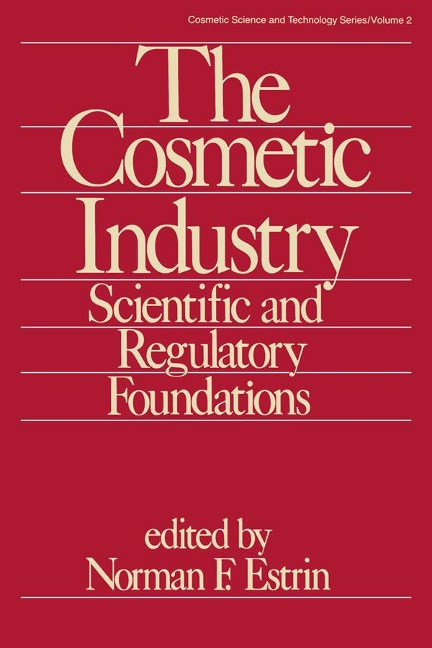
This book summarizes the authority of regulatory agencies and programs as they pertain to the cosmetic industry, offers practical advice on how to operate within the regulatory environment, and introduces scientific and regulatory issues that are likely to have an impact on cosmetic manufacturers. "This interesting volume reports all the novel technologies in use to study and control the cosmetic products in order to make them effective and free of side effects." ---Journal of Applied Cosmetology, 2000
Norman F. Estrin of Estrin Consulting Group, Inc.
About the Series Preface Contributors The Regulatory Environment Regulation of Cosmetics in the United States: An Overview- Stephen H. McNamara The FDA's Scientific and Regulatory Programs for Cosmetics- John A. Wenninger The Toxic Substances Control Act and Its Potential Impact on the Cosmetic Industry- Martin Gretif Federal Regulation of Soap Products- Eve E. Bachrach The Impact of the FDA's Over-the-Counter Drug Review Program on the Regulation of Cosmetics- William E. Gilbertson Regulation of Advertising by the Federal Trade Commission- Thomas J. Donegan, Jr. The Impact of Other Regulatory Agencies on the Cosmetic Industry- Peter Barton Hutt An Overview of Worldwide Regulatory Programs- William H. Schmitt and Emalee G. Murphy Cosmetics: The Legislative Climate- Eve E. Bachrach Functioning in The Regulatory Environment Section A: As an Industry Voluntary Self-Regulation Programs of the Cosmetic Industry- Emalee G. Murphy Organization for Action- Development of CTFA's Scientific Programs- Frank W. Baker and Norman F. Estrin The Cosmetic Ingredient Review- Robert L Elder and Jonathon T Busch The Industry Response Program to the Cosmetic Ingredient Review- Gerald N. McEwen Jr., Theodore Wernick and Robert P. Giovacchini The RIFM Story- Donald L. Opdyke Cosmetic Industry Research Programs- Gerald N. McEwen Jr, H. Joseph Sekerke, and Anita S. Curry Industry Programs for Dealing with Trace Contaminants - George Pollack and Ira Rosenberg The John Hopkins Center for Alternative to Animal Testing- Alan M. Goldberg Communication and Cooperation- The Dermatologist and the Cosmetic Industry- Walter Larsen Industry Performance and Public Opinion: Some Reflection on Public Relations- Victor R. Hirsh Section B: As Individual Companies Preparing for Cosmetic GMPs- Allan T. Reeves Evaluating Your Microbiology Program- John L. Smith Establishing a Training Program for Plant Personnel- John L. Beck and Joseph E. Kilsheimer Coping with Cosmetic Labeling- James M. Akerson and James M. Long The CTFA Cosmetic Ingredient Dictionary- Patricia A. Crosley Coping with Color Additive Regulations- Murray Berdick Adequately Sustaining the Safety of Cosmetic and Toiletry Products - Robert P. Giovacchini Managerial and Technical Responsibilities for Selecting a Laboratory for GLP Toxicology Studies- Phillip C. Merker Ocular Irritancy: The Search for Acceptable and Humane Test Methods- Edward M. Jackson When an FDA Inspector Calls- Stephen H. McNamara How and When to Recall- William C. Waggoner Establishing a Consumer Response Program- Betty J. Diener Special Problems of Small Companies- Linda R. Marshall The Private Label Company- Special Considerations- Jerome K. Malbin Innovating in a Regulated Environment- Monroe Lanzet Challenges for Tomorrow Development of Public Policy on Carcinogens- Peter Barton Hutt Risk Assessment in Perspective- Joseph V. Rodricks Trace Contaminants- The Industry View- Jerome H. Heckman The FDA's Research Plan for Cosmetics- Sanford A. Miller and Patricia Thompson The National Toxicology Program and Preventative Oncology- James E. Huff, John A. Moore and David P. Rall Alternatives to Animal Research- An Animal Welfare Perspective- Andrew N. Rowan Index
Dieses eBook wird im PDF-Format geliefert und ist mit einem Adobe Kopierschutz (DRM) versehen. Sie können dieses eBook mit allen Geräten lesen, die das PDF-Format und den Adobe Kopierschutz (DRM) unterstützen.
Zum Beispiel mit den folgenden Geräten:
• tolino Reader
Laden Sie das eBook direkt über den Reader-Shop auf dem tolino herunter oder übertragen Sie das eBook auf Ihren tolino mit einer kostenlosen Software wie beispielsweise Adobe Digital Editions.
• Sony Reader & andere eBook Reader
Laden Sie das eBook direkt über den Reader-Shop herunter oder übertragen Sie das eBook mit der kostenlosen Software Sony READER FOR PC/Mac oder Adobe Digital Editions auf ein Standard-Lesegeräte mit epub- und Adobe DRM-Unterstützung.
• Tablets & Smartphones
Möchten Sie dieses eBook auf Ihrem Smartphone oder Tablet lesen, finden Sie hier unsere kostenlose Lese-App für iPhone/iPad und Android Smartphone/Tablets.
• PC & Mac
Lesen Sie das eBook direkt nach dem Herunterladen mit einer kostenlosen Lesesoftware, beispielsweise Adobe Digital Editions, Sony READER FOR PC/Mac oder direkt über Ihre eBook-Bibliothek in Ihrem Konto unter „Meine eBooks“ - „online lesen“.
Schalten Sie das eBook mit Ihrer persönlichen Adobe ID auf bis zu sechs Geräten gleichzeitig frei.
Bitte beachten Sie, dass die Kindle-Geräte das Format nicht unterstützen und dieses eBook somit nicht auf Kindle-Geräten lesbar ist.