Und dann auf "Zum Home-Bildschirm [+]".

Stöbern
genialokal zum Startbildschirm hinzufügen
Installieren Sie die genialokal App auf Ihrem Startbildschirm für einen schnellen Zugriff und eine komfortable Nutzung.
Installieren Sie die genialokal App auf Ihrem Startbildschirm für einen schnellen Zugriff und eine komfortable Nutzung.
Ihr gewünschter Artikel ist in 0 Buchhandlungen vorrätig - wählen Sie hier eine Buchhandlung in Ihrer Nähe aus:


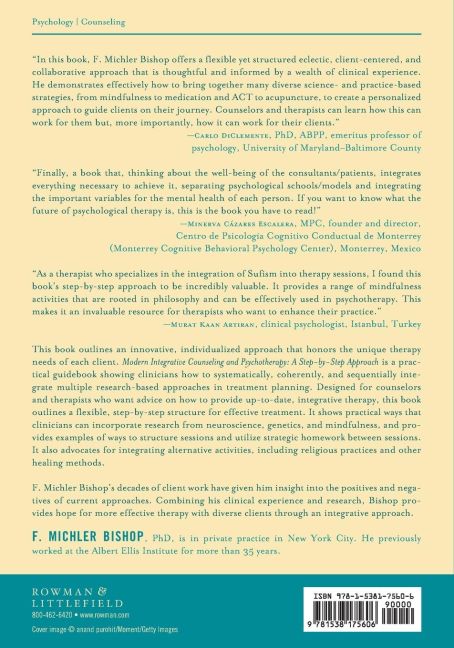
This practical, affordable guide for integrating multiple clinical approaches into mental health treatment plans shows therapists how to structure sessions and evidence-based techniques to benefit individual clients, including within the constraints of short-term modalities.
F. Michler Bishop, Ph.D., is in private practice in New York City after retiring from the Albert Ellis Institute (AEI) where he worked closely with Dr. Ellis for over twenty years, running groups and workshops. During his long career, he has advocated for a compassionate, goal-focused modern therapeutic approach, integrating a variety of research-based treatment options with alternative healing techniques and activities that a client has found helpful in the past. The overall objective is to create a unique therapy for each client. As national vice president of SMART Recovery®, he was instrumental in the development of SMART Recovery's Four-Point Program. He has conducted numerous workshops on CBT, Rational Emotive Behavior Therapy (REBT), MI and SMART Recovery in the United States and internationally. He worked at AEI for over thirty-five years, seeing clients with a wide variety of problems, including anxiety and mood disorders, and impulse control and relationships issues.
Introduction PART I: MODERN INTEGRATIVE COUNSELING AND PSYCHOTHERAPY Chapter 1: Moving Beyond Schools of Psychotherapy Chapter 2: Guiding Principles for Modern Integrated Counseling and Psychotherapy PART II: INITIAL IN-SESSION AND BETWEEN-SESSION WORK: STEP-BY-STEP Chapter 3: Step 1: Build the Working Relationship: Enhance Hope and Motivation Chapter 4: Step 2: Initial Assessment Chapter 5: Step 3: Agreeing on the Therapeutic Goals Chapter 6: Step 4: Set the Agenda Chapter 7: Step 5: In-Session Work Chapter 8: Step 6: Agree on Between-Session Work Chapter 9: Working with Diverse Clients PART III: SUBSEQUENT SESSIONS Chapter 10: Ongoing Assessment, Evaluating Between-Session Work, Checking on Therapeutic Goals, and Setting the Agenda Chapter 11: Facilitating Acceptance, Compassion, and Change: Mindfulness and Metastability Chapter 12: Facilitating Acceptance, Compassion, and Change:: Emotion-Focused and Imagery-Focused Work Chapter 13: Facilitating Acceptance, Compassion, and Change:: Genetics, Neurochemistry, and Neuroplasticity Chapter 14: Moving Forward, Sliding Back: Managing Change and Metastability Chapter 15: If Needed, Dig Deeper: Past-Focused Work, Trauma, and Childhood Issues Chapter 16: Subsequent Between-Session Exercises PART IV: OTHER ISSUES Chapter 17: Self/Selves, Identity/Identities, and Change Chapter 18: Integrating Coaching Chapter 19: Medications: Are They Right for Your Client? Chapter 20: Build Your Practice, Protect Yourself, and Prevent Burnout References About the Author