Und dann auf "Zum Home-Bildschirm [+]".

Stöbern
genialokal zum Startbildschirm hinzufügen
Installieren Sie die genialokal App auf Ihrem Startbildschirm für einen schnellen Zugriff und eine komfortable Nutzung.
Installieren Sie die genialokal App auf Ihrem Startbildschirm für einen schnellen Zugriff und eine komfortable Nutzung.


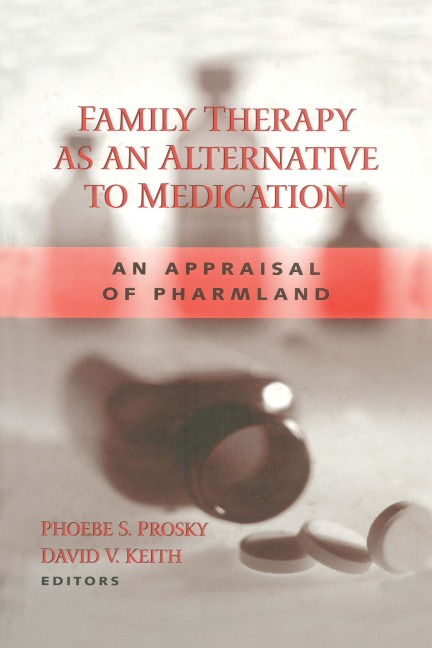
Family Therapy as an Alternative to Medication critically and passionately explores the concepts and practices that constitute the interface between family systems based psychotherapy and modern biological psychiatry. This diverse collection of essays, eight by psychiatrists, is neither for nor against medication, but takes a skeptical view of the unquestioned dominance that medication-based treatments have achieved among mental health practitioners. Its viewpoint is that therapeutic attention to context and relationships, regularly diminished when medications are prescribed, interferes with the development of psychiatric disorders, adds to maturity, and expands consciousness. Clinical examples, by both practitioners and patients, are used to define potential problems that arise from trying to combine a medical model with family systems work and also illustrate the decision-making processes and methods for applying family systems based therapies. This book will stimulate thoughtful conversation among students and practitioners of all mental health disciplines.
Phoebe Prosky, MSW, studied under family therapy pioneer Nathan Ackerman, MD, and worked and taught at the Ackerman Institute for Family Therapy for fifteen years. Moving to Maine, she founded a family therapy training center and clinic which incorporates the spirit of Ackerman's work, embodied in an approach which emphasizes the conscious use of intuition and alternatives to the use of medication in the teaching and practice of family therapy. David V. Keith, M.D. holds joint appointments as Professor in the Departments of Psychiatry, Family Medicine, and Pediatrics at the State University of New York, Health Science Center at Syracuse. He is also the Director of the Division of Child and Adolescent Psychiatry and Director of Family Therapy. Dr. Keith's special interest is in the impact of relationships on health and illness. It is this interest which guides his teaching, academics, and clinical work in family therapy.
Acknowledgments. Introduction. Part I: Introductory: Setting the Stage for an Exploration of the Interface of Family Therapy and Medication. Keith, Biometaphorical Psychiatry: Family Therapy and the Poetics of Experience. Prosky, When More is Less: A Common Difficulty in Collaborative Treatment of Human Distress. Auerswald, Family Healing and Planetary Healing: Three Paradigms in Search of a Culture. Part II: Theoretical: Dilemmas and Contradictions in the Approaches of Family Systems Therapy and Psychopharmacological Practice. Freeman, Psychobiological Family Therapy: Toward an Ecological Psychiatry. Pakman, A Systemic Frame for Mental Health Practices. Schaefer, Medicating the Ghost in the Machine. Ducommun-Nagy, Can Giving Heal? Contextual Therapy and Biological Psychiatry. Mei, Rethinking Illness. Part III: Political: The Mechanisms Behind the Accelerating Growth of Psychopharmacological Practices. Duncan, Miller, Sparks, The Myth of the Magic Pill. Beder, Gosden, Mosher, Pig Pharma: Psychiatric Agenda Setting by Drug Companies. Part V: Seeking Health: Clients Describe their Experiences with Family Therapy and Psychopharmacological Treatment. Dyer, The Headache. Messalink, Love of a Lifetime. Davis, The Therapy That Almost Wasn't, or Imaginary Therapy. Part IV: Clinical: Systems-based Practices as Alternatives to the Use of Medication. Flynn, Expert Therapist-beginning Therapist. Begel, The Jazz Consultation: Improvisation in Family Therapy. Ford, Goldilocks and the Three Bears Revisited. Benda, My Journey with Allison in Wonderland. Yaroshevsky, Bekiaris, Deficit of Attention Disorder. Auerswald, Thinking about Thinking in Family Therapy.
Dieses eBook wird im PDF-Format geliefert und ist mit einem Adobe Kopierschutz (DRM) versehen. Sie können dieses eBook mit allen Geräten lesen, die das PDF-Format und den Adobe Kopierschutz (DRM) unterstützen.
Zum Beispiel mit den folgenden Geräten:
• tolino Reader
Laden Sie das eBook direkt über den Reader-Shop auf dem tolino herunter oder übertragen Sie das eBook auf Ihren tolino mit einer kostenlosen Software wie beispielsweise Adobe Digital Editions.
• Sony Reader & andere eBook Reader
Laden Sie das eBook direkt über den Reader-Shop herunter oder übertragen Sie das eBook mit der kostenlosen Software Sony READER FOR PC/Mac oder Adobe Digital Editions auf ein Standard-Lesegeräte mit epub- und Adobe DRM-Unterstützung.
• Tablets & Smartphones
Möchten Sie dieses eBook auf Ihrem Smartphone oder Tablet lesen, finden Sie hier unsere kostenlose Lese-App für iPhone/iPad und Android Smartphone/Tablets.
• PC & Mac
Lesen Sie das eBook direkt nach dem Herunterladen mit einer kostenlosen Lesesoftware, beispielsweise Adobe Digital Editions, Sony READER FOR PC/Mac oder direkt über Ihre eBook-Bibliothek in Ihrem Konto unter „Meine eBooks“ - „online lesen“.
Schalten Sie das eBook mit Ihrer persönlichen Adobe ID auf bis zu sechs Geräten gleichzeitig frei.
Bitte beachten Sie, dass die Kindle-Geräte das Format nicht unterstützen und dieses eBook somit nicht auf Kindle-Geräten lesbar ist.