Und dann auf "Zum Home-Bildschirm [+]".

Stöbern
genialokal zum Startbildschirm hinzufügen
Installieren Sie die genialokal App auf Ihrem Startbildschirm für einen schnellen Zugriff und eine komfortable Nutzung.
Installieren Sie die genialokal App auf Ihrem Startbildschirm für einen schnellen Zugriff und eine komfortable Nutzung.
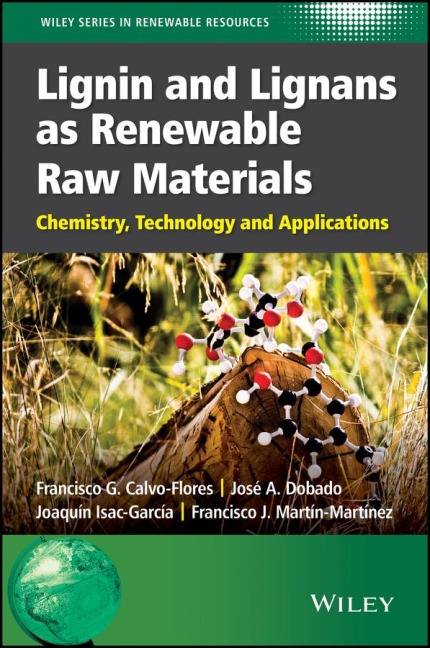
As naturally occurring and abundant sources of non-fossil carbon, lignin and lignans offer exciting possibilities as a source of commercially valuable products, moving away from petrochemical-based feedstocks in favour of renewable raw materials. Lignin can be used directly in fields such as agriculture, livestock, soil rehabilitation, bioremediation and the polymer industry, or it can be chemically modified for the fabrication of specialty and high-value chemicals such as resins, adhesives, fuels and greases.
Lignin and Lignans as Renewable Raw Materials presents a multidisciplinary overview of the state-of-the-art and future prospects of lignin and lignans. The book discusses the origin, structure, function and applications of both types of compounds, describing the main resources and values of these products as carbon raw materials.
Topics covered include:
* Structure and physicochemical properties * Lignin detection methods * Biosynthesis of lignin * Isolation methods * Characterization and modification of lignins * Applications of modified and unmodified lignins * Lignans: structure, chemical and biological properties * Future perspectives
This book is a comprehensive resource for researchers, scientists and engineers in academia and industry working on new possibilities for the application of renewable raw materials.
For more information on the Wiley Series in Renewable Resources, visit www.wiley.com/go/rrs
Francisco García Calvo-Flores, Associate Professor, Department of Organic Chemistry, University of Granada, Spain. José A. Dobado, Associate Professor, Department of Organic Chemistry, University of Granada, Spain. Joaquín Isac García, Associate Professor, Department of Organic Chemistry, University of Granada, Spain. Francisco J. Martin-Martinez, Post-doctoral Researcher, Free University of Brussels (VUB), Belgium. The authors form a multidisciplinary team in research areas spanning carbohydrate chemistry, green chemistry, chemical engineering, organic synthesis, and theoretical chemistry. They also have extensive experience in teaching subjects such as Green Chemistry, Environmental Chemistry, Organic Chemistry, Application of Spectroscopic Methods to Organic Compounds, Computational Organic Chemistry, both at the undergraduate and Masters level of Chemistry.
Series Preface xv Preface xvii List of Acronyms xix List of Symbols xxiii Part I Introduction 1 1. Background and Overview 3 1.1 Introduction 3 1.2 Lignin: Economical Aspects and Sustainability 4 1.3 Structure of the Book 5 Part II What is Lignin? 9 2. Structure and Physicochemical Properties 11 2.1 Introduction 11 2.2 Monolignols, The Basis of a Complex Architecture 12 2.3 Chemical Classification of Lignins 16 2.4 Lignin Linkages 17 2.5 Structural Models of Native Lignin 20 2.6 Lignin-Carbohydrate Complex 34 2.7 Physical and Chemical Properties of Lignins 39 3. Detection and Determination 49 3.1 Introduction 49 3.2 The Detection of Lignin (Color-Forming Reactions) 49 3.3 Determination of Lignin 55 3.4 Direct Methods for the Determination of Lignin 55 3.5 Indirect Methods for the Determination of Lignin 60 3.6 Comparison of the Different Determination Methods 66 4. Biosynthesis of Lignin 75 4.1 Introduction 75 4.2 The Biological Function of Lignins 75 4.3 The Shikimic Acid Pathway 76 4.4 The Common Phenylpropanoid Pathway 78 4.5 The Biosynthesis of Lignin Precursors (the Monolignol-Specific Pathway) 80 4.6 The Dehydrogenation of the Precursors 85 4.7 Peroxidases and Laccases 86 4.8 The Radical Polymerization 87 4.9 The Lignin-Carbohydrate Connectivity 97 4.10 Location of Lignins (Cell Wall Lignification) 99 4.11 Differences Between Angiosperm and Gymnosperm Lignins 101 Part III Sources and Characterization of Lignin 113 5. Isolation of Lignins 115 5.1 Introduction 115 5.2 Methods for Lignin Isolation from Wood and Grass for Laboratory Purposes 116 5.3 Commercial Lignins 127 6. Functional and Spectroscopic Characterization of Lignins 145 6.1 Introduction 145 6.2 Elemental Analysis and Empirical Formula 146 6.3 Determination of Molecular Weight 147 6.4 Functional Group Analyses 151 6.5 Frequencies of Functional Groups and Linkage Types in Lignins 159 6.6 Characterization by Spectroscopic Methods 164 6.7 Raman Spectroscopy 166 7. Chemical Characterization and Modification of Lignins 189 7.1 Introduction 189 7.2 Characterization by Chemical Degradation Methods 189 7.3 Other Chemical Modifications of Lignins 216 7.4 Thermolysis (Pyrolysis) of Lignins 227 7.5 Biochemical Transformations of Lignins 227 Part IV Lignins Applications 247 8. Applications of Modified and Unmodified Lignins 249 8.1 Introduction 249 8.2 Lignin as Fuel 252 8.3 Lignin as a Binder 253 8.4 Lignin as Chelating Agent 254 8.5 Lignin in Biosciences and Medicine 256 8.6 Lignin in Agriculture 257 8.7 Polymers with Unmodified Lignin 258 8.8 Other Applications of Unmodified Lignins 267 8.9 New Polymeric Materials Derived from Modified Lignins and Related Biomass Derivatives 271 8.10 Polymers Derived from Chemicals Obtainable from Lignin Decomposition 278 8.11 Other Applications of Modified Lignins 279 9. High-Value Chemical Products 289 9.1 Introduction 289 9.2 Gasification: Syngas from Lignin 291 9.3 Thermolysis of Lignin 291 9.4 Hydrodeoxygenation (Hydrogenolysis) 294 9.5 Hydrothermal Hydrolysis 295 9.6 Chemical Depolymerization 295 9.7 Oxidative Transformation of Lignin 299 9.8 High-Value Chemicals from Lignin 302 Part V Lignans 313 10. Structure and Chemical Properties of Lignans 315 10.1 Introduction 315 10.2 Structure and Classification of Lignans 315 10.3 Nomenclature of Lignans 319 10.4 Lignan Occurrence in Plants 325 10.5 Methods of Determination and Isolation of Lignans from Plants 328 10.6 Structure Determination of Lignans 331 10.7 The Chemical Synthesis of Lignans 332 11. Biological Properties of Lignans 369 11.1 Introduction 369 11.2 Biosynthesis of Lignans 370 11.3 Metabolism of Lignans 377 11.4 Plant Physiology and Plant Defense 383 11.5 Podophyllotoxin 386 11.6 Biological Activity of Different Lignan Structures 397 Part VI Outcome and Challenges 455 12. Summary, Conclusions, and Perspectives on Lignin Chemistry 457 12.1 Sources of Lignin 457 12.2 Structure of Lignin 458 12.3 Biosynthesis and Biological Function 459 12.4 Applications of Lignin 459 12.5 Lignans 461 12.6 Perspectives 462 References 462 Glossary 465 Index 467
Dieses eBook wird im PDF-Format geliefert und ist mit einem Adobe Kopierschutz (DRM) versehen. Sie können dieses eBook mit allen Geräten lesen, die das PDF-Format und den Adobe Kopierschutz (DRM) unterstützen.
Zum Beispiel mit den folgenden Geräten:
• tolino Reader
Laden Sie das eBook direkt über den Reader-Shop auf dem tolino herunter oder übertragen Sie das eBook auf Ihren tolino mit einer kostenlosen Software wie beispielsweise Adobe Digital Editions.
• Sony Reader & andere eBook Reader
Laden Sie das eBook direkt über den Reader-Shop herunter oder übertragen Sie das eBook mit der kostenlosen Software Sony READER FOR PC/Mac oder Adobe Digital Editions auf ein Standard-Lesegeräte mit epub- und Adobe DRM-Unterstützung.
• Tablets & Smartphones
Möchten Sie dieses eBook auf Ihrem Smartphone oder Tablet lesen, finden Sie hier unsere kostenlose Lese-App für iPhone/iPad und Android Smartphone/Tablets.
• PC & Mac
Lesen Sie das eBook direkt nach dem Herunterladen mit einer kostenlosen Lesesoftware, beispielsweise Adobe Digital Editions, Sony READER FOR PC/Mac oder direkt über Ihre eBook-Bibliothek in Ihrem Konto unter „Meine eBooks“ - „online lesen“.
Schalten Sie das eBook mit Ihrer persönlichen Adobe ID auf bis zu sechs Geräten gleichzeitig frei.
Bitte beachten Sie, dass die Kindle-Geräte das Format nicht unterstützen und dieses eBook somit nicht auf Kindle-Geräten lesbar ist.