Und dann auf "Zum Home-Bildschirm [+]".

Stöbern
genialokal zum Startbildschirm hinzufügen
Installieren Sie die genialokal App auf Ihrem Startbildschirm für einen schnellen Zugriff und eine komfortable Nutzung.
Installieren Sie die genialokal App auf Ihrem Startbildschirm für einen schnellen Zugriff und eine komfortable Nutzung.
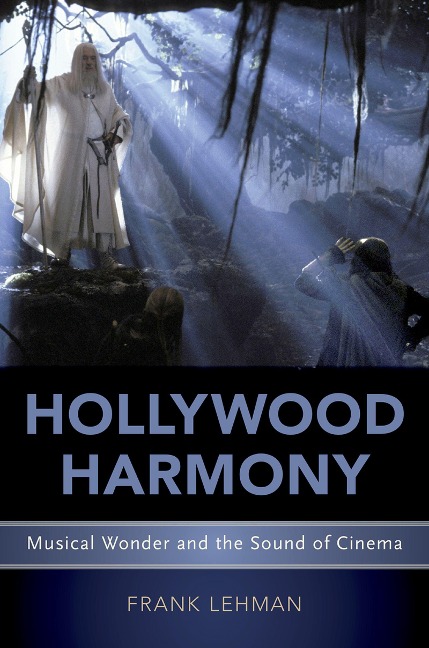
Film music often tells us how to feel, but it also guides us how to hear. Filmgoing is an intensely musical experience, one in which the soundtrack structures our interpretations and steers our emotions. Hollywood Harmony explores the inner workings of film music, bringing together tools from music theory, musicology, and music psychology in this first ever book-length analytical study of this culturally central repertoire. Harmony, and especially chromaticism, is emblematic of the "film music sound," and it is often used to evoke that most cinematic of feelings-wonder. To help parse this familiar but complex musical style, Hollywood Harmony offers a first-of-its kind introduction to neo-Riemannian theory, a recently developed and versatile method of understanding music as a dynamic and transformational process, rather than a series of inert notes on a page. This application of neo-Riemannian theory to film music is perfect way in for curious newcomers, while also constituting significant scholarly contribution to the larger discipline of music theory. Author Frank Lehman draws from his extensive knowledge of cinematic history with case-studies that range from classics of Golden Age Hollywood to massive contemporary franchises to obscure cult-films. Special emphasis is placed on scores for major blockbusters such as Lord of the Rings, Star Wars, and Inception. With over a hundred meticulously transcribed music examples and more than two hundred individual movies discussed, Hollywood Harmony will fascinate any fan of film and music.
Frank Lehman is an Assistant Professor of Music at Tufts University, and holds degrees from Brown University and Harvard University. As a music theorist, he is interested in how music works and what effects it has on its listeners. His research has explored a range of styles and repertoires, from nineteenth century instrumental compositions to film scores to ambient music. He has recently focused on the composers John Williams and Hans Zimmer. He lives in Belmont, Massachusetts.
Acknowledgments Abbreviations, Orthography, and Examples About the Companion Website Introduction Chapter 1: Tonal Practices Chapter 2: Expression and Transformation Chapter 3: Neo-Riemannian Theory at the Movies Chapter 4: Analyzing Chromaticism in Film Chapter 5: Pantriadic Aesthetics Chapter 6: Harmonious Interactions Afterword Bibliography Index
Dieses eBook wird im PDF-Format geliefert und ist mit einem Adobe Kopierschutz (DRM) versehen. Sie können dieses eBook mit allen Geräten lesen, die das PDF-Format und den Adobe Kopierschutz (DRM) unterstützen.
Zum Beispiel mit den folgenden Geräten:
• tolino Reader
Laden Sie das eBook direkt über den Reader-Shop auf dem tolino herunter oder übertragen Sie das eBook auf Ihren tolino mit einer kostenlosen Software wie beispielsweise Adobe Digital Editions.
• Sony Reader & andere eBook Reader
Laden Sie das eBook direkt über den Reader-Shop herunter oder übertragen Sie das eBook mit der kostenlosen Software Sony READER FOR PC/Mac oder Adobe Digital Editions auf ein Standard-Lesegeräte mit epub- und Adobe DRM-Unterstützung.
• Tablets & Smartphones
Möchten Sie dieses eBook auf Ihrem Smartphone oder Tablet lesen, finden Sie hier unsere kostenlose Lese-App für iPhone/iPad und Android Smartphone/Tablets.
• PC & Mac
Lesen Sie das eBook direkt nach dem Herunterladen mit einer kostenlosen Lesesoftware, beispielsweise Adobe Digital Editions, Sony READER FOR PC/Mac oder direkt über Ihre eBook-Bibliothek in Ihrem Konto unter „Meine eBooks“ - „online lesen“.
Schalten Sie das eBook mit Ihrer persönlichen Adobe ID auf bis zu sechs Geräten gleichzeitig frei.
Bitte beachten Sie, dass die Kindle-Geräte das Format nicht unterstützen und dieses eBook somit nicht auf Kindle-Geräten lesbar ist.