Und dann auf "Zum Home-Bildschirm [+]".

Stöbern
genialokal zum Startbildschirm hinzufügen
Installieren Sie die genialokal App auf Ihrem Startbildschirm für einen schnellen Zugriff und eine komfortable Nutzung.
Installieren Sie die genialokal App auf Ihrem Startbildschirm für einen schnellen Zugriff und eine komfortable Nutzung.
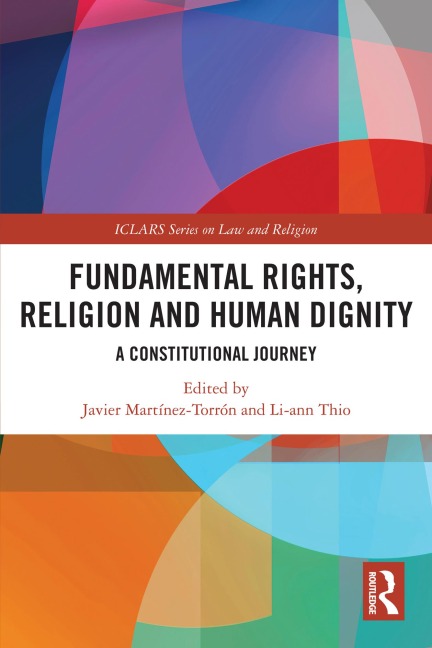
This collection examines theoretical and practical issues concerning the relationship between freedom of religion or belief and other fundamental rights, in the context of secular States, from the perspective of human dignity. As the Universal Declaration of Human Rights made clear, human dignity constitutes the foundation of human rights, among which freedom of thought, conscience, and religion occupies a prominent place. As a consequence of the inter-cultural debate that is ongoing in contemporary Western societies, which are increasingly pluralistic, the concept of human dignity faces important challenges in terms of what it requires. The five chapters included in the first part of this book discuss some of these conceptual challenges, such as the implications of common good constitutionalism for the understanding of human dignity and the role of religious freedom from the perspective of Western experiences and legal thinkers. The chapters in Part II explore particular questions involving human dignity and the relationship between freedom of religion or belief and other human rights, for example, how to build bridges between religious freedom and other fundamental freedoms when people make conflicting legitimate choices. Taken together, the book offers an insightful range of perspectives on some contemporary challenges raised by the exercise of religious freedom in societies that claim to be based on respect for human dignity and human rights. The volume will be a valuable resource for academics, researchers, and policy-makers working in the areas of Law and Religion, Human Rights Law, Constitutional Law, and International Relations.
Javier Martínez-Torrón is Professor of Law at Complutense University (Madrid), Vice-President of the Section of Canon Law and Church-State Relations of the Spanish Royal Academy of Jurisprudence and Legislation, Titular Member of the International Academy of Comparative Law, and Honorary Foreign Member of the National Academy of Law and Social Sciences of Cordoba, Argentina. He is also President of the International Consortium on Law and Religion Studies (ICLARS). Li-ann Thio is Provost Chair Professor of Law at the National University of Singapore. She was a Nominated Member of the Singapore Parliament (2007-2009), and a member of the ICLARS Steering Committee from 2022. She teaches and has published widely in the fields of constitutional and administrative law, law and religion, human rights in Asia and public international law. She was formerly Chief Editor, Singapore Journal of Legal Studies, General Editor, Asian Yearbook of International Law and is currently Co-Series Editor of the Hart Constitutionalism in Asia series.
Introduction: Contemporary Debates on Human Dignity and the Implications for Freedom of Religion - A Provisional Exploration Part I: Human Dignity, Religion, and Constitutionalism: A Necessary Dialogue Chapter 1: Human Dignity and Common Good Constitutionalism Chapter 2: Common Good Constitutionalism and Religious Freedom Chapter 3: Law, Reconciliation and Human Dignity: Religious Diversity and Managing Religious Harmony in Singapore Chapter 4: On the Importance of the Distinction Between Human Dignity and Honour in the Inter-Cultural Debate Chapter 5: Is there a Central-European Approach to Human Dignity? Part II: Freedom of Religion or Belief and Other Fundamental Rights Chapter 6: Building Bridges between Freedom of Religion and Belief and Other Fundamental Human Rights Chapter 7: Hate Speech, Offences to Religion and Public Morals in Strasbourg Case Law Chapter 8: State Neutrality, Religion, and Academic Freedom Chapter 9: Gender Equality and Religious Freedom in the Healthcare Context. Some Conflicts Involving Faith-Based Entities in United States' Law
Dieses eBook wird im PDF-Format geliefert und ist mit einem Adobe Kopierschutz (DRM) versehen. Sie können dieses eBook mit allen Geräten lesen, die das PDF-Format und den Adobe Kopierschutz (DRM) unterstützen.
Zum Beispiel mit den folgenden Geräten:
• tolino Reader
Laden Sie das eBook direkt über den Reader-Shop auf dem tolino herunter oder übertragen Sie das eBook auf Ihren tolino mit einer kostenlosen Software wie beispielsweise Adobe Digital Editions.
• Sony Reader & andere eBook Reader
Laden Sie das eBook direkt über den Reader-Shop herunter oder übertragen Sie das eBook mit der kostenlosen Software Sony READER FOR PC/Mac oder Adobe Digital Editions auf ein Standard-Lesegeräte mit epub- und Adobe DRM-Unterstützung.
• Tablets & Smartphones
Möchten Sie dieses eBook auf Ihrem Smartphone oder Tablet lesen, finden Sie hier unsere kostenlose Lese-App für iPhone/iPad und Android Smartphone/Tablets.
• PC & Mac
Lesen Sie das eBook direkt nach dem Herunterladen mit einer kostenlosen Lesesoftware, beispielsweise Adobe Digital Editions, Sony READER FOR PC/Mac oder direkt über Ihre eBook-Bibliothek in Ihrem Konto unter „Meine eBooks“ - „online lesen“.
Schalten Sie das eBook mit Ihrer persönlichen Adobe ID auf bis zu sechs Geräten gleichzeitig frei.
Bitte beachten Sie, dass die Kindle-Geräte das Format nicht unterstützen und dieses eBook somit nicht auf Kindle-Geräten lesbar ist.