Und dann auf "Zum Home-Bildschirm [+]".

Stöbern
genialokal zum Startbildschirm hinzufügen
Installieren Sie die genialokal App auf Ihrem Startbildschirm für einen schnellen Zugriff und eine komfortable Nutzung.
Installieren Sie die genialokal App auf Ihrem Startbildschirm für einen schnellen Zugriff und eine komfortable Nutzung.
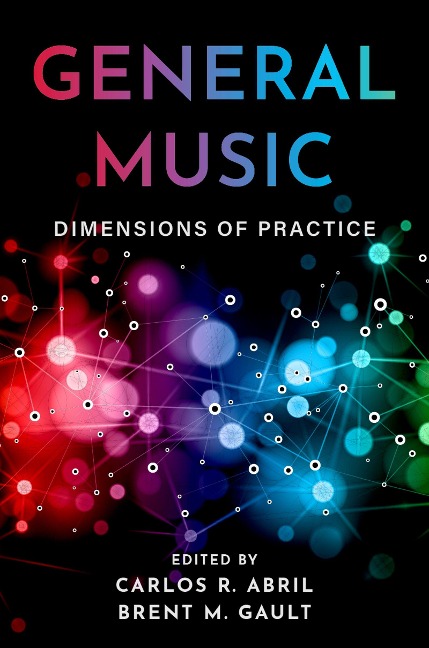
General Music: Dimensions of Practice is a practical guide for music teachers and teaching artists who strive to teach music holistically. The book begins by framing general music as a holistic music education that is comprehensive, meaningful, and relevant to diverse learners in school and community settings. It is followed by chapters that are organized into one of four dimensions of music practice: performing, connecting, creating, and responding. Chapter authors share creative and innovative teaching ideas, for both elementary and secondary school students, that focus on a wide range of topics, including: songwriting, composing, improvising, singing, moving, playing, listening, analyzing, contextualizing, and connecting. Each chapter provides (a) a rationale for a given area of music study, establishing its importance and relevance; (b) a research or theoretical background, to inform and guide practice; and (c) a pedagogical model or framework illustrated through lesson ideas, curriculum units, or vignettes. The ideas in this book seek to inspire and guide teachers as they build comprehensive music programs that are informed by students and communities.
Carlos R. Abril is Professor of Music and Associate Dean at the University of Miami Frost School of Music, where he teaches courses in equity, access, and diversity in music education, philosophy of music education, and general music methods. His body of research seeks to document visible and invisible barriers to the study of music in schools, as well as to illuminate ways to make the study of music more relevant and accessible. Abril's work is published in numerous research and professional journals, as well as in books. He co-edited the books Teaching General Music: Approaches, Issues, and Viewpoints and Musical Experiences in Our Lives: Lessons We Learn and Meanings We Make and has published music and instructional materials for World Music Press and McGraw-Hill's Spotlight on Music. Abril is the chair of the Society for Research in Music Education and has served on the Research Panel for the National Endowment for the Arts. He was recently honored with the Phillip Frost Award for Excellence in Teaching and Scholarship. Brent M. Gault is Professor of Music Education and Interim Chair of the Music Education Department at the Indiana University Jacobs School of Music. He has taught elementary and early childhood music courses in Texas, Wisconsin, Connecticut, Pennsylvania, and Indiana. He specializes in elementary general music education, early childhood music education, and Kodály-inspired methodology. He also has training in both the Orff and Dalcroze approaches to music education. Gault has presented sessions and research at conferences of the American Orff-Schulwerk Association, Dalcroze Society of America, International Kodály Society, International Society for Music Education, Organization of American Kodály Educators, and National Association for Music Education. In addition, he has served as a presenter and guest lecturer for colleges and music education organizations in the United States, Canada, China, Ireland, and Singapore. He is the co-editor of Teaching General Music: Approaches, Issues, and Viewpoints and author of Listen Up! Fostering Musicianship Through Active Listening.
1. General Music as Holistic Music Education Carlos R. Abril and Brent M. Gault Performing 2. Singing in the Elementary General Music Classroom Sarah J. Bartolome 3. Playing with Orff and Classroom Instruments Amy Beegle 4. Participatory Music Making with Fretted Instruments Martina Vasil 5. Pedagogical Approaches in Modern Band Gareth Dylan Smith and Warren Gramm 6. Teaching and Learning World Music Karen Howard Connecting 7. Teaching Music for Human Connections Carlos R. Abril and Loneka W. Battiste 8. Fostering Historical Empathy through Music, Art, and Poetry Janet Revell Barrett 9. Connecting with Repertoire: On the Efficacy of Folksong Jacqueline Kelly-McHale 10. Toward School and Community Musical Engagements Kari K. Veblen 11. How Do We Connect? Music Education in Online and Hybrid Learning Nyssa M. Brown Creating 12. Frames for Improvising Una MacGlone 13. New Ways to Think about Composing and Producing Katherine Strand and Michele Kaschub 14. Demystifying Songwriting Kat Reinhart 15. Digital Media, Digital Technology, and Participatory Culture Ann C. Clements Responding 16. Movement: An Integral Component of General Music Marja-Leena Juntunen 17. Engaging Learners in Active Music Listening Brent M. Gault 18. Perceiving and Responding through Analysis Andrew S. Paney and Nathan O. Buonviri Index
Dieses eBook wird im PDF-Format geliefert und ist mit einem Adobe Kopierschutz (DRM) versehen. Sie können dieses eBook mit allen Geräten lesen, die das PDF-Format und den Adobe Kopierschutz (DRM) unterstützen.
Zum Beispiel mit den folgenden Geräten:
• tolino Reader
Laden Sie das eBook direkt über den Reader-Shop auf dem tolino herunter oder übertragen Sie das eBook auf Ihren tolino mit einer kostenlosen Software wie beispielsweise Adobe Digital Editions.
• Sony Reader & andere eBook Reader
Laden Sie das eBook direkt über den Reader-Shop herunter oder übertragen Sie das eBook mit der kostenlosen Software Sony READER FOR PC/Mac oder Adobe Digital Editions auf ein Standard-Lesegeräte mit epub- und Adobe DRM-Unterstützung.
• Tablets & Smartphones
Möchten Sie dieses eBook auf Ihrem Smartphone oder Tablet lesen, finden Sie hier unsere kostenlose Lese-App für iPhone/iPad und Android Smartphone/Tablets.
• PC & Mac
Lesen Sie das eBook direkt nach dem Herunterladen mit einer kostenlosen Lesesoftware, beispielsweise Adobe Digital Editions, Sony READER FOR PC/Mac oder direkt über Ihre eBook-Bibliothek in Ihrem Konto unter „Meine eBooks“ - „online lesen“.
Schalten Sie das eBook mit Ihrer persönlichen Adobe ID auf bis zu sechs Geräten gleichzeitig frei.
Bitte beachten Sie, dass die Kindle-Geräte das Format nicht unterstützen und dieses eBook somit nicht auf Kindle-Geräten lesbar ist.