
Stöbern
genialokal zum Startbildschirm hinzufügen
Installieren Sie die genialokal App auf Ihrem Startbildschirm für einen schnellen Zugriff und eine komfortable Nutzung.
Installieren Sie die genialokal App auf Ihrem Startbildschirm für einen schnellen Zugriff und eine komfortable Nutzung.
Tippen Sie einfach auf Teilen:
 Und dann auf "Zum Home-Bildschirm [+]".
Bei genialokal.de kaufen Sie online bei Ihrer lokalen, inhabergeführten Buchhandlung!
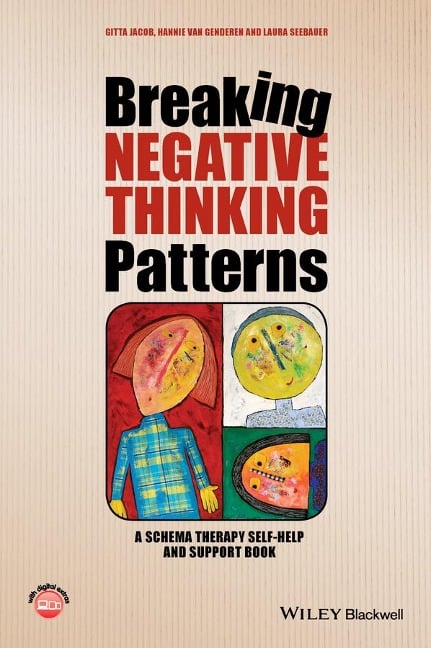
Breaking Negative Thinking Patterns is the first schema-mode focused resource guide aimed at schema therapy patients and self-help readers seeking to understand and overcome negative patterns of thinking and behaviour. * Represents the first resource for general readers on the mode approach to schema therapy * Features a wealth of case studies that serve to clarify schemas and modes and illustrate techniques for overcoming dysfunctional modes and behavior patterns * Offers a series of exercises that readers can immediately apply to real-world challenges and emotional problems as well as the complex difficulties typically tackled with schema therapy * Includes original illustrations that demonstrate the modes and approaches in action, along with 20 self-help mode materials which are also available online * Written by authors closely associated with the development of schema therapy and the schema mode approach
Gitta Jacob is a Clinical Psychologist and Schema Therapist at GAIA, a therapy development and research company in Hamburg, Germany. A founding board member of the International Society for Schema Therapy (ISST), Dr. Jacob is also co-author of Schema Therapy in Practice: An Introductory Guide to the Schema Mode Approach (2012). Hannie van Genderen is a Clinical Psychologist, Supervisor of the Dutch Association for Behavioural and Cognitive Therapy, and Chair of the Dutch Schema Therapy Association. She is also a Psychotherapist at the Maastricht Community Mental Health Centre and co-author of Schema Therapy for Borderline Personality Disorder (2009). Laura Seebauer is a Psychologist, Psychotherapist and Schema Therapist in the Department of Clinical Psychology and Psychotherapy, University Medical Centre, University of Freiburg, Germany.
Preface viii Credit for Images x 1 Introduction 1 1.1 What Is Schema Therapy? 2 1.2 Understanding the Origin of Your Patterns 4 1.2.1 Recognizing your Modes 5 1.2.2 Changing your Modes 5 Part I: Become Familiar with Your Modes 7 2 Child Modes 9 2.1 Vulnerable Child Modes 12 2.1.1 Get in contact with your own Vulnerable Child Mode 17 2.1.2 Detecting Vulnerable Child Modes in others 20 2.2 Angry and Impulsive Child Modes 20 2.2.1 Get in contact with your own Angry or Impulsive Child Mode 26 2.2.2 Detecting Angry or Impulsive Child Modes in others 28 2.3 Happy Child Mode 32 2.3.1 Get in contact with your own Happy Child Mode 34 2.3.2 Detecting the Happy Child in others 36 2.4 Summary 36 3 Dysfunctional Parent Modes 38 3.1 Demanding Parent Modes 44 3.1.1 How can I detect my own Demanding Parent Mode? 49 3.1.2 How can I detect a Demanding Parent Mode in other people? 49 3.2 Guilt-Inducing Parent Modes 51 3.2.1 How can I detect Guilt-inducing Parent Modes? 55 3.3 Punitive Parent Mode 57 3.3.1 How can I detect a Punitive Parent Mode in myself? 60 3.3.2 How can I detect a Punitive Parent Mode in others? 62 3.4 Summary 63 4 Coping Modes 65 4.1 Compliant Surrender Mode 73 4.1.1 How can I detect a Compliant Surrender Coping Mode in myself? 74 4.1.2 How can I detect a Compliant Surrender Mode in others? 81 4.2 Avoidant Coping Mode 81 4.2.1 How can I detect Avoidant Coping Mode in myself? 84 4.2.2 How can I detect Avoidant Coping Mode in others? 84 4.3 Overcompensatory Coping Mode 88 4.3.1 How can I detect Overcompensatory Coping Mode in myself? 88 4.3.2 How can I detect Overcompensatory Coping Mode in others? 92 4.4 Summary 95 5 Healthy Adult Mode 96 5.1 How can I detect a Healthy Adult Mode in myself? 98 5.2 How can I detect a Healthy Adult Mode in others? 99 5.3 How can I distinguish the Healthy Adult Mode from other modes? 101 5.4 Summary 104 Part II: Change Your Modes 105 6 Healing Vulnerable Child Modes 107 6.1 Get Acquainted with your Vulnerable Child Mode 108 6.2 Taking care of your Vulnerable Child Mode 111 7 Gaining Control over Angry and Impulsive Child Modes 117 7.1 Get Acquainted with your Angry or Impulsive Child Mode 119 7.2 Setting Limits to Angry or Impulsive Child Modes 120 7.2.1 Goals and needs 122 7.2.2 Chair dialogues 123 7.2.3 Learn to direct your behavior 124 7.2.4 How can I learn to control my anger? 126 8 Strengthen the Happy Child Mode 130 8.1 Get Acquainted with your Happy Child Mode 130 8.2 Exercises to Strengthen the Happy Child Mode 133 9 Setting Limits to Dysfunctional Parent Modes 136 9.1 Get in Touch with your Dysfunctional Parent Mode 137 9.2 Silence Dysfunctional Parent Modes 144 9.2.1 Exercises to reduce Dysfunctional Parent Messages 147 10 Changing Coping Modes 150 10.1 Get in Touch with your Coping Modes 151 10.2 Reducing Coping Modes 151 10.2.1 Reducing the Compliant Surrender Mode 157 10.2.2 Reducing avoidance 157 10.2.3 Reducing Overcompensation 160 11 Promoting Your Healthy Adult Mode 165 Glossary 175 References and Further Reading 179 Index 181
Dieses eBook wird im PDF-Format geliefert und ist mit einem Adobe Kopierschutz (DRM) versehen. Sie können dieses eBook mit allen Geräten lesen, die das PDF-Format und den Adobe Kopierschutz (DRM) unterstützen.
Zum Beispiel mit den folgenden Geräten:
• tolino Reader
Laden Sie das eBook direkt über den Reader-Shop auf dem tolino herunter oder übertragen Sie das eBook auf Ihren tolino mit einer kostenlosen Software wie beispielsweise Adobe Digital Editions.
• Sony Reader & andere eBook Reader
Laden Sie das eBook direkt über den Reader-Shop herunter oder übertragen Sie das eBook mit der kostenlosen Software Sony READER FOR PC/Mac oder Adobe Digital Editions auf ein Standard-Lesegeräte mit epub- und Adobe DRM-Unterstützung.
• Tablets & Smartphones
Möchten Sie dieses eBook auf Ihrem Smartphone oder Tablet lesen, finden Sie hier unsere kostenlose Lese-App für iPhone/iPad und Android Smartphone/Tablets.
• PC & Mac
Lesen Sie das eBook direkt nach dem Herunterladen mit einer kostenlosen Lesesoftware, beispielsweise Adobe Digital Editions, Sony READER FOR PC/Mac oder direkt über Ihre eBook-Bibliothek in Ihrem Konto unter „Meine eBooks“ - „online lesen“.
Schalten Sie das eBook mit Ihrer persönlichen Adobe ID auf bis zu sechs Geräten gleichzeitig frei.
Bitte beachten Sie, dass die Kindle-Geräte das Format nicht unterstützen und dieses eBook somit nicht auf Kindle-Geräten lesbar ist.