Und dann auf "Zum Home-Bildschirm [+]".

Stöbern
genialokal zum Startbildschirm hinzufügen
Installieren Sie die genialokal App auf Ihrem Startbildschirm für einen schnellen Zugriff und eine komfortable Nutzung.
Installieren Sie die genialokal App auf Ihrem Startbildschirm für einen schnellen Zugriff und eine komfortable Nutzung.
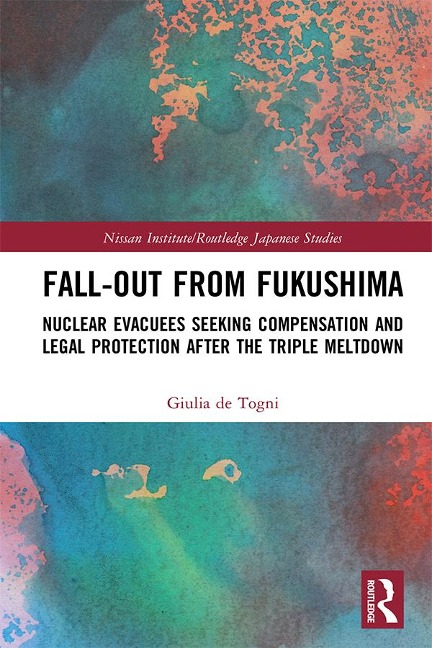
This book shows how the Fukushima plaintiffs have challenged narratives of safety and risk containment produced by TEPCO and the Japanese government through offering new empirical data on risk perceptions and life choices of some nuclear evacuees. Considering the Fukushima evacuees' disappearance from public discourse in Japan, the book engages with theoretical writings on risk, neoliberal governmentality and citizen science. Chapters draw on a wide range of anthropologically-related methodologies including socio-linguistics, participant observation, and qualitative interviews. Themes of self-governance, resistance, gender, kinship, class and social change surface throughout, setting the Fukushima experience in a broad historical, social, and comparative context. This is the first ethnographic account of the Fukushima litigation and the first extensive qualitative study documenting the worldviews and living conditions of nuclear evacuees who moved outside Fukushima Prefecture, with a particular focus on underrepresented groups (single mothers, elderly and disabled evacuees). The history of industrial disasters and the role of citizens in shaping environmental policy in Japan is also evaluated. Fall-out from Fukushima sets out to be a manifesto for understanding and supporting post-nuclear disaster societies, and will appeal to students and scholars of social, legal, and linguistic anthropology, science and technology studies, as well as Japanese studies.
Giulia De Togni is a research fellow at the University of Edinburgh. Her research focuses on risk, technology, and health. She received her MSc in social anthropology from Oxford University (2015) and a PhD in social anthropology from UCL (2019) with dissertations focused on Fukushima.
1. The Politics of Risk in a Disaster Archipelago Part 1: Risk Perceptions, Worldviews, and Individual Choices of Nuclear Evacuees 2. Life After Fukushima 3. Loss of Homeland 4. Food Safety Under the Radiation Threat Part 2: Collective Civil Actions Against TEPCO and the Government 5. Nuclear Evacuees Seeking Compensation 6. Competing Narratives in the Courtroom 7. Female Plaintiffs Reshaping Gender Inequality 8. The Emancipatory Effects of Fukushima
Dieses eBook wird im PDF-Format geliefert und ist mit einem Adobe Kopierschutz (DRM) versehen. Sie können dieses eBook mit allen Geräten lesen, die das PDF-Format und den Adobe Kopierschutz (DRM) unterstützen.
Zum Beispiel mit den folgenden Geräten:
• tolino Reader
Laden Sie das eBook direkt über den Reader-Shop auf dem tolino herunter oder übertragen Sie das eBook auf Ihren tolino mit einer kostenlosen Software wie beispielsweise Adobe Digital Editions.
• Sony Reader & andere eBook Reader
Laden Sie das eBook direkt über den Reader-Shop herunter oder übertragen Sie das eBook mit der kostenlosen Software Sony READER FOR PC/Mac oder Adobe Digital Editions auf ein Standard-Lesegeräte mit epub- und Adobe DRM-Unterstützung.
• Tablets & Smartphones
Möchten Sie dieses eBook auf Ihrem Smartphone oder Tablet lesen, finden Sie hier unsere kostenlose Lese-App für iPhone/iPad und Android Smartphone/Tablets.
• PC & Mac
Lesen Sie das eBook direkt nach dem Herunterladen mit einer kostenlosen Lesesoftware, beispielsweise Adobe Digital Editions, Sony READER FOR PC/Mac oder direkt über Ihre eBook-Bibliothek in Ihrem Konto unter „Meine eBooks“ - „online lesen“.
Schalten Sie das eBook mit Ihrer persönlichen Adobe ID auf bis zu sechs Geräten gleichzeitig frei.
Bitte beachten Sie, dass die Kindle-Geräte das Format nicht unterstützen und dieses eBook somit nicht auf Kindle-Geräten lesbar ist.