Und dann auf "Zum Home-Bildschirm [+]".

Stöbern
genialokal zum Startbildschirm hinzufügen
Installieren Sie die genialokal App auf Ihrem Startbildschirm für einen schnellen Zugriff und eine komfortable Nutzung.
Installieren Sie die genialokal App auf Ihrem Startbildschirm für einen schnellen Zugriff und eine komfortable Nutzung.
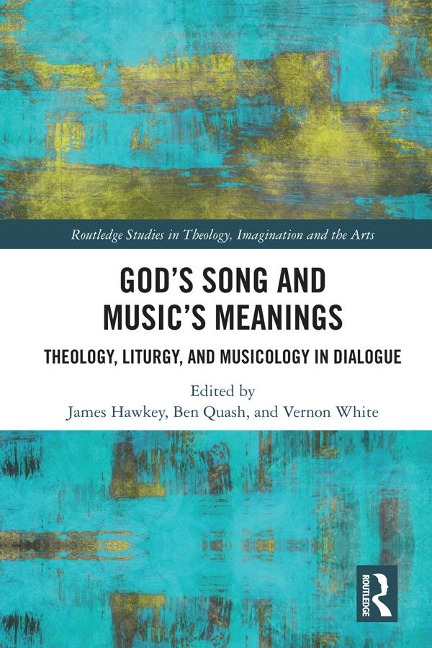
Taking seriously the practice and not just the theory of music, this ground-breaking collection of essays establishes a new standard for the interdisciplinary conversation between theology, musicology, and liturgical studies. The public making of music in our society happens more often in the context of chapels, churches, and cathedrals than anywhere else. The command to sing and make music to God makes music an essential part of the DNA of Christian worship. The book's three main parts address questions about the history, the performative contexts, and the nature of music. Its opening four chapters traces how accounts of music and its relation to God, the cosmos, and the human person have changed dramatically through Western history, from the patristic period through medieval, Reformation and modern times. A second section examines the role of music in worship, and asks what-if anything-makes a piece of music suitable for religious use. The final part of the book shows how the serious discussion of music opens onto considerations of time, tradition, ontology, anthropology, providence, and the nature of God. A pioneering set of explorations by a distinguished group of international scholars, this book will be of interest to anyone interested in Christianity's long relationship with music, including those working in the fields of theology, musicology, and liturgical studies.
James Hawkey is Canon Theologian of Westminster Abbey, and a Fellow of Clare College, Cambridge, UK. Ben Quash is Professor of Christianity and the Arts and Director of the Centre for Arts and the Sacred at King's College London, UK. Vernon White is Visiting Professor in Theology at King's College London, UK. Until recently he was also Sub-Dean and Canon Theologian at Westminster Abbey.
Preface, Vernon White Part 1: The Meanings of Music in Western History 1 Mellifluous Music in Early Western Christianity, Carol Harrison 2 'We Prefer Gods We Can See': Music's Mediations Between Seen Things and God in the Patristic and Medieval Periods, Nancy van Deusen 3 Hearing Revelation: Music and Theology in the Reformation, Jonathan Arnold 4 Music, Atheism, and Modernity: Aesthetics, Morality, and the Theological Construction of the Self, Gareth Wilson Part 2: The Work of Worship and the Meanings of Music 5 The worship of God and the quest of the Spirit: 'Contemporary' versus 'Traditional' Church Music, Gordon Graham 6 Musical Promiscuity: Can the Same Music Serve Sacred and Profane Ends Equally Well? Lucy Winkett 7 Mixing their Musick: Worship, Music, and Christian Communities, James Hawkey Part 3: The Meanings of Music and the Mystery of God 8 The Malleable Meanings of Music, John Butt 9 The Material, the Moral and the Mysterious: Three Dimensions of Music, Ben Quash 10 Absolute Music / Absolute Worship, Daniel K.L. Chua 11 Afterword, Jeremy S. Begbie
Dieses eBook wird im PDF-Format geliefert und ist mit einem Adobe Kopierschutz (DRM) versehen. Sie können dieses eBook mit allen Geräten lesen, die das PDF-Format und den Adobe Kopierschutz (DRM) unterstützen.
Zum Beispiel mit den folgenden Geräten:
• tolino Reader
Laden Sie das eBook direkt über den Reader-Shop auf dem tolino herunter oder übertragen Sie das eBook auf Ihren tolino mit einer kostenlosen Software wie beispielsweise Adobe Digital Editions.
• Sony Reader & andere eBook Reader
Laden Sie das eBook direkt über den Reader-Shop herunter oder übertragen Sie das eBook mit der kostenlosen Software Sony READER FOR PC/Mac oder Adobe Digital Editions auf ein Standard-Lesegeräte mit epub- und Adobe DRM-Unterstützung.
• Tablets & Smartphones
Möchten Sie dieses eBook auf Ihrem Smartphone oder Tablet lesen, finden Sie hier unsere kostenlose Lese-App für iPhone/iPad und Android Smartphone/Tablets.
• PC & Mac
Lesen Sie das eBook direkt nach dem Herunterladen mit einer kostenlosen Lesesoftware, beispielsweise Adobe Digital Editions, Sony READER FOR PC/Mac oder direkt über Ihre eBook-Bibliothek in Ihrem Konto unter „Meine eBooks“ - „online lesen“.
Schalten Sie das eBook mit Ihrer persönlichen Adobe ID auf bis zu sechs Geräten gleichzeitig frei.
Bitte beachten Sie, dass die Kindle-Geräte das Format nicht unterstützen und dieses eBook somit nicht auf Kindle-Geräten lesbar ist.