Und dann auf "Zum Home-Bildschirm [+]".

Stöbern
genialokal zum Startbildschirm hinzufügen
Installieren Sie die genialokal App auf Ihrem Startbildschirm für einen schnellen Zugriff und eine komfortable Nutzung.
Installieren Sie die genialokal App auf Ihrem Startbildschirm für einen schnellen Zugriff und eine komfortable Nutzung.
Ihr gewünschter Artikel ist in 0 Buchhandlungen vorrätig - wählen Sie hier eine Buchhandlung in Ihrer Nähe aus:

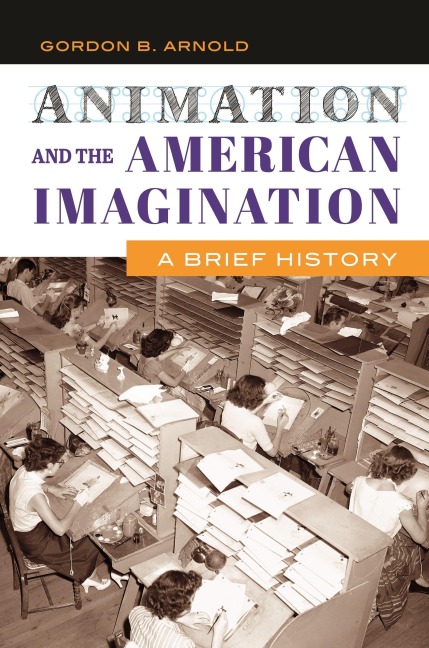

Providing a detailed historical overview of animated film and television in the United States over more than a century, this book examines animation within the U.S. film and television industry as well as in the broader sociocultural context. From the early 1900s onwards, animated cartoons have always had a wide, enthusiastic audience. Not only did viewers delight in seeing drawn images come to life, tell fantastic stories, and depict impossible gags, but animation artists also relished working in a visual art form largely free from the constraints of the real world. This book takes a fresh look at the big picture of U.S. animation, both on and behind the screen. It reveals a range of fascinating animated cartoons and the colorful personalities, technological innovations, cultural influences and political agendas, and shifting audience expectations that shaped not only what appeared on screen but also how audiences reacted to thousands of productions. Animation and the American Imagination: A Brief History presents a concise, unified picture that brings together divergent strands of the story so readers can make sense of the flow of animation history in the United States. The book emphasizes the overall shape of animation history by identifying how key developments emerged from what came before and from the culture at large. It covers the major persons and studios of the various eras; identifies important social factors, including the Great Depression, World War II, the counterculture of the 1960s and 1970s, and the struggles for civil rights and women's rights; addresses the critical role of technological and aesthetic changes; and discusses major works of animation and the responses to them.
Gordon Arnold has taught at several colleges, including Montserrat College of Art in Beverly, Massachusetts. He lives in the Boston area.
Preface Acknowledgments Chapter 1 Coming to Light Chapter 2 A World of Possibilities Chapter 3 Animation's Rising Star Chapter 4 Man from the Midwest Chapter 5 Dawn of a Golden Age Chapter 6 Snow White and the Beginning of U.S. Feature Animation Chapter 7 War Years Chapter 8 Postwar Transitions Chapter 9 Changing Times Chapter 10 The Vast Wasteland and Other Discontents Chapter 11 Tradition, Rebellion, Transformation Chapter 12 Renaissance and Revolution Epilogue: The New Millennium Notes Selected Bibliography Index