Und dann auf "Zum Home-Bildschirm [+]".

Stöbern
genialokal zum Startbildschirm hinzufügen
Installieren Sie die genialokal App auf Ihrem Startbildschirm für einen schnellen Zugriff und eine komfortable Nutzung.
Installieren Sie die genialokal App auf Ihrem Startbildschirm für einen schnellen Zugriff und eine komfortable Nutzung.
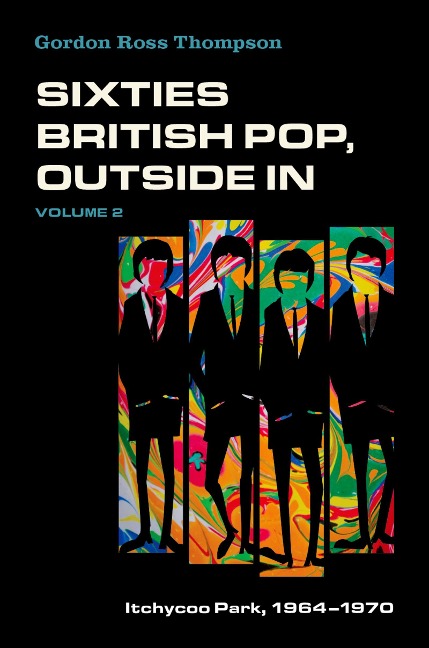
Itchycoo Park, 1964-1970--the second volume of Sixties British Pop, Outside In--explores how London songwriters, musicians, and production crews navigated the era's cultural upheavals by reimagining the pop-music envelope. As the generation born during the postwar years approached adulthood, they gravitated to music that resonated with their lives. Mainstream pop remained true to the basics, but some British artists conjured up sophisticated hybrid forms by recombining elements of jazz, folk, blues, Indian ragas, and western classical music while others returned to the raw essentials. Encouraging these experiments, youth culture's economic power challenged the authority of their parents' generation. Improved amplification opened larger and more lucrative concert venues while the spread of studios with enhanced technologies allowed artists and production crews the means to improve performances and recordings. British charts began to reflect London's postcolonial heritage as groups such as the Beatles, the Rolling Stones, the Kinks, and the Who all listened for ideas and sounds that would distinguish their recordings. On stage, the Yardbirds, Cream, Led Zeppelin, the Nice, and others led by instrumental virtuosi developed British versions of American blues and rhythm and blues while the Moody Blues, Pink Floyd, and King Crimson painted imaginary worlds. And, although Engelbert Humperdinck and other men lamented independent women, Dusty Springfield, Sandie Shaw, and Lulu used their cultural capital to question systemic sexism. Based on extensive research, including vintage and original interviews, Itchycoo Park, 1964-1970 presents sixties British pop, not as lists of discrete people and events, but as an interwoven story. Communities of musicians, producers, music directors, engineers, songwriters, publishers, promoters, broadcasters, and journalists interacted as they provided songs, made and played recordings, organized concerts, and celebrated the optimism of youth. They brought audiences together and gave individuals identity while establishing the musical world in which we live today.
Gordon Ross Thompson has taught classes on the musics of India, popular music culture, and media studies at Skidmore College and has served as editor of the Society for Ethnomusicology's Newsletter and as webmaster for the Society for Asian Music. The author of Please Please Me: Sixties British Pop, Inside Out, he has been interviewed by National Public Radio, the Canadian Broadcasting Corporation, and the Australian Broadcasting Corporation among other radio and television broadcasts. At Skidmore College, he also produced a popular annual Beatles concert by students, staff, and faculty.
Introduction Part One Swinging London, 1964-1967 Chapter 1 The Art of Pop Chapter 2 Finding England Chapter 3 Home Court Advantages Chapter 4 Beatles '67 Chapter 5 The Establishment Strikes Back Chapter 6 Classic Progressives Part Two Gardens of Earthly Delights, 1965-1969 Chapter 7 British Proto Punk Chapter 8 Transatlantic Transformers Chapter 9 Old Bottles, New Wine Part Three Pop Roles Chapter 10 Male Delivery Chapter 11 Televising the Feminine Chapter 12 Second Wave Pocket Part Four Decade Ends, 1967-1970 Chapter 13 Worlds Apart Chapter 14 England Calling Chapter 15 Electric Faeries Chapter 16 Folk Pop Chapter 17 Transatlantic Routes Part Five Something Old, Something New Chapter 18 New Territory Chapter 19 English Tales Chapter 20 Something Old, Something New Afterword Appendices Discography Media Sources Sources Music Index Subject Index
Dieses eBook wird im PDF-Format geliefert und ist mit einem Adobe Kopierschutz (DRM) versehen. Sie können dieses eBook mit allen Geräten lesen, die das PDF-Format und den Adobe Kopierschutz (DRM) unterstützen.
Zum Beispiel mit den folgenden Geräten:
• tolino Reader
Laden Sie das eBook direkt über den Reader-Shop auf dem tolino herunter oder übertragen Sie das eBook auf Ihren tolino mit einer kostenlosen Software wie beispielsweise Adobe Digital Editions.
• Sony Reader & andere eBook Reader
Laden Sie das eBook direkt über den Reader-Shop herunter oder übertragen Sie das eBook mit der kostenlosen Software Sony READER FOR PC/Mac oder Adobe Digital Editions auf ein Standard-Lesegeräte mit epub- und Adobe DRM-Unterstützung.
• Tablets & Smartphones
Möchten Sie dieses eBook auf Ihrem Smartphone oder Tablet lesen, finden Sie hier unsere kostenlose Lese-App für iPhone/iPad und Android Smartphone/Tablets.
• PC & Mac
Lesen Sie das eBook direkt nach dem Herunterladen mit einer kostenlosen Lesesoftware, beispielsweise Adobe Digital Editions, Sony READER FOR PC/Mac oder direkt über Ihre eBook-Bibliothek in Ihrem Konto unter „Meine eBooks“ - „online lesen“.
Schalten Sie das eBook mit Ihrer persönlichen Adobe ID auf bis zu sechs Geräten gleichzeitig frei.
Bitte beachten Sie, dass die Kindle-Geräte das Format nicht unterstützen und dieses eBook somit nicht auf Kindle-Geräten lesbar ist.