Und dann auf "Zum Home-Bildschirm [+]".

Stöbern
genialokal zum Startbildschirm hinzufügen
Installieren Sie die genialokal App auf Ihrem Startbildschirm für einen schnellen Zugriff und eine komfortable Nutzung.
Installieren Sie die genialokal App auf Ihrem Startbildschirm für einen schnellen Zugriff und eine komfortable Nutzung.
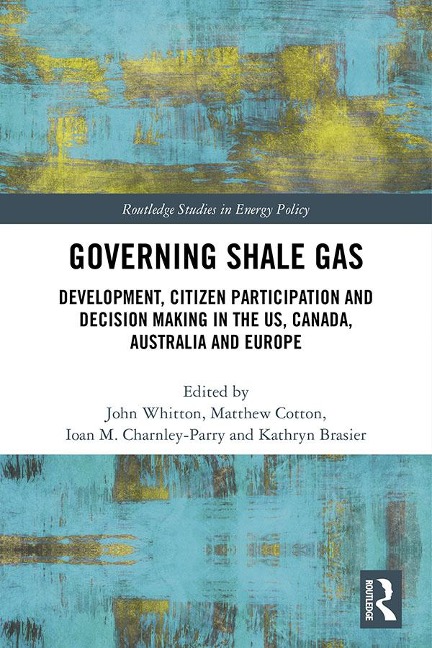
Shale energy development is an issue of global importance. The number of reserves globally, and their potential economic return, have increased dramatically in the past decade. Questions abound, however, about the appropriate governance systems to manage the risks of unconventional oil and gas development and the ability for citizens to engage and participate in decisions regarding these systems. Stakeholder participation is essential for the social and political legitimacy of energy extraction and production, what the industry calls a 'social license' to operate. This book attempts to bring together critical themes inherent in the energy governance literature and illustrate them through cases in multiple countries, including the US, the UK, Canada, South Africa, Germany and Poland. These themes include how multiple actors and institutions - industry, governments and regulatory bodies at all scales, communities, opposition movements, and individual landowners - have roles in developing, contesting, monitoring, and enforcing practices and regulations within unconventional oil and gas development. Overall, the book proposes a systemic, participatory, community-led approach required to achieve a form of legitimacy that allows communities to derive social priorities by a process of community visioning. This book will be of great relevance to scholars and policy-makers with an interest in shale gas development, and energy policy and governance.
John Whitton is the Director of UCLan Energy and a Co-Director of the Research Institute of Citizenship, Society and Change at the University of Central Lancashire, UK Matthew Cotton is a Lecturer in Human Geography in the Environment Department at the University of York, UK Ioan M. Charnley-Parry is a post-doctoral research associate within UCLan Energy and the Research Institute of Citizenship, Society and Change at the University of Central Lancashire, UK Kathryn Brasier is an Associate Professor of Rural Sociology at Pennsylvania State University, USA
Chapter 1 - Introduction: Governing Shale Gas John Whitton, Matthew Cotton, Kathy Brasier, Ioan Charnley-Parry Chapter 2 - Regulating Unconventional Shale Gas Development in the United States: Diverging Priorities, Overlapping Jurisdictions, and Asymmetrical Data Access Beth Kinne Chapter 3 - A complex adaptive system or just a tangled mess? Property rights and shale gas governance in Australia and the US Jeffrey B. Jacquet, Katherine Witt, William Rifkin, Julia H. Haggerty Chapter 4 - Governing Unconventional Legacies from the Coalbed Methane Boom in Wyoming Kathryn Bills Walsh, Julia H. Haggerty Chapter 5 - Governing Shale Gas in Germany Annette Elisabeth Töller, Michael Böcher Chapter 6 - Experimental regulatory approaches for unconventional gas: the case of urban drilling and local government authority in Texas Matthew Fry, Christian Brannstrom Chapter 7 - The Role of Multi-State River Basin Commissions in Shale Gas Governance Systems: A Comparative analysis of the Susquehanna and Delaware River Basin Commissions in the Marcellus Shale Region Grace Wildermuth, John Dzwonczyk, Kathy Brasier Chapter 8 - Unlikely allies against fracking networks of resistance against shale gas development in Poland Aleksandra Lis, Agata Stasik Chapter 9 - Community representations of unconventional gas development in Australia, Canada, and the United States, and their effect on social licence Darrick Evensen, Hanabeth Luke Chapter 10 - Evidence-based and participatory processes is support of shale gas policy development in South Africa Schreiner, G.O., De Jager, M.J., Snyman-Van der Walt, L., Dludla, A., Lochner, P.A., Wright, J. G., Scholes, R.J., Atkinson, D., Hardcastle, P., Kotze, H., Esterhuyse, S. Chapter 11 - Campus Organizing towards the Democratization of Shale Oil and Gas Governance in Higher Education Sarah T. Romano, Wendy Highby Chapter 12 - Devolved Governance & Alternative Dispute Resolution Programs: An Example from the Bakken Kristin K. Smith, Julia H. Haggerty Chapter 13 - Fracking Communities, Fractured Communication: Information transfer and transparency of the energy industry Peggy Petrzelka, Colter Ellis, Douglas Jackson Smith, Gene Theodori Chapter 14 - Shale Gas Governance in the United States, United Kingdom and Europe: Public Participation and the role of Social Justice John Whitton, Ioan Charnley-Parry Chapter 15 - Shale gas development in England: a tale of two mineral planning authorities Imogen Rattle, Tudor Baker, James Van Alstine Chapter 16 - Community understanding of risk from fracking in the UK and Poland: How democracy- and justice-based concerns amplify risk perceptions Anna Szolucha Chapter 17 - Seeking common ground in contested energy technology landscapes: Insights from a Q Methodology study Matthew Dairon, John R. Parkins and Kate Sherren Chapter 18 - Scientized and sanitized: Shale gas in the context of New Brunswick's political history Kelly Bronson and Tom Beckley
Dieses eBook wird im PDF-Format geliefert und ist mit einem Adobe Kopierschutz (DRM) versehen. Sie können dieses eBook mit allen Geräten lesen, die das PDF-Format und den Adobe Kopierschutz (DRM) unterstützen.
Zum Beispiel mit den folgenden Geräten:
• tolino Reader
Laden Sie das eBook direkt über den Reader-Shop auf dem tolino herunter oder übertragen Sie das eBook auf Ihren tolino mit einer kostenlosen Software wie beispielsweise Adobe Digital Editions.
• Sony Reader & andere eBook Reader
Laden Sie das eBook direkt über den Reader-Shop herunter oder übertragen Sie das eBook mit der kostenlosen Software Sony READER FOR PC/Mac oder Adobe Digital Editions auf ein Standard-Lesegeräte mit epub- und Adobe DRM-Unterstützung.
• Tablets & Smartphones
Möchten Sie dieses eBook auf Ihrem Smartphone oder Tablet lesen, finden Sie hier unsere kostenlose Lese-App für iPhone/iPad und Android Smartphone/Tablets.
• PC & Mac
Lesen Sie das eBook direkt nach dem Herunterladen mit einer kostenlosen Lesesoftware, beispielsweise Adobe Digital Editions, Sony READER FOR PC/Mac oder direkt über Ihre eBook-Bibliothek in Ihrem Konto unter „Meine eBooks“ - „online lesen“.
Schalten Sie das eBook mit Ihrer persönlichen Adobe ID auf bis zu sechs Geräten gleichzeitig frei.
Bitte beachten Sie, dass die Kindle-Geräte das Format nicht unterstützen und dieses eBook somit nicht auf Kindle-Geräten lesbar ist.