Und dann auf "Zum Home-Bildschirm [+]".

Stöbern
genialokal zum Startbildschirm hinzufügen
Installieren Sie die genialokal App auf Ihrem Startbildschirm für einen schnellen Zugriff und eine komfortable Nutzung.
Installieren Sie die genialokal App auf Ihrem Startbildschirm für einen schnellen Zugriff und eine komfortable Nutzung.
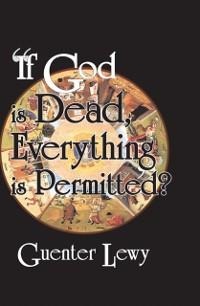
Dostoevsky's dictum that when God is dead everything is permitted can have several meanings. It can refer to the behavior of individuals suggesting that someone who is or becomes an unbeliever will conduct himself immorally. Alternatively, the saying can pertain to the moral character of an entire country and mean a society that rejects God is doomed to moral decay. Guenter Lewy presents a few of the major arguments of those who question the relationship between morality and religion, and examines the case for the continuing dependence of morality upon religion.Beginning with Dostoevsky's The Brothers Karamazov Lewy introduces the reader to the position that morality depends on religious belief. He then follows the idea throughout history, from its origin, to its extension during the Enlightment, to the Victorians, to the roots of atheism. Lewy then presents a critical discussion of Sweden as a model of a secular nation where morality is retained although most of the population is not religious. He shows that Sweden offers a serious and unique illustration of how democracy and morality can flourish in a post-modern environment.If God is Dead, Everything is Permitted? as the author acknowledges, is more of an essay than a seemless history of the relationship of religion and morality. Lewy's fascination with the intersection and influence of religion on morality is not a new topic. Indeed the discussion is important and alive today in light of new technological and scientific advances. Although Lewy may not put closure to the debate about whether morality is dependent on religion the evidence presented here sheds light on the morality of today by examining its historical past.
Guenter Lewy
Preface, 1 Introduction: Dostoyevsky's Proposition, 2 The Enlightenment: From Skepticism to Unbelief, 3 The Religion of Humanity, 4 The Victorians: Disbelieving Religiously, 5 Atheism: Proclaiming the Death of God, 6 Christian Morality: God and Moral Truth, 7 Is Modern Totalitarianism the Result of the Abandonment of God?, 8 The Case of Secular Sweden, 9 Unbelief and the Future of Morality, Notes, Index
Dieses eBook wird im PDF-Format geliefert und ist mit einem Adobe Kopierschutz (DRM) versehen. Sie können dieses eBook mit allen Geräten lesen, die das PDF-Format und den Adobe Kopierschutz (DRM) unterstützen.
Zum Beispiel mit den folgenden Geräten:
• tolino Reader
Laden Sie das eBook direkt über den Reader-Shop auf dem tolino herunter oder übertragen Sie das eBook auf Ihren tolino mit einer kostenlosen Software wie beispielsweise Adobe Digital Editions.
• Sony Reader & andere eBook Reader
Laden Sie das eBook direkt über den Reader-Shop herunter oder übertragen Sie das eBook mit der kostenlosen Software Sony READER FOR PC/Mac oder Adobe Digital Editions auf ein Standard-Lesegeräte mit epub- und Adobe DRM-Unterstützung.
• Tablets & Smartphones
Möchten Sie dieses eBook auf Ihrem Smartphone oder Tablet lesen, finden Sie hier unsere kostenlose Lese-App für iPhone/iPad und Android Smartphone/Tablets.
• PC & Mac
Lesen Sie das eBook direkt nach dem Herunterladen mit einer kostenlosen Lesesoftware, beispielsweise Adobe Digital Editions, Sony READER FOR PC/Mac oder direkt über Ihre eBook-Bibliothek in Ihrem Konto unter „Meine eBooks“ - „online lesen“.
Schalten Sie das eBook mit Ihrer persönlichen Adobe ID auf bis zu sechs Geräten gleichzeitig frei.
Bitte beachten Sie, dass die Kindle-Geräte das Format nicht unterstützen und dieses eBook somit nicht auf Kindle-Geräten lesbar ist.