Und dann auf "Zum Home-Bildschirm [+]".

Stöbern
genialokal zum Startbildschirm hinzufügen
Installieren Sie die genialokal App auf Ihrem Startbildschirm für einen schnellen Zugriff und eine komfortable Nutzung.
Installieren Sie die genialokal App auf Ihrem Startbildschirm für einen schnellen Zugriff und eine komfortable Nutzung.
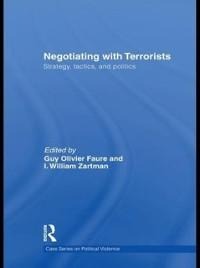
This edited volume addresses the important issue of negotiating with terrorists, and offers recommendations for best practice and processes. Hostage negotiation is the process of trying to align two often completely polarised parties. Authorities view hostage taking as unacceptable demands made by unacceptable means. However terrorists view their actions as completely justified, even on moral and religious grounds. If they are to try and reconcile these two sides, it is essential for hostage negotiators to understand terrorist culture, the hostage takers' profiles, their personality, their view of the world and also the authorities, their values and their framing of the problem raised by the taking of hostages. Although not advocating negotiating with terrorists, the volume seeks to analyse when, why, and how it is done. Part I deals with the theory and quantifiable data produced from analysis of hostage situations, while Part II explores several high profile case studies and the lessons that can be learnt from them. This volume will be of great interest to students of terrorism studies, conflict management, negotiation, security studies and IR in general. I William Zartman is the Jacob Blaustein Distinguished Professor Emeritus of International Organization and Conflict Resolution and former Director of the Conflict Management and African Studies Programs, at the Paul H. Nitze School of Advanced International Studies, Johns Hopkins University, Washington, DC. He is a member of the Steering Committee of the Processes of International Negotiation (PIN) Program at the International Institute of Applied Systems Analysis (IIASA) in Laxenburg, Austria. He is author/editor of over 20 books on negotiation, conflict and mediation. Guy Olivier Faure is Professor of Sociology at the Sorbonne University, Paris I, and a member of the Steering Committee of the Processes of International Negotiation (PIN) Program at the International Institute of Applied Systems Analysis (IIASA) in Laxenburg, Austria. He has served as an advisor to French government on hostage negotiations.
Guy Olivier Faure is Professor of Sociology at the Sorbonne University, Paris V, and a member of the Steering Committee of the Processes of International Negotiation (PIN) Program at the International Institute of Applied Systems Analysis (IIASA) in Laxenburg, Austria. He has served as an advisor on hostage negotiations. He has authored and co-authored fifteen books on negotiation and conflict resolution. His works have been translated into twelve languages. I. William Zartman is the Jacob Blaustein Distinguished Professor Emeritus of International Organization and Conflict Resolution and former Director of the Conflict Management and African Studies Programs, at the Paul H. Nitze School of Advanced International Studies, Johns Hopkins University, Washington, DC. He is a member of the Steering Committee of the Processes of International Negotiation (PIN) Program at the International Institute of Applied Systems Analysis (IIASA) in Laxenburg, Austria. He is author or editor of over twenty books on negotiation, conflict, and mediation.
Introduction GO Faure and I. William Zartman Part 1: How to Negotiate: Kidnapping the Kidnappers Introductionto Part 1 1. Guidelines for Negotiators with Terrorists Laurent Combalbert 2. Quantitative and Qualitative Aspects of Kidnapping and Hostage Negotiation Alex Schmid and P. Flemming 3. Talking to the Devil David Pinder Part 2: Practical/Tactical: Freeing the Hostages Introduction to Part 2 4. Terrorist Negotiating Strategy in Lebanon Karen Feste 5. Negotiating in Beslan and Beyond Adam Dolnik 6. Negotiating Visible and Hidden Agendas Victor Kremenyuk 7. Negotiating The Grand Swap in Khandahar P. Sahadevan Part 3: Conclusions 8. Lessons for Practice GO Faure and I. William Zartman. Bibliography
Dieses eBook wird im PDF-Format geliefert und ist mit einem Adobe Kopierschutz (DRM) versehen. Sie können dieses eBook mit allen Geräten lesen, die das PDF-Format und den Adobe Kopierschutz (DRM) unterstützen.
Zum Beispiel mit den folgenden Geräten:
• tolino Reader
Laden Sie das eBook direkt über den Reader-Shop auf dem tolino herunter oder übertragen Sie das eBook auf Ihren tolino mit einer kostenlosen Software wie beispielsweise Adobe Digital Editions.
• Sony Reader & andere eBook Reader
Laden Sie das eBook direkt über den Reader-Shop herunter oder übertragen Sie das eBook mit der kostenlosen Software Sony READER FOR PC/Mac oder Adobe Digital Editions auf ein Standard-Lesegeräte mit epub- und Adobe DRM-Unterstützung.
• Tablets & Smartphones
Möchten Sie dieses eBook auf Ihrem Smartphone oder Tablet lesen, finden Sie hier unsere kostenlose Lese-App für iPhone/iPad und Android Smartphone/Tablets.
• PC & Mac
Lesen Sie das eBook direkt nach dem Herunterladen mit einer kostenlosen Lesesoftware, beispielsweise Adobe Digital Editions, Sony READER FOR PC/Mac oder direkt über Ihre eBook-Bibliothek in Ihrem Konto unter „Meine eBooks“ - „online lesen“.
Schalten Sie das eBook mit Ihrer persönlichen Adobe ID auf bis zu sechs Geräten gleichzeitig frei.
Bitte beachten Sie, dass die Kindle-Geräte das Format nicht unterstützen und dieses eBook somit nicht auf Kindle-Geräten lesbar ist.