Stöbern
genialokal zum Startbildschirm hinzufügen
Installieren Sie die genialokal App auf Ihrem Startbildschirm für einen schnellen Zugriff und eine komfortable Nutzung.
Installieren Sie die genialokal App auf Ihrem Startbildschirm für einen schnellen Zugriff und eine komfortable Nutzung.
Tippen Sie einfach auf Teilen:
 Und dann auf "Zum Home-Bildschirm [+]".
Ihr gewünschter Artikel ist in 0 Buchhandlungen vorrätig - wählen Sie hier eine Buchhandlung in Ihrer Nähe aus:

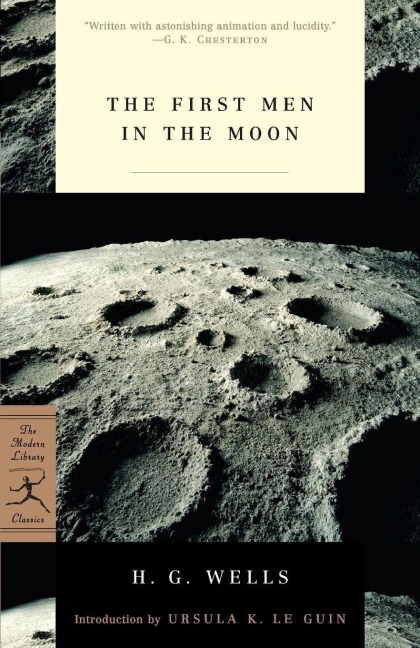
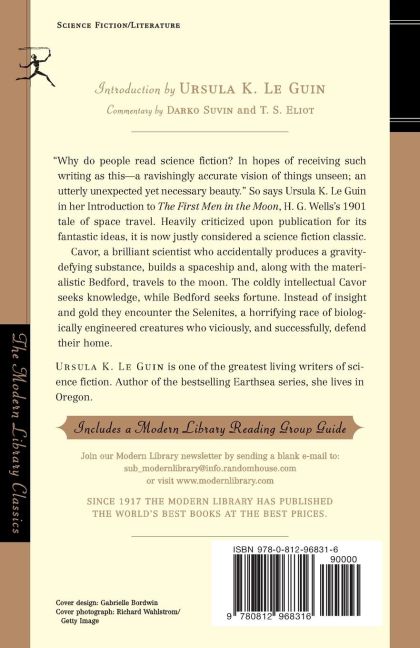

"Why do people read science fiction? In hopes of receiving such writing as this—a ravishingly accurate vision of things unseen; an utterly unexpected yet necessary beauty.” So says Ursula K. Le Guin in her Introduction to The First Men in the Moon, H. G. Wells's 1901 tale of space travel. Heavily criticized upon publication for its fantastic ideas, it is now justly considered a science fiction classic. Cavor, a brilliant scientist who accidentally produces a gravity-defying substance, builds a spaceship and, along with the materialistic Bedford, travels to the moon. The coldly intellectual Cavor seeks knowledge, while Bedford seeks fortune. Instead of insight and gold they encounter the Selenites, a horrifying race of biologically engineered creatures who viciously, and successfully, defend their home.
Herbert George Wells was an influential English writer, best known for his works in science fiction, though his prolific output spanned various genres, including history, social commentary, politics, and autobiography. Born on September 21, 1866, in Bromley, London, Wells attended the Normal School of Science in London, where he studied biology under Thomas Henry Huxley. Wells initially worked as a teacher and journalist before turning to writing full time. Over his career, he penned more than fifty novels, along with numerous short stories and non-fiction works. His early works, such as "The Time Machine,The War of the Worlds," and "The Invisible Man," helped establish him as one of the pioneers of modern science fiction. He also explored themes of social justice, the possibilities of science and technology, and the complexities of human nature in works like "The History of Mr. Polly" and "The Shape of Things to Come." Throughout his life, Wells engaged in political and philosophical discourse, influenced by thinkers like Mark Twain and Plato. He died on August 13, 1946, in London, leaving behind a legacy that shaped the development of speculative fiction and continued to inspire future generations of writers and thinkers.