Und dann auf "Zum Home-Bildschirm [+]".

Stöbern
genialokal zum Startbildschirm hinzufügen
Installieren Sie die genialokal App auf Ihrem Startbildschirm für einen schnellen Zugriff und eine komfortable Nutzung.
Installieren Sie die genialokal App auf Ihrem Startbildschirm für einen schnellen Zugriff und eine komfortable Nutzung.

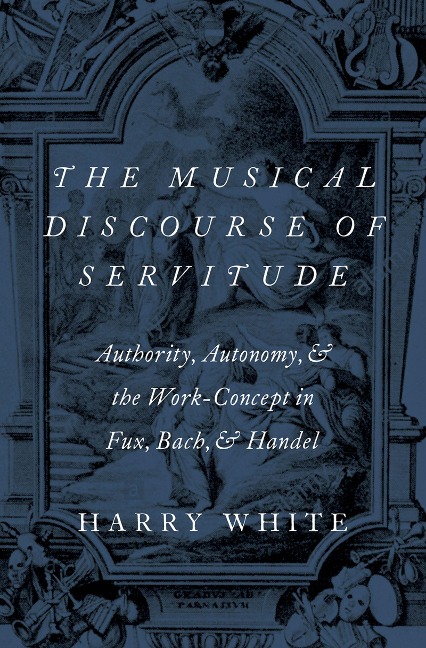
Examining, for the first time, the compositions of Johann Joseph Fux in relation to his contemporaries Bach and Handel, The Musical Discourse of Servitude presents a new theory of the late baroque musical imagination. Author Harry White contrasts musical "servility" and "freedom" in his analysis, with Fux tied to the prevailing servitude of the day's musical imagination, particularly the hegemonic flowering of North Italian partimento method across Europe. In contrast, both Bach and Handel represented an autonomy of musical discourse, with Bach exhausting generic models in the mass and Handel inventing a new genre in the oratorio. A potent critique of Lydia Goehr's seminal The Imaginary Museum of Musical Works, The Musical Discourse of Servitude draws on Goehr's formulation of the "work-concept" as an imaginary construct which, according to Goehr, is an invention of nineteenth-century reception history. White locates this concept as a defining agent of automony in Bach's late works, and contextualized the "work-concept" itself by exploring rival concepts of political, religious, and musical authority which define the European musical imagination in the first half of the eighteenth century. A major revisionist statement about the musical imagination in Western art music, The Musical Discourse of Servitude will be of interest to scholars of the Baroque, particularly of Bach and Handel.
Harry White is Professor of Music at University College Dublin and a Fellow of the Royal Irish Academy of Music. He is widely acclaimed as the foremost cultural historian of music in Ireland.
Preface & Acknowledgements
Introduction: Servitude, Autonomy and the European Musical ImaginationChapter 1: The Minstrelsy of Heaven: Servility, Freedom and the Dynastic Style Chapter 2: The Virtuoso of Submissiveness: Fux and the Concept of AuthorityChapter 3: The Steward of Unmeaning Art: Bach and the Musical SubjectChapter 4: 'A Darkness Which Might be Felt': Handel, Fux and the OratorioChapter 5: Steps to Parnassus: Fux, Caldara and BachConclusion: Well, well, well: Fux, Bach and Handel
Select BibliographySelect Index