
Stöbern
genialokal zum Startbildschirm hinzufügen
Installieren Sie die genialokal App auf Ihrem Startbildschirm für einen schnellen Zugriff und eine komfortable Nutzung.
Installieren Sie die genialokal App auf Ihrem Startbildschirm für einen schnellen Zugriff und eine komfortable Nutzung.
Tippen Sie einfach auf Teilen:
 Und dann auf "Zum Home-Bildschirm [+]".
Bei genialokal.de kaufen Sie online bei Ihrer lokalen, inhabergeführten Buchhandlung!
Ihr gewünschter Artikel ist in 0 Buchhandlungen vorrätig - wählen Sie hier eine Buchhandlung in Ihrer Nähe aus:

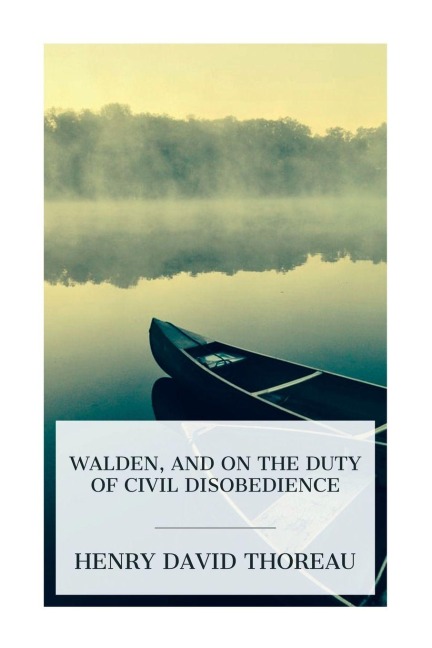
In "Walden, and On The Duty of Civil Disobedience," Henry David Thoreau presents a profound exploration of individuality, simplicity, and the ethical implications of governance. The first section, "Walden," is a reflection on simple living in natural surroundings, where Thoreau details his experiment in self-sufficiency while residing in a cabin near Walden Pond. Through vivid descriptions and a lyrical prose style, he evokes a deep connection to nature and a critique of consumerism, embodying the transcendentalist movement's call for spiritual awakening and personal introspection. The second essay, "On The Duty of Civil Disobedience," articulates Thoreau's belief that individuals should prioritize their conscience over governmental laws, advocating for active resistance against injustice. This dual work serves as a cornerstone for both environmental literature and social activism, intertwining philosophical musings with practical exhortations. Thoreau, a pivotal figure in American transcendentalism, was profoundly influenced by his observations of society, nature, and moral integrity. His disdain for material excess and his commitment to social justice stemmed from various experiences, including his opposition to slavery and the Mexican-American War. These themes deeply permeate both essays, showcasing his conviction that introspection and ethical action are integral to personal and societal well-being. Readers seeking an insightful examination of the human condition and the interplay between person and nature will find "Walden, and On The Duty of Civil Disobedience" essential. Thoreau's reflections encourage a radical rethinking of lifestyle choices and civic responsibility, making this work not only a historical document but also a call to action for contemporary and future generations.