Und dann auf "Zum Home-Bildschirm [+]".

Stöbern
genialokal zum Startbildschirm hinzufügen
Installieren Sie die genialokal App auf Ihrem Startbildschirm für einen schnellen Zugriff und eine komfortable Nutzung.
Installieren Sie die genialokal App auf Ihrem Startbildschirm für einen schnellen Zugriff und eine komfortable Nutzung.
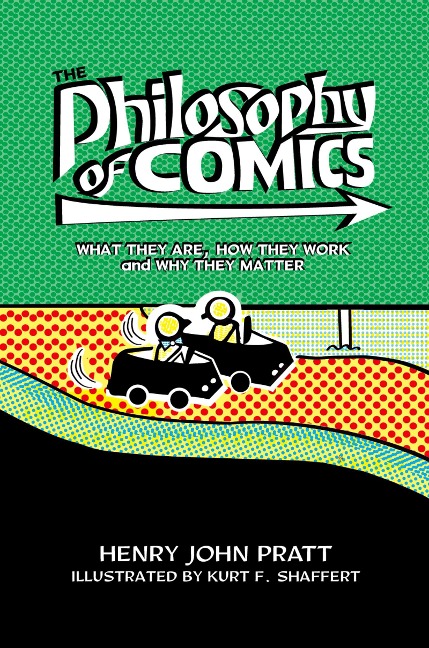
How do comics produce such a striking range of vibrant stories, representations, and expressions of the sensibilities of their creators? Henry John Pratt's The Philosophy of Comics provides a ground-breaking, illustrated introduction to the study of comics and graphic novels, advancing the field of comics studies by attending to some of its most notable problems. Pratt examines the history of comics, the contrast between comics and cartoons, the tenuous place of comics in the art world, and what it is to be a comic in the first place. Comics work through extensive modes of representation and expression, including through film, non-graphic literature, and theatre. Pratt examines questions such as, why and how are so many films based on comics? Can there be a perfect adaptation from one to the other? Are some comics better than others? Why is reading comics not regarded in the same light as reading literary books? Pratt urges us to look closely at the most significant problems and puzzles that comics provoke, having to do with the very nature of comics, what composes them, how comics are related to other art forms, how they function to manage space and time in storytelling, and why they've been neglected in academic circles despite being a culturally significant art form for decades. With illustrations by Kurt F. Shaffert, The Philosophy of Comics ultimately tries to explain the true underlying value of comics as an art form.
Henry John Pratt is Associate Professor of Philosophy at Marist College. He received his Ph.D. in Philosophy from The Ohio State University. His published work focuses on popular art forms such as comics and film. Kurt F. Shaffert is an American cartoonist and creator of the comic strip Fergie. Known as the "Cartooning Chaplain," Shaffert is the first Will Eisner Fellow in Applied Cartooning with the Center for Cartoon Studies and is the co-founder of Pearl Press.
PrefaceAcknowledgementsChapter 1: The Category of ComicsChapter 2: Formal Definitions of ComicsChapter 3: The Media of ComicsChapter 4: Narrative, Time, and SpaceChapter 5: AdaptationChapter 6: Evaluating ComicsChapter 7: Social and Moral ProblemsAfterwordReferences
Dieses eBook wird im PDF-Format geliefert und ist mit einem Adobe Kopierschutz (DRM) versehen. Sie können dieses eBook mit allen Geräten lesen, die das PDF-Format und den Adobe Kopierschutz (DRM) unterstützen.
Zum Beispiel mit den folgenden Geräten:
• tolino Reader
Laden Sie das eBook direkt über den Reader-Shop auf dem tolino herunter oder übertragen Sie das eBook auf Ihren tolino mit einer kostenlosen Software wie beispielsweise Adobe Digital Editions.
• Sony Reader & andere eBook Reader
Laden Sie das eBook direkt über den Reader-Shop herunter oder übertragen Sie das eBook mit der kostenlosen Software Sony READER FOR PC/Mac oder Adobe Digital Editions auf ein Standard-Lesegeräte mit epub- und Adobe DRM-Unterstützung.
• Tablets & Smartphones
Möchten Sie dieses eBook auf Ihrem Smartphone oder Tablet lesen, finden Sie hier unsere kostenlose Lese-App für iPhone/iPad und Android Smartphone/Tablets.
• PC & Mac
Lesen Sie das eBook direkt nach dem Herunterladen mit einer kostenlosen Lesesoftware, beispielsweise Adobe Digital Editions, Sony READER FOR PC/Mac oder direkt über Ihre eBook-Bibliothek in Ihrem Konto unter „Meine eBooks“ - „online lesen“.
Schalten Sie das eBook mit Ihrer persönlichen Adobe ID auf bis zu sechs Geräten gleichzeitig frei.
Bitte beachten Sie, dass die Kindle-Geräte das Format nicht unterstützen und dieses eBook somit nicht auf Kindle-Geräten lesbar ist.