Und dann auf "Zum Home-Bildschirm [+]".

Stöbern
genialokal zum Startbildschirm hinzufügen
Installieren Sie die genialokal App auf Ihrem Startbildschirm für einen schnellen Zugriff und eine komfortable Nutzung.
Installieren Sie die genialokal App auf Ihrem Startbildschirm für einen schnellen Zugriff und eine komfortable Nutzung.
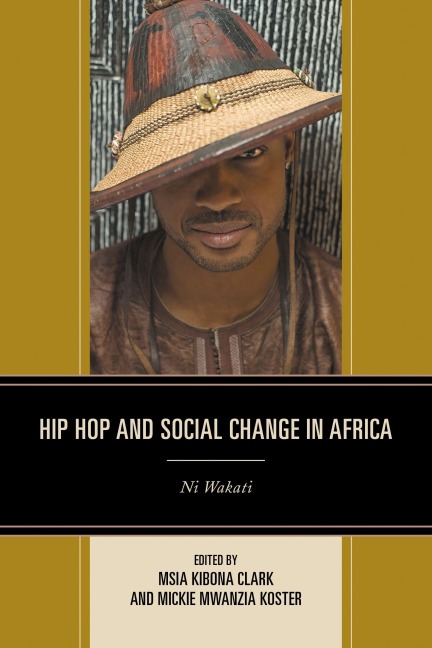
This book examines social change in Africa through the lens of hip hop music and culture. Artists engage their African communities in a variety of ways that confront established social structures, using coded language and symbols to inform, question, and challenge. Through lyrical expression, dance, and graffiti, hip hop is used to challenge social inequality and to push for social change. The study looks across Africa and explores how hip hop is being used in different places, spaces, and moments to foster change. In this edited work, authors from a wide range of fields, including history, sociology, African and African American studies, and political science explore the transformative impact that hip hop has had on African youth, who have in turn emerged to push for social change on the continent. The powerful moment in which those that want change decide to consciously and collectively take a stand is rooted in an awareness that has much to do with time. Therefore, the book centers on African hip hop around the context of "it's time" for change, Ni Wakati.
Msia Kibona Clark is assistant professor of Pan African studies at California State University.
Mickie Mwanzia Koster is assistant professor of history at the University of Texas at Tyler.
1. Introduction by Msia Kibona Clark and Mickie Mwanzia Koster
Part I: "Social Ills": Coming from Behind the Microphone to Effect Reform in Africa
2. Hip-Hop Halisi: Continuities of Heroism on the African Political Landscape, Caroline Mose
3. Building Our Nation: Sénégalese Hip Hop Artists as Agents of Social and Political Change, Sheba Lo
4. Speaking Truth to Power: Hip-Hop and the African Awakening, Amentahru Wahlrab
Essay 1 English. "Malian Hip Hop: Social Engagement through Music," Amkoullel L'enfant Peulh
Part II: "The Dusty Foot Philosopher": Hip Hop Voices on Social Change in Africa
Essay 2. "How Hip Hop Impacts Social Change in Africa," Malle Marxist
5. Redefining the Struggle: Remembering the Mau Mau through Hip-Hop Music, Mich Nyawalo
6. Khoi Hop: Hip Hop, Youth Activism and the Dilemma of Coloured Identity in South Africa, Shaheen Ariefdien and Rico Chapman
7. Beyond "Y'en a Marre": Pikine's Hip Hop Youth Say "Enough is Enough" and Pave the Way for Continuous Social Change, Asl
Dieses eBook wird im PDF-Format geliefert und ist mit einem Adobe Kopierschutz (DRM) versehen. Sie können dieses eBook mit allen Geräten lesen, die das PDF-Format und den Adobe Kopierschutz (DRM) unterstützen.
Zum Beispiel mit den folgenden Geräten:
• tolino Reader
Laden Sie das eBook direkt über den Reader-Shop auf dem tolino herunter oder übertragen Sie das eBook auf Ihren tolino mit einer kostenlosen Software wie beispielsweise Adobe Digital Editions.
• Sony Reader & andere eBook Reader
Laden Sie das eBook direkt über den Reader-Shop herunter oder übertragen Sie das eBook mit der kostenlosen Software Sony READER FOR PC/Mac oder Adobe Digital Editions auf ein Standard-Lesegeräte mit epub- und Adobe DRM-Unterstützung.
• Tablets & Smartphones
Möchten Sie dieses eBook auf Ihrem Smartphone oder Tablet lesen, finden Sie hier unsere kostenlose Lese-App für iPhone/iPad und Android Smartphone/Tablets.
• PC & Mac
Lesen Sie das eBook direkt nach dem Herunterladen mit einer kostenlosen Lesesoftware, beispielsweise Adobe Digital Editions, Sony READER FOR PC/Mac oder direkt über Ihre eBook-Bibliothek in Ihrem Konto unter „Meine eBooks“ - „online lesen“.
Schalten Sie das eBook mit Ihrer persönlichen Adobe ID auf bis zu sechs Geräten gleichzeitig frei.
Bitte beachten Sie, dass die Kindle-Geräte das Format nicht unterstützen und dieses eBook somit nicht auf Kindle-Geräten lesbar ist.