Stöbern
genialokal zum Startbildschirm hinzufügen
Installieren Sie die genialokal App auf Ihrem Startbildschirm für einen schnellen Zugriff und eine komfortable Nutzung.
Installieren Sie die genialokal App auf Ihrem Startbildschirm für einen schnellen Zugriff und eine komfortable Nutzung.
Tippen Sie einfach auf Teilen:
 Und dann auf "Zum Home-Bildschirm [+]".

One of The New York Times 100 Notable Books of 2023 • A Washington Post Best Book of the Year 2023 • One of Atlantic's Best Books of 2023 • One of Time's 100 Must-Read Books of 2023 • One of New Statesman's 2023 Books of the Year • One of Electric Literature's Best Poetry Collections of 2023
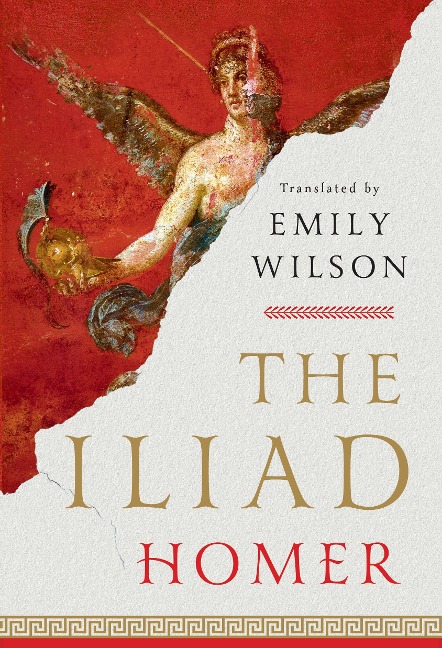
The greatest literary landmark of antiquity masterfully rendered by the most celebrated translator of our time. When Emily Wilson's translation of The Odyssey appeared in 2017revealing the ancient poem in a contemporary idiom that was fresh, unpretentious and lean (Madeline Miller, Washington Post)critics lauded it as a revelation (Susan Chira, New York Times) and a cultural landmark (Charlotte Higgins, Guardian) that would forever change how Homer is read in English. Now Wilson has returned with an equally revelatory translation of Homer's other great epicthe most revered war poem of all time. The Iliad roars with the clamor of arms, the bellowing boasts of victors, the fury and grief of loss, and the anguished cries of dying men. It sings, too, of the sublime magnitude of the worldthe fierce beauty of nature and the gods' grand schemes beyond the ken of mortals. In Wilson's hands, this thrilling, magical, and often horrifying tale now gallops at a pace befitting its legendary battle scenes, in crisp but resonant language that evokes the poem's deep pathos and reveals palpably real, even complicated, charactersboth human and divine. The culmination of a decade of intense engagement with antiquity's most surpassingly beautiful and emotionally complex poetry, Wilson's Iliad now gives us a complete Homer for our generation.
HOMER's identity is shrouded in mystery. Most scholars agree that an epic poet named Homer likely existed anywhere between 900 to 700 B.C.E. Legend, originating in antiquity, says that Homer was a blind bard from Ionia, but no account of Homer's life can be verified. The Iliad and The Odyssey, the two epic poems attributed to Homer, which take place during the Trojan War and its aftermath, were derived from the oral storytelling tradition. Their method of compositioneither by a single author or several bards working in tandemremains unknown. The Homeric Poems are among the most significant narratives in the Greek and Western literary canon.