
Stöbern
genialokal zum Startbildschirm hinzufügen
Installieren Sie die genialokal App auf Ihrem Startbildschirm für einen schnellen Zugriff und eine komfortable Nutzung.
Installieren Sie die genialokal App auf Ihrem Startbildschirm für einen schnellen Zugriff und eine komfortable Nutzung.
Tippen Sie einfach auf Teilen:
 Und dann auf "Zum Home-Bildschirm [+]".
Bei genialokal.de kaufen Sie online bei Ihrer lokalen, inhabergeführten Buchhandlung!
Ihr gewünschter Artikel ist in 0 Buchhandlungen vorrätig - wählen Sie hier eine Buchhandlung in Ihrer Nähe aus:

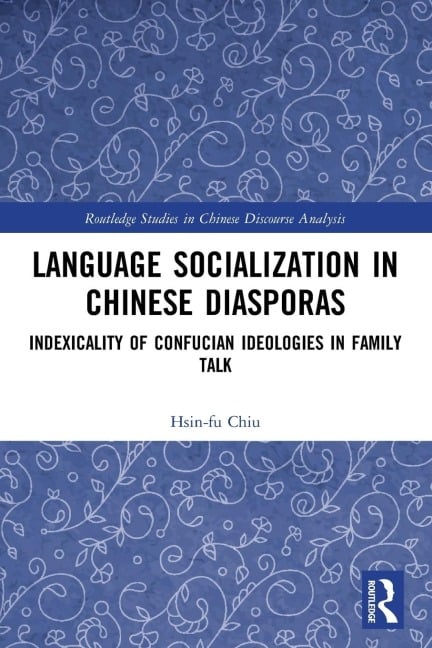

This book provides ethnographically informed analyses of indigenous kin interactions in three Chinese diasporic households in LA. Drawing upon the approach that regards talk as a form of social practice, it demonstrates different ways in which relationships are indigenously orchestrated by Chinese parents and their American-born children.
Hsin-fu Chiu is Associate Professor of Chinese at the California State University, Los Angeles. Trained at the University of California, Los Angeles, Dr. Chiu is a conversation/discourse analyst, interactional sociolinguist, and linguistic anthropologist. For him, human sociality and cognitive processes do not exist within the individual, but rather across symbolically mediated interactions among members of a social group. To document trajectories of human development, Dr. Chiu employs a range of qualitative methods (including participation observation, sociolinguistic interviews, video-recording, and analysis of textual documents) and conducts his research on language socialization in Chinese diasporas and second/foreign language acquisition of Chinese in the classroom and beyond.
Figures Tables Illustrations Excerpts Preface Acknowledgements I. Theoretical Standpoint, Methodology, and Ethnography of Data Corpus 1. Theoretical standpoints 1.1 Overview of the book 1.2 Bourdieusian approach second language acquisition in the transnational context 1.3 Language socialization as a conceptual paradigm 1.4 Participation framework 1.5 Conversation analysis as an analytic apparatus 1.6 Outline of the book 2. Ethnography of participating families 2.1 Collection of digital data 2.2 Ethnography of participating families 2.2.1 The Culver City Family (A) 2.2.2 The Pasadena Family (B) 2.2.3 The Diamond Bar Family (C) 2.3 Transcription of digital data 2.4 Points of departure for analyses II. Becoming a Member of Chinese Diasporas in the U.S. 3. Power Asymmetry as Process of Socialization to Filial Piety and Obedience 3.1 Introduction 3.2 Interdisciplinary approach to power in interaction 3.3 Co-construction of authoritarian practices 3.3.1 Actions of deference by Children 3.3.2 Mitigated moves of resistance against privilege denials 3.3.3 Compliance adjacent to effective power 3.3.4 Conditional threats as aggravated words of control 3.4 Co-construction of authoritative practices 3.4.1 Actions that threaten parental esteem 3.4.2 Recycles of commands 3.4.3 Shepherding as aggravated embodied control 3.5 Concluding remarks 4. Epistemic Asymmetry as Process of Socialization to Humbleness and Shame 4.1 Introduction 4.2 Membership categorization, positioning, and socialization to identity 4.2.1 From negativity to interdependent self 4.3.1 Positive assessable values downplayed 4.3.2 Negative assessable as a joint focus of attention 4.3.3 Epistemic asymmetry underscored over actions of contrast 4.4 Socialization techniques in the shame-socialized culture 4.5 Socialization to individualistic self-esteem 4.6 Concluding remarks III. Indexical Ideologies of Confucian Thoughts 5. Interpersonal Selflessness as the Basis for Harmonious Kin Relations 5.1 An issue with competing opinions 5.2 Socialization to the interpersonal self 5.3 Co-constriction of harmonious kin relations 5.3.1 Embodied displays of adoration in parent-child relations 5.3.2 Embodied displays of cohesion among siblings 5.4 Harmony kin relations in disguise 5.5 Concluding remarks 6. Conclusion and Discussion 6.1 A recap of the major findings 6.2 Indexical orders of Confucian ideologies 6.3 Implications for heritage-language socialization and instruction Bibliography Index