
Stöbern
genialokal zum Startbildschirm hinzufügen
Installieren Sie die genialokal App auf Ihrem Startbildschirm für einen schnellen Zugriff und eine komfortable Nutzung.
Installieren Sie die genialokal App auf Ihrem Startbildschirm für einen schnellen Zugriff und eine komfortable Nutzung.
Tippen Sie einfach auf Teilen:
 Und dann auf "Zum Home-Bildschirm [+]".
Bei genialokal.de kaufen Sie online bei Ihrer lokalen, inhabergeführten Buchhandlung!
Ihr gewünschter Artikel ist in 0 Buchhandlungen vorrätig - wählen Sie hier eine Buchhandlung in Ihrer Nähe aus:

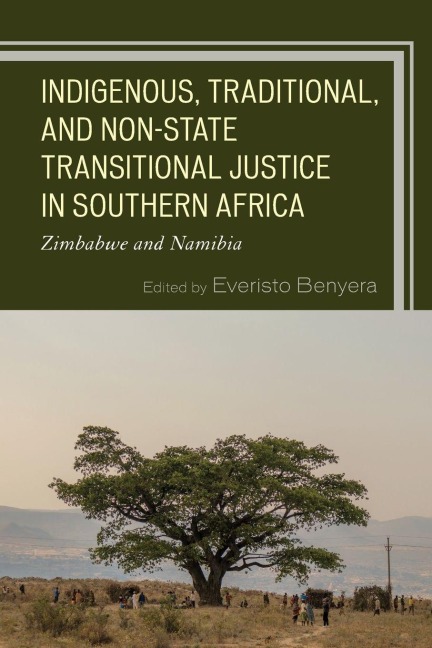
The book investigates the use of bottom-up, community based healing and peacebuilding approaches, focusing on their strengths and suggesting how they can be enhanced. The main contribution of the book is an ethnographic investigation of how post-conflict communities in parts of Southern Africa use their local resources to forge a future after mass violence. The way in which Namibia's Herero and Zimbabwe's Ndebele dealt with their respective genocides is a major contribution of the book.
The focus of the book is on two Southern African countries that never experienced institutionalized transitional justice as dispensed in post-apartheid South Africa via the famed Truth and Reconciliation Commission. We answer the question: how have communities healed and reconciled after the end of protracted violence and gross human rights abuses in Zimbabwe and Namibia? We depart from statetist, top-down, one-size fits all approaches to transitional justice and investigate bottom-up approaches.
Everisto Benyera is associate professor of African politics at the University of South Africa in Pretoria.
Chapter 1: Transitology, Transitional Justice and Transformative Justice Everisto Benyera Chapter 2: A Dozen Transitional Justice Realities and Some Preliminary Problematisation Everisto Benyera Chapter 3: The Case for Indigenous, Traditional and Non-State Transitional Justice Everisto Benyera Chapter 4: Construing Transitology in the Context(s) of Democratization, Transitional Justice and Decolonization in Africa: A Legal Anthropology Perspective Tapiwa Warikandwa & Artwell Nhemachena Chapter 5: Operation Murambatsvina, Transitional Justice & Discursive Representation in Zimbabwe Umali Saidi Chapter 6: 'Healing the Dead' in Matabeleland, Zimbabwe: Combining Tradition with Science to Restore Personhood after Massacres Shari Eppel Chapter 7: The Aftermath of Gukurahundi: Dealing with Wounds of the Genocide through Non-State Justice Processes in Bubi (Inyathi) and Nkayi Districts, Matabeleland North Province, Zimbabwe Ruth Murambadoro and Chenai Matshaka Chapter 8: Grassroots Mechanisms for Justice, Peace-building and Social Cohesion in Zimbabwe's 'New' Farm Communities Tom Tom and Clement Chipenda Chapter 9: Young women in peacebuilding and development in Zimbabwe: The case of Zimbabwe Young Women's Network for Peacebuilding in Mutoko Patience Thauzeni and Torque Mude Chapter 10: Stains on the Wall: Struggle to survive post genocide violence by Nama- Herero communities in Namibia Tafirenyika Madziyauswa Chapter 11: Uncharted Waters: Reparations through Indigenous Forms of Transitional Justice for Namibian Victims of a colonial Genocide Christian Harris