Stöbern
genialokal zum Startbildschirm hinzufügen
Installieren Sie die genialokal App auf Ihrem Startbildschirm für einen schnellen Zugriff und eine komfortable Nutzung.
Installieren Sie die genialokal App auf Ihrem Startbildschirm für einen schnellen Zugriff und eine komfortable Nutzung.
Tippen Sie einfach auf Teilen:
 Und dann auf "Zum Home-Bildschirm [+]".
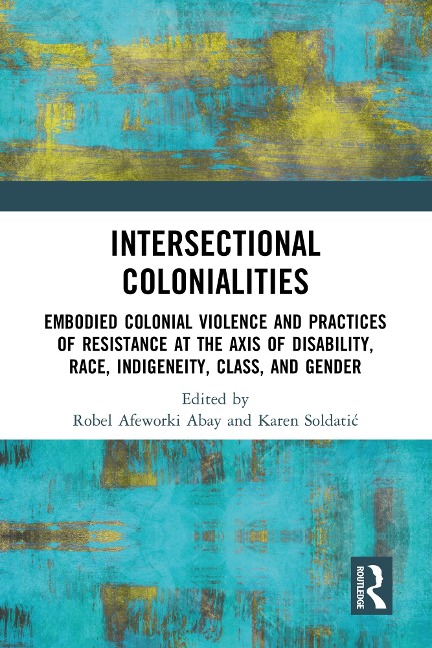
This book provides a rich synthesis of empirical research and theoretical engagements with questions of disability across different practices of colonialism as historically defined - post/de/anti/settler colonialism. It synthesises, critiques, and expands the boundaries of existing disability research which has been undertaken within different colonial contexts through the rich examination of recent empirical work mapping across disability and its intersectional colonialities. Filling an existing gap within the international literature through embedding the importance of grounding these within scholarly debates of colonialism, it empirically demonstrates the significance of disability for the broader scholarly fields of postcolonial, decolonial, and intersectional theories. It will be of interest to all scholars and students of disability studies, sociology, critical studies, sociology of race and ethic relations, intersectionality, postcolonial and decolonial studies, and human geography.
Robel Afeworki Abay is a sociologist and a guest professor of participatory approaches in social and health sciences at Alice Salomon University of Applied Sciences Berlin. Karen Soldatic is a Canadian excellence research chair, Health Equity and Community Wellbeing, Toronto Metropolitan University and Whitlam Fellow at Western Sydney University.
0.The relevance of analysing embodied violence and practices of resistance, contestation, and mobilisation at the axis of disability, race, indigeneity, class, and gender. 1.Decolonising disability studies: Conceptualising disability justice from an African community ideal. 2.Racialized and Gendered Ableism: The Epistemic Erasure and Epistemic Labour of Disability in Transnational Contexts. 3.Trans-Latinidades, disability and decoloniality: Diasporic and Global South LatDisCrit lessons from Central America. 4.Degeneracy & Replacement: Reproducing white settler anxieties in the 21st century. 5.Disabled Romani people in Germany: Learning from the notion of indigeneity in disability studies outside of Settler-Colonial states. 6.Africa and the epistemic normativity of disability. 7.Impossible working lives and disabled bodies during racialised capitalism: Perspectives from Germany and the UK. 8.Stigma as a structure of disablement: Towards collective postcolonial justice. 9.Coloniality, disability, and the family in Kurdistan-Iraq. 10.Raising children with autism in a patriarchal society of a new liberal state: Experiences of mothers of autistic children in Bangladesh. 11.Disability discourse and Muslim student organisations in Malang, Indonesia. 12.Migration studies and disability studies: Colonial engagements past, present and future. 13.Colonial and ableist constructions of 'vulnerability' shaping the lives of disabled asylum seekers and refugees in the UK and Germany. 14.Towards a decolonial approach to disability as knowledge and praxis: Unsettling the 'colonial' and re-imagining research as spaces of struggles. 15.Reflecting on the How Questions: Using intersectional methods for policy changes. 16.Cultural humility in participatory research: Debunking the myth of 'hard-to-reach' groups.
Dieses eBook wird im PDF-Format geliefert und ist mit einem Adobe Kopierschutz (DRM) versehen. Sie können dieses eBook mit allen Geräten lesen, die das PDF-Format und den Adobe Kopierschutz (DRM) unterstützen.
Zum Beispiel mit den folgenden Geräten:
• tolino Reader
Laden Sie das eBook direkt über den Reader-Shop auf dem tolino herunter oder übertragen Sie das eBook auf Ihren tolino mit einer kostenlosen Software wie beispielsweise Adobe Digital Editions.
• Sony Reader & andere eBook Reader
Laden Sie das eBook direkt über den Reader-Shop herunter oder übertragen Sie das eBook mit der kostenlosen Software Sony READER FOR PC/Mac oder Adobe Digital Editions auf ein Standard-Lesegeräte mit epub- und Adobe DRM-Unterstützung.
• Tablets & Smartphones
Möchten Sie dieses eBook auf Ihrem Smartphone oder Tablet lesen, finden Sie hier unsere kostenlose Lese-App für iPhone/iPad und Android Smartphone/Tablets.
• PC & Mac
Lesen Sie das eBook direkt nach dem Herunterladen mit einer kostenlosen Lesesoftware, beispielsweise Adobe Digital Editions, Sony READER FOR PC/Mac oder direkt über Ihre eBook-Bibliothek in Ihrem Konto unter „Meine eBooks“ - „online lesen“.
Schalten Sie das eBook mit Ihrer persönlichen Adobe ID auf bis zu sechs Geräten gleichzeitig frei.
Bitte beachten Sie, dass die Kindle-Geräte das Format nicht unterstützen und dieses eBook somit nicht auf Kindle-Geräten lesbar ist.