Und dann auf "Zum Home-Bildschirm [+]".

Stöbern
genialokal zum Startbildschirm hinzufügen
Installieren Sie die genialokal App auf Ihrem Startbildschirm für einen schnellen Zugriff und eine komfortable Nutzung.
Installieren Sie die genialokal App auf Ihrem Startbildschirm für einen schnellen Zugriff und eine komfortable Nutzung.
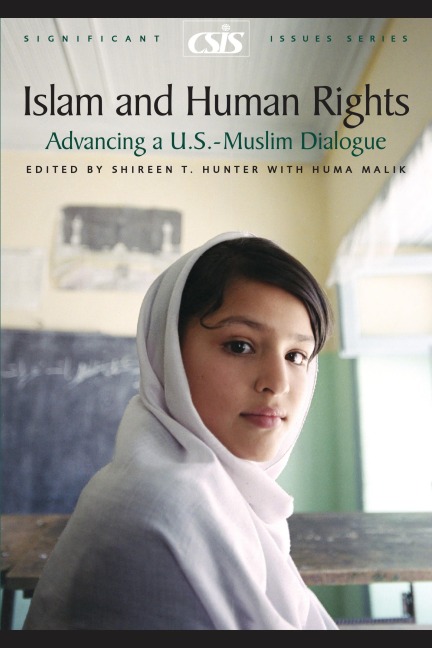
In the last few years, issues related to human rights, including encouraging the democratization of Muslim societies from the Middle East to Southeast Asia, have acquired great importance in shaping the character of U.S.-Muslim relations and U.S. policy toward Muslim countries. An important impetus behind this development were the tragic events of 9/11, which demonstrated the destructive potential of militant groups that use a distorted interpretation of Islam as justification for their actions. These events also led to a greater realization by the United States--and the West--that a lack of democracy and lack of respect for human rights have been contributory factors to the rise of militant Islam.
Consequently, in its approach toward the Muslim world, the United States has emphasized the themes of human rights and democracy. Within the Islamic world, too, both secular and moderate Islamists have begun focusing on issues related to human rights. Although many conservative Muslims believe that Islam is incompatible with Western notions of democracy and human rights, reformist Muslim thinkers and activists maintain that a proper reading of Islamic injunctions and the ethical values underpinning those injunctions shows there is no such incompatibility. Complicating the debate is the fact that many Muslims--secular as well as conservative and reformist--doubt the seriousness of the U.S. commitment to the cause of human rights and democracy in the Muslim world, believing that the United States applies human rights' standards selectively to suit its strategic and economic interests. Irrespective of the validity of these charges, they are part of the context of the U.S.-Muslim dialogue on human rights. And it is this complex dialogue that this volume seeks to advance.
Shireen T. Hunter is director of the Islam Program at CSIS. Huma Malik is deputy director of the Islam Program at CSIS.
Dieses eBook wird im PDF-Format geliefert und ist mit einem Adobe Kopierschutz (DRM) versehen. Sie können dieses eBook mit allen Geräten lesen, die das PDF-Format und den Adobe Kopierschutz (DRM) unterstützen.
Zum Beispiel mit den folgenden Geräten:
• tolino Reader
Laden Sie das eBook direkt über den Reader-Shop auf dem tolino herunter oder übertragen Sie das eBook auf Ihren tolino mit einer kostenlosen Software wie beispielsweise Adobe Digital Editions.
• Sony Reader & andere eBook Reader
Laden Sie das eBook direkt über den Reader-Shop herunter oder übertragen Sie das eBook mit der kostenlosen Software Sony READER FOR PC/Mac oder Adobe Digital Editions auf ein Standard-Lesegeräte mit epub- und Adobe DRM-Unterstützung.
• Tablets & Smartphones
Möchten Sie dieses eBook auf Ihrem Smartphone oder Tablet lesen, finden Sie hier unsere kostenlose Lese-App für iPhone/iPad und Android Smartphone/Tablets.
• PC & Mac
Lesen Sie das eBook direkt nach dem Herunterladen mit einer kostenlosen Lesesoftware, beispielsweise Adobe Digital Editions, Sony READER FOR PC/Mac oder direkt über Ihre eBook-Bibliothek in Ihrem Konto unter „Meine eBooks“ - „online lesen“.
Schalten Sie das eBook mit Ihrer persönlichen Adobe ID auf bis zu sechs Geräten gleichzeitig frei.
Bitte beachten Sie, dass die Kindle-Geräte das Format nicht unterstützen und dieses eBook somit nicht auf Kindle-Geräten lesbar ist.