Und dann auf "Zum Home-Bildschirm [+]".

Stöbern
genialokal zum Startbildschirm hinzufügen
Installieren Sie die genialokal App auf Ihrem Startbildschirm für einen schnellen Zugriff und eine komfortable Nutzung.
Installieren Sie die genialokal App auf Ihrem Startbildschirm für einen schnellen Zugriff und eine komfortable Nutzung.
Ihr gewünschter Artikel ist in 0 Buchhandlungen vorrätig - wählen Sie hier eine Buchhandlung in Ihrer Nähe aus:

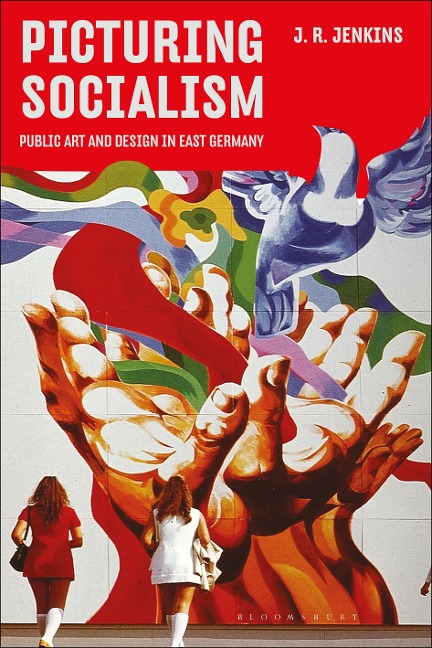
This vibrant history of the former German Democratic Republic's public art reveals a barely known but visually and theoretically rich cultural legacy. Picturing Socialism shows how works of art and design in the urban spaces of East Germany were the site of a sustained struggle between practitioners, critics and political leaders. This was not the oft-assumed conflict between artistic freedom and political dogma; at stake was the self-identity of the republic as socialist. Art and its relationship to architecture functioned as the testing ground for East Germany's relationship to socialist realism and modernism against the backdrop of Cold War competition from the neighbouring Federal Republic. Picturing Socialism makes a timely contribution to the recent groundswell of interest in the legacy of East Germany's art and architecture, illuminating and elucidating the public art which has been lost or remains under threat since unification in 1990.
J. R. Jenkins
List of Figures List of Plates Preface Acknowledgements Glossary and Abbreviations Introduction Part One: Reconstruction, Art and Ornament (1945 to 1963) 1. Modernism, Realism and Muralism - the Struggle for Art in Post-fascist Germany 2. The Synthesis of Art and Architecture During the Transition to Industrialized Building Part Two: Developing a Realist Modernism (1959 to 1973) 3. Reconceptualizing the Place of Art in the System-built Environment 4. New Socialist Landscapes and the Building of Halle-Neustadt 5. Innovations in Socialist Public Art in Halle-Neustadt Part Three: From the Monumental to the Unreal (1973-1990) 6. A Space of Pure Possibility: The X. Weltfestspiele and its Impact on Public Art 7. 'Ultimately, Ordinary People Want to Have a Bit of Kitsch': How Socialist Realism Looked Unreal Conclusion Select Bibliography List of Interviewees Index