Und dann auf "Zum Home-Bildschirm [+]".

Stöbern
genialokal zum Startbildschirm hinzufügen
Installieren Sie die genialokal App auf Ihrem Startbildschirm für einen schnellen Zugriff und eine komfortable Nutzung.
Installieren Sie die genialokal App auf Ihrem Startbildschirm für einen schnellen Zugriff und eine komfortable Nutzung.
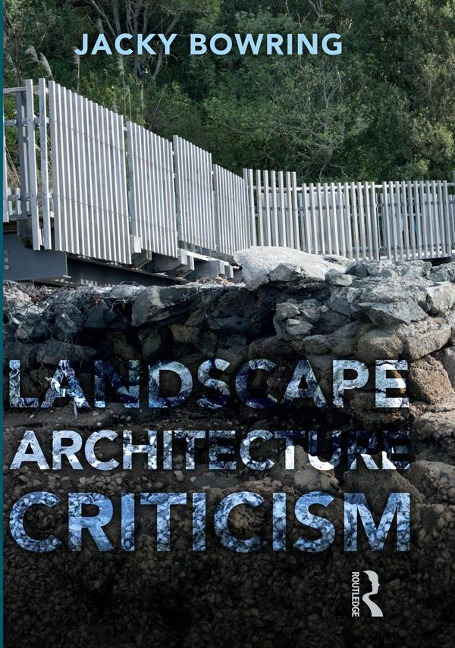
Landscape Architecture Criticism offers techniques, perspectives and theories which relate to landscape architecture, a field very different from the more well-known domains of art and architectural criticism. Throughout the book, Bowring delves into questions such as, how do we know if built or unbuilt works of landscape architecture are successful? What strategies are used to measure the success or failure, and by whom? Does design criticism only come in written form? It brings together diverse perspectives on criticism in landscape architecture, establishing a substantial point of reference for approaching design critique, exploring how criticism developed within the discipline. Beginning with an introductory overview to set the framework, the book then moves on to historical perspectives, the purpose of critique, theoretical positions ranging from aesthetics, to politics and experience, unbuilt projects, techniques, and communication. Written for professionals and academics, as well as for students and instructors in landscape architecture, it includes strategies, diagrams, matrices, and full colour illustrations to prompt discussion and provide a basis for exploring design critique.
Jacky Bowring is Professor of Landscape Architecture at Lincoln University, New Zealand. She is the author of A Field Guide to Melancholy (2008), Melancholy and the Landscape: Locating Sadness, Memory and Reflection in the Landscape (2016), and editor of Landscape Review, and explores ideas about landscape architecture through research, critique, and design, including a winning design in journal LA+'s international competition to design an island.
1 Introduction 2 History of landscape architectural criticism 3 Motives and methods for critique 4 Theoretical overview 5 Theoretical positions: Art and Aesthetics 6 Theoretical positions: Meaning and politics 7 Theoretical positions: Experience and emotion 8 Theoretical positions: Context 9 Theoretical positions: Function and performance 10 Critique of the unbuilt 11 Combining and contrasting critiques 12 Communicating criticism 13 Conclusion
Dieses eBook wird im PDF-Format geliefert und ist mit einem Adobe Kopierschutz (DRM) versehen. Sie können dieses eBook mit allen Geräten lesen, die das PDF-Format und den Adobe Kopierschutz (DRM) unterstützen.
Zum Beispiel mit den folgenden Geräten:
• tolino Reader
Laden Sie das eBook direkt über den Reader-Shop auf dem tolino herunter oder übertragen Sie das eBook auf Ihren tolino mit einer kostenlosen Software wie beispielsweise Adobe Digital Editions.
• Sony Reader & andere eBook Reader
Laden Sie das eBook direkt über den Reader-Shop herunter oder übertragen Sie das eBook mit der kostenlosen Software Sony READER FOR PC/Mac oder Adobe Digital Editions auf ein Standard-Lesegeräte mit epub- und Adobe DRM-Unterstützung.
• Tablets & Smartphones
Möchten Sie dieses eBook auf Ihrem Smartphone oder Tablet lesen, finden Sie hier unsere kostenlose Lese-App für iPhone/iPad und Android Smartphone/Tablets.
• PC & Mac
Lesen Sie das eBook direkt nach dem Herunterladen mit einer kostenlosen Lesesoftware, beispielsweise Adobe Digital Editions, Sony READER FOR PC/Mac oder direkt über Ihre eBook-Bibliothek in Ihrem Konto unter „Meine eBooks“ - „online lesen“.
Schalten Sie das eBook mit Ihrer persönlichen Adobe ID auf bis zu sechs Geräten gleichzeitig frei.
Bitte beachten Sie, dass die Kindle-Geräte das Format nicht unterstützen und dieses eBook somit nicht auf Kindle-Geräten lesbar ist.