Und dann auf "Zum Home-Bildschirm [+]".

Stöbern
genialokal zum Startbildschirm hinzufügen
Installieren Sie die genialokal App auf Ihrem Startbildschirm für einen schnellen Zugriff und eine komfortable Nutzung.
Installieren Sie die genialokal App auf Ihrem Startbildschirm für einen schnellen Zugriff und eine komfortable Nutzung.
Ihr gewünschter Artikel ist in 0 Buchhandlungen vorrätig - wählen Sie hier eine Buchhandlung in Ihrer Nähe aus:

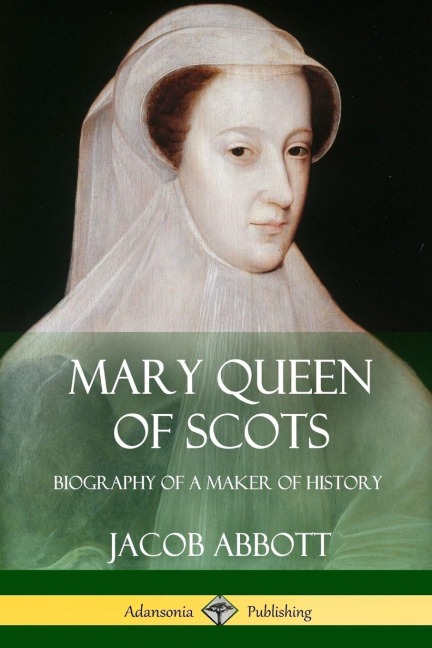
Jacob Abbott's account of Mary Queen of Scots life and untimely death is complete with original illustrations of Mary herself and her various residences. Abbott's history is both embracing and superb as an introduction to one of the most divisive and controversial figures of the Tudor era. Mary had a complex role in the politics of the day, and had potential as a rival to the reign of Queen Elizabeth I. The book begins by examining Mary's childhood years, and her French education. The agreement - The Treaty of Greenwich - which would pair the young Mary to Edward, the son of Henry VIII, is detailed, as are hopes that the union would cement relations between the English and the Scots. Clever, capable and charming, Mary Queen of Scots was initially seen as a promising monarch. However the rules of accession of the time made her very existence problematic for Queen Elizabeth I. This problem would underline the remainder of Mary's life, her nature as a potential threat made eternal by her very blood.
Jacob Abbott (1803-1879) was an American educator, historian, and prolific author best known for his accessible historical and biographical works written for young readers. A graduate of Bowdoin College and later a teacher and school administrator, Abbott devoted much of his career to producing educational literature that combined narrative clarity with moral and intellectual instruction. His writing was designed to make complex historical subjects understandable without sacrificing accuracy, and his books became widely used in nineteenth-century classrooms and home education.Abbott's extensive body of work includes the popular "Makers of History" series, in which he presented figures such as Cleopatra, Julius Caesar, and Alexander the Great through carefully structured narratives that emphasize causation, leadership, and historical consequence. His approach to history-clear, methodical, and accessible-has ensured the continued relevance of his works for students, educators, and readers seeking a foundational understanding of historical figures and events.