Und dann auf "Zum Home-Bildschirm [+]".

Stöbern
genialokal zum Startbildschirm hinzufügen
Installieren Sie die genialokal App auf Ihrem Startbildschirm für einen schnellen Zugriff und eine komfortable Nutzung.
Installieren Sie die genialokal App auf Ihrem Startbildschirm für einen schnellen Zugriff und eine komfortable Nutzung.
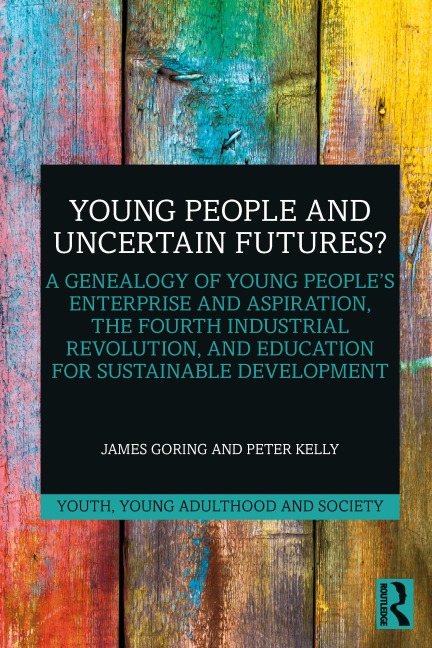
Drawing on Foucault's 'genealogical ethos' and his work on power/knowledge/subjects, this book analyses the ways in which neo-liberal education apparatuses in Australia and other high-income economies frame the problem of young people and uncertain futures. The book critically examines the character of the presents and futures of education, training, and work, and of the planet that have been produced in globalising neo-liberal capitalism during the last four decades, and which see in the development of young people's enterprise and aspiration, the solutions to multiple crises and uncertainties. It analyses how and why young people's behaviours and dispositions have been made knowable in these ways, and the limits and possibilities that they produce for understanding what young people must be and become. The book draws on post-humanist, feminist studies of techno-science and futures studies to explore the promise of more socially just and sustainable futures for young people. A thought-provoking study for scholars and students of the sociology of education and of youth and society, it will be invaluable for policymakers, governments, NGOs, educators, and undergraduate and postgraduate students interested in young people and the crises of capitalism, earth systems, and the biosphere.
James Goring is Lecturer in Education in the School of Education at Deakin University. His research interests lie at the intersection of the critical sociologies of education and youth studies. He seeks to better understand the relationships between young people's health and well-being, their education, training, and employment pathways, and planetary crisis. Peter Kelly is Professor of Education in the School of Education at Deakin University. His research focuses on young people's education, employment, and well-being in times of crisis at the convergence of the sixth mass extinction and the Fourth Industrial Revolution. His books include Young People and Thinking Technologies of/for the Anthropocene (2022), COVID-19 and the (Broken) Promise of Education for Sustainable Development: A Case Study from Post-Colonial Pakistan (2023), Informal Workers and a Political Economy of Life Long Learning: Provocations from the Margins of Global Capitalism (2024), and On the Problem of Foundation Skills and the Futures of Work (2025).
Prologue: Futures Uncertain? 1. A Genealogical Ethos 2. The Emergence of a Neo-Liberal Education Apparatus 3. Being and Becoming an Enterprising Young Person 4. Being and Becoming an Aspirational Young Person 5. On the Problem of Young People and the Future of Work 6. On the Problem of Young People and Sustainable Futures Epilogue: Speculative Fabulations?
Dieses eBook wird im PDF-Format geliefert und ist mit einem Adobe Kopierschutz (DRM) versehen. Sie können dieses eBook mit allen Geräten lesen, die das PDF-Format und den Adobe Kopierschutz (DRM) unterstützen.
Zum Beispiel mit den folgenden Geräten:
• tolino Reader
Laden Sie das eBook direkt über den Reader-Shop auf dem tolino herunter oder übertragen Sie das eBook auf Ihren tolino mit einer kostenlosen Software wie beispielsweise Adobe Digital Editions.
• Sony Reader & andere eBook Reader
Laden Sie das eBook direkt über den Reader-Shop herunter oder übertragen Sie das eBook mit der kostenlosen Software Sony READER FOR PC/Mac oder Adobe Digital Editions auf ein Standard-Lesegeräte mit epub- und Adobe DRM-Unterstützung.
• Tablets & Smartphones
Möchten Sie dieses eBook auf Ihrem Smartphone oder Tablet lesen, finden Sie hier unsere kostenlose Lese-App für iPhone/iPad und Android Smartphone/Tablets.
• PC & Mac
Lesen Sie das eBook direkt nach dem Herunterladen mit einer kostenlosen Lesesoftware, beispielsweise Adobe Digital Editions, Sony READER FOR PC/Mac oder direkt über Ihre eBook-Bibliothek in Ihrem Konto unter „Meine eBooks“ - „online lesen“.
Schalten Sie das eBook mit Ihrer persönlichen Adobe ID auf bis zu sechs Geräten gleichzeitig frei.
Bitte beachten Sie, dass die Kindle-Geräte das Format nicht unterstützen und dieses eBook somit nicht auf Kindle-Geräten lesbar ist.