Und dann auf "Zum Home-Bildschirm [+]".

Stöbern
genialokal zum Startbildschirm hinzufügen
Installieren Sie die genialokal App auf Ihrem Startbildschirm für einen schnellen Zugriff und eine komfortable Nutzung.
Installieren Sie die genialokal App auf Ihrem Startbildschirm für einen schnellen Zugriff und eine komfortable Nutzung.
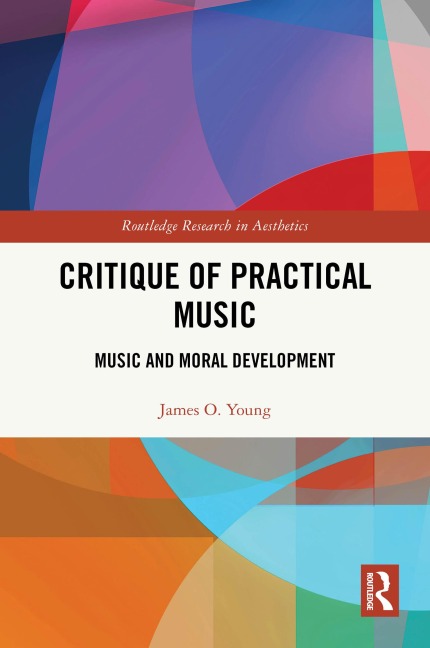
This book offers a systematic survey of ethos theory: the theory according to which the right sort of music can have a positive or negative effect on moral development. It also evaluates the extant empirical literature on music and moral development. The belief that the right sort of music promotes moral development is almost ubiquitous. At every stage in the history of philosophical thinking, many philosophers have believed that the right sort of music is conducive to moral improvement and the wrong kind of music can produce moral decay. This book has three main goals. The first is to inform readers about the range of thinkers and cultures (Asian, African and European) which have adopted some version of the ethos theory. The book surveys the history of ethos theory starting with its origins in ancient Greece and ancient China, proceeding to trace its development through the Middle Ages and into the early modern period. Next, the development of ethos theory is traced from the middle of the nineteenth century to the present. The second goal is to investigate what would count as evidence that ethos theory is correct, paying specific attention to the complex ways that people experience music. Finally, the author evaluates the currently available empirical evidence for ethos theory. Critique of Practical Music will appeal to philosophers, psychologists, musicologists and music educators who are interested in music and moral development.
James O. Young, FRSC, is Professor of Philosophy at the University of Victoria. He is the author of several books including Cultural Appropriation and the Arts (2008), Critique of Pure Music (2014), A History of Western Philosophy of Music (2023) and more than 80 articles in refereed journals.
1. Origins of the Ethos Theory 2. Modern Philosophical Views on the Ethos Theory 3. Theory into Practice 4. The Empirical Evidence
Dieses eBook wird im PDF-Format geliefert und ist mit einem Adobe Kopierschutz (DRM) versehen. Sie können dieses eBook mit allen Geräten lesen, die das PDF-Format und den Adobe Kopierschutz (DRM) unterstützen.
Zum Beispiel mit den folgenden Geräten:
• tolino Reader
Laden Sie das eBook direkt über den Reader-Shop auf dem tolino herunter oder übertragen Sie das eBook auf Ihren tolino mit einer kostenlosen Software wie beispielsweise Adobe Digital Editions.
• Sony Reader & andere eBook Reader
Laden Sie das eBook direkt über den Reader-Shop herunter oder übertragen Sie das eBook mit der kostenlosen Software Sony READER FOR PC/Mac oder Adobe Digital Editions auf ein Standard-Lesegeräte mit epub- und Adobe DRM-Unterstützung.
• Tablets & Smartphones
Möchten Sie dieses eBook auf Ihrem Smartphone oder Tablet lesen, finden Sie hier unsere kostenlose Lese-App für iPhone/iPad und Android Smartphone/Tablets.
• PC & Mac
Lesen Sie das eBook direkt nach dem Herunterladen mit einer kostenlosen Lesesoftware, beispielsweise Adobe Digital Editions, Sony READER FOR PC/Mac oder direkt über Ihre eBook-Bibliothek in Ihrem Konto unter „Meine eBooks“ - „online lesen“.
Schalten Sie das eBook mit Ihrer persönlichen Adobe ID auf bis zu sechs Geräten gleichzeitig frei.
Bitte beachten Sie, dass die Kindle-Geräte das Format nicht unterstützen und dieses eBook somit nicht auf Kindle-Geräten lesbar ist.