Und dann auf "Zum Home-Bildschirm [+]".

Stöbern
genialokal zum Startbildschirm hinzufügen
Installieren Sie die genialokal App auf Ihrem Startbildschirm für einen schnellen Zugriff und eine komfortable Nutzung.
Installieren Sie die genialokal App auf Ihrem Startbildschirm für einen schnellen Zugriff und eine komfortable Nutzung.
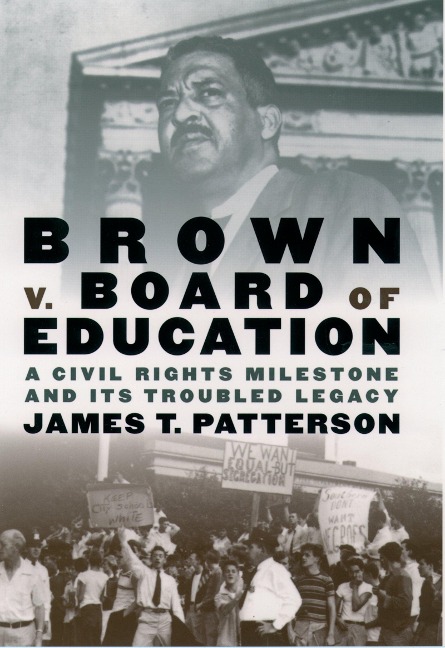
Many people were elated when Supreme Court Chief Justice Earl Warren delivered Brown v. Board of Education of Topeka in May 1954, the ruling that struck down state-sponsored racial segregation in America's public schools. Thurgood Marshall, chief attorney for the black families that launched the litigation, exclaimed later, "I was so happy, I was numb." The novelist Ralph Ellison wrote, "another battle of the Civil War has been won. The rest is up to us and I'm very glad. What a wonderful world of possibilities are unfolded for the children!" Here, in a concise, compelling narrative, Bancroft Prize-winning historian James T. Patterson takes readers through the dramatic case and its fifty-year aftermath. A wide range of characters animates the story, from the little-known African-Americans who dared to challenge Jim Crow with lawsuits (at great personal cost); to Thurgood Marshall, who later became a Justice himself; to Earl Warren, who shepherded a fractured Court to a unanimous decision. Others include segregationist politicians like Governor Orval Faubus of Arkansas; Presidents Eisenhower, Johnson, and Nixon; and controversial Supreme Court justices such as William Rehnquist and Clarence Thomas. Most Americans still see Brown as a triumph--but was it? Patterson shrewdly explores the provocative questions that still swirl around the case. Could the Court--or President Eisenhower--have done more to ensure compliance with Brown? Did the decision touch off the modern civil rights movement? How useful are court-ordered busing and affirmative action against racial segregation? To what extent has racial mixing affected the academic achievement of black children? Where indeed do we go from here to realize the expectations of Marshall, Ellison, and others in 1954?
James T. Patterson won the Bancroft Prize in History for Grand Expectations: The United States, 1945-1974 (OUP, 1996). Author of numerous books concerning modern American life, he is Ford Foundation Professor of History at Brown University.
Preface: Contesting the Color Line 1. Race and the Schools Before Brown 2. The Grass Roots and Struggling Lawyers 3. The Court Decides 4. Crossroads, 1954-55 5. Southern Whites Fight Back 6. Striving for Racial Balance in teh 1960s 7. The Burger Court Surprise 8. Stalemates 9. Resegregation? 10. Legacies and Lessons Appendix I; Key Cases Appendix II: Tables and Figures Notes Bibliographical Essay Acknowledgments Index
Dieses eBook wird im PDF-Format geliefert und ist mit einem Adobe Kopierschutz (DRM) versehen. Sie können dieses eBook mit allen Geräten lesen, die das PDF-Format und den Adobe Kopierschutz (DRM) unterstützen.
Zum Beispiel mit den folgenden Geräten:
• tolino Reader
Laden Sie das eBook direkt über den Reader-Shop auf dem tolino herunter oder übertragen Sie das eBook auf Ihren tolino mit einer kostenlosen Software wie beispielsweise Adobe Digital Editions.
• Sony Reader & andere eBook Reader
Laden Sie das eBook direkt über den Reader-Shop herunter oder übertragen Sie das eBook mit der kostenlosen Software Sony READER FOR PC/Mac oder Adobe Digital Editions auf ein Standard-Lesegeräte mit epub- und Adobe DRM-Unterstützung.
• Tablets & Smartphones
Möchten Sie dieses eBook auf Ihrem Smartphone oder Tablet lesen, finden Sie hier unsere kostenlose Lese-App für iPhone/iPad und Android Smartphone/Tablets.
• PC & Mac
Lesen Sie das eBook direkt nach dem Herunterladen mit einer kostenlosen Lesesoftware, beispielsweise Adobe Digital Editions, Sony READER FOR PC/Mac oder direkt über Ihre eBook-Bibliothek in Ihrem Konto unter „Meine eBooks“ - „online lesen“.
Schalten Sie das eBook mit Ihrer persönlichen Adobe ID auf bis zu sechs Geräten gleichzeitig frei.
Bitte beachten Sie, dass die Kindle-Geräte das Format nicht unterstützen und dieses eBook somit nicht auf Kindle-Geräten lesbar ist.