Und dann auf "Zum Home-Bildschirm [+]".

Stöbern
genialokal zum Startbildschirm hinzufügen
Installieren Sie die genialokal App auf Ihrem Startbildschirm für einen schnellen Zugriff und eine komfortable Nutzung.
Installieren Sie die genialokal App auf Ihrem Startbildschirm für einen schnellen Zugriff und eine komfortable Nutzung.


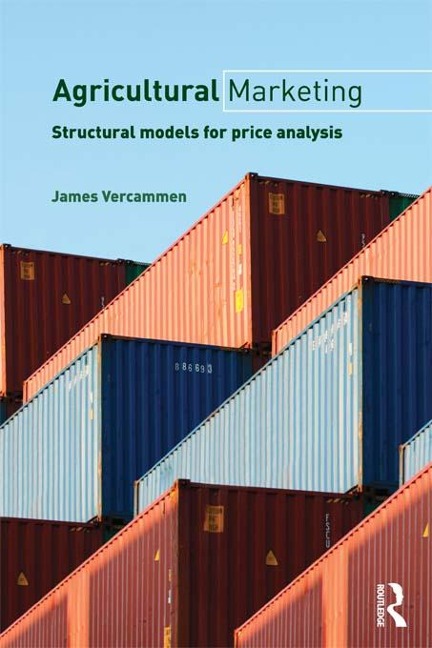
The price of food has become very volatile in recent years for a variety of reasons, including a strengthened connection between the prices of agricultural commodities and other commodities such as oil and metals, more volatile production due to more frequent droughts and floods, and a rising demand for biofuels. Understanding the determinants of agricultural commodity prices and the connections between prices has become a high priority for academics and applied economists who are interested in agricultural marketing and trade, policy analysis and international rural development. This book builds on the various theories of commodity price relationships in competitive markets over space, time and form. It also builds on the various theories of commodity price relationships in markets that are non-competitive because processing firms exploit market power, private information distorts commodity bidding, and bargaining is required to establish prices when the marketing transaction involves a single seller and buyer. Each chapter features a spreadsheet model to analyze a particular real-world case study or plausible scenario, and issues considered include: - the reasons for commodity price differences across regions - the connection between the release of information and the rapid adjustment in a network of commodity prices - the specific linkage between energy and food prices - bidding strategies by large exporters who compete in import tenders The simulation results that are obtained from the spreadsheet models reveal many important features of commodity prices. The models are also well suited for additional "what if" analysis such as examining how the pattern of trade in agricultural commodities may change if shipping becomes more expensive because of substantial increase in the world price of oil. Model building and the analysis of the simulation results is a highly effective way to develop critical thinking skills and to view agricultural commodity prices in a rigorous and unique way. This is an ideal resource for economics students looking to gain develop skills in the areas of Agricultural Marketing, Commodity Price Analysis, Models of Commodity Markets, Quantitative Methods and Commodity Futures Markets.
James Vercammen is Professor at the University of British Columbia, Canada, and currently holds a joint position with the Food and Resource Economics Group and the Sauder School of Business.
1. Introduction 2. Prices Over Space 3. Prices Over Time (Storage) 4. Prices Over Time (Commodity Futures) 5. Prices Over Form (Quality) 6. Prices Linkages Across Commodity Markets 7. Marketing Margins in Vertical Supply Chains 8. Auctions and Competitive Bidding 9. Bargaining In Bilateral Exchange
Dieses eBook wird im PDF-Format geliefert und ist mit einem Adobe Kopierschutz (DRM) versehen. Sie können dieses eBook mit allen Geräten lesen, die das PDF-Format und den Adobe Kopierschutz (DRM) unterstützen.
Zum Beispiel mit den folgenden Geräten:
• tolino Reader
Laden Sie das eBook direkt über den Reader-Shop auf dem tolino herunter oder übertragen Sie das eBook auf Ihren tolino mit einer kostenlosen Software wie beispielsweise Adobe Digital Editions.
• Sony Reader & andere eBook Reader
Laden Sie das eBook direkt über den Reader-Shop herunter oder übertragen Sie das eBook mit der kostenlosen Software Sony READER FOR PC/Mac oder Adobe Digital Editions auf ein Standard-Lesegeräte mit epub- und Adobe DRM-Unterstützung.
• Tablets & Smartphones
Möchten Sie dieses eBook auf Ihrem Smartphone oder Tablet lesen, finden Sie hier unsere kostenlose Lese-App für iPhone/iPad und Android Smartphone/Tablets.
• PC & Mac
Lesen Sie das eBook direkt nach dem Herunterladen mit einer kostenlosen Lesesoftware, beispielsweise Adobe Digital Editions, Sony READER FOR PC/Mac oder direkt über Ihre eBook-Bibliothek in Ihrem Konto unter „Meine eBooks“ - „online lesen“.
Schalten Sie das eBook mit Ihrer persönlichen Adobe ID auf bis zu sechs Geräten gleichzeitig frei.
Bitte beachten Sie, dass die Kindle-Geräte das Format nicht unterstützen und dieses eBook somit nicht auf Kindle-Geräten lesbar ist.