Und dann auf "Zum Home-Bildschirm [+]".

Stöbern
genialokal zum Startbildschirm hinzufügen
Installieren Sie die genialokal App auf Ihrem Startbildschirm für einen schnellen Zugriff und eine komfortable Nutzung.
Installieren Sie die genialokal App auf Ihrem Startbildschirm für einen schnellen Zugriff und eine komfortable Nutzung.
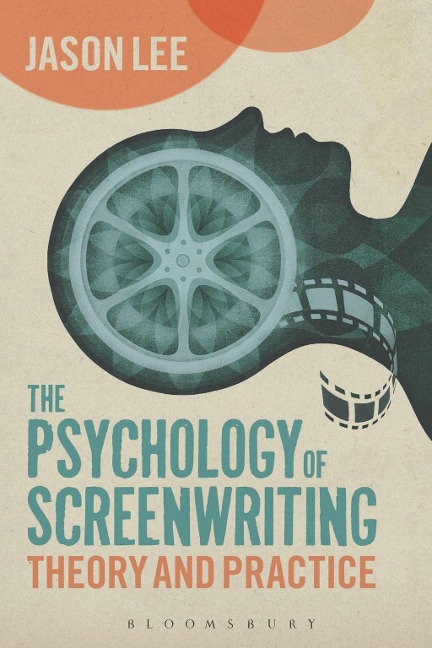
The Psychology of Screenwriting is more than an interesting book on the theory and practice of screenwriting. It is also a philosophical analysis of predetermination and freewill in the context of writing and human life in our mediated world of technology. Drawing on humanism, existentialism, Buddhism, postmodernism and transhumanism, and diverse thinkers from Meister Eckhart to Friedrich Nietzsche, Theodor Adorno, Jacques Derrida, Jean Baudrillard and Gilles Deleuze, The Psychology of Screenwriting will be of use to screenwriters, film students, philosophers and all those interested in contemporary theory. This book combines in-depth critical and cultural analysis with an elaboration on practice in an innovative fashion. It explores how people, such as those in the Dogme 95 movement, have tried to overcome traditional screenwriting, looking in detail at the psychology of writing and the practicalities of how to write well for the screen. This is the first book to include high-theory with screenwriting practice whilst incorporating the Enneagram for character development. Numerous filmmakers and writers, including David Lynch, Jim Jarmusch, David Cronenberg, Pedro Almodóvar, Darren Aronofsky, Sally Potter and Charlie Kaufman are explored. The Psychology of Screenwriting is invaluable for those who want to delve deeper into writing
for the screen.
Jason Lee is Professor and Head of Film and Media with Creative and Professional Writing at the University of Derby, UK. He has taught screenwriting for over twenty years and has published numerous screenplays. His articles on film have appeared in Film International and Vertigo. His other books include The Metaphysics of Mass Art Vols. I and II (1999), Pervasive Perversions (2005), and Cultures of Addiction (2010), and his work has been translated into ten languages.
Acknowledgements
1. The Psychology of Identity
1.1 Introduction/1.2 Ban the Script?/1.3 Identity, History and Psychology/1.4 Inferiority Complex/1.5 Back to Basics - ideology/1.6 Evil and Knowledge
2. The Psychology of Practice
2.1 Finding your Intention/2.2 The Psychology of Obstacles/2.3 The Psychology of Treatments/2.4 The Psychology of Format/2.5 The Psychology of Ideas
3. The Psychology of Character
3.1 Names/3.2 The Goodness of Evil/3.3 Myth and Psychology/3.4 The Psychology of Mirroring/3.5 The Psychology of Self/Limit/3.6 The Psychology of Machines/3.7 The Psychology of the Enneagram/3.8 The Psychology of Instinct/3.9 Scene and Structure
4. The Psychology of Dialogue
5. Individuation
5.1 The Timing of the Secret/5.2 Break a Few Rules and Home/5.3 Fundamentals/5.4 Intertexuality and the Reader/5.5 Theme/5.6 Adaptation/5.7 Writing Voiceovers/5.8 Whose Voice?
6. Conclusions
6.1 The Psychology of Story/6.2 Chekhov's Gun/6.3 The Psychology of Freedom/6.4 The Psychology of the Non-self/6.5 Genre/6.6 Editing and the Rewrite/6.7 The How and the Why/6.8 Mediated Fate
Endnotes
Select Bibliography
Index
Dieses eBook wird im PDF-Format geliefert und ist mit einem Adobe Kopierschutz (DRM) versehen. Sie können dieses eBook mit allen Geräten lesen, die das PDF-Format und den Adobe Kopierschutz (DRM) unterstützen.
Zum Beispiel mit den folgenden Geräten:
• tolino Reader
Laden Sie das eBook direkt über den Reader-Shop auf dem tolino herunter oder übertragen Sie das eBook auf Ihren tolino mit einer kostenlosen Software wie beispielsweise Adobe Digital Editions.
• Sony Reader & andere eBook Reader
Laden Sie das eBook direkt über den Reader-Shop herunter oder übertragen Sie das eBook mit der kostenlosen Software Sony READER FOR PC/Mac oder Adobe Digital Editions auf ein Standard-Lesegeräte mit epub- und Adobe DRM-Unterstützung.
• Tablets & Smartphones
Möchten Sie dieses eBook auf Ihrem Smartphone oder Tablet lesen, finden Sie hier unsere kostenlose Lese-App für iPhone/iPad und Android Smartphone/Tablets.
• PC & Mac
Lesen Sie das eBook direkt nach dem Herunterladen mit einer kostenlosen Lesesoftware, beispielsweise Adobe Digital Editions, Sony READER FOR PC/Mac oder direkt über Ihre eBook-Bibliothek in Ihrem Konto unter „Meine eBooks“ - „online lesen“.
Schalten Sie das eBook mit Ihrer persönlichen Adobe ID auf bis zu sechs Geräten gleichzeitig frei.
Bitte beachten Sie, dass die Kindle-Geräte das Format nicht unterstützen und dieses eBook somit nicht auf Kindle-Geräten lesbar ist.