Und dann auf "Zum Home-Bildschirm [+]".

Stöbern
genialokal zum Startbildschirm hinzufügen
Installieren Sie die genialokal App auf Ihrem Startbildschirm für einen schnellen Zugriff und eine komfortable Nutzung.
Installieren Sie die genialokal App auf Ihrem Startbildschirm für einen schnellen Zugriff und eine komfortable Nutzung.
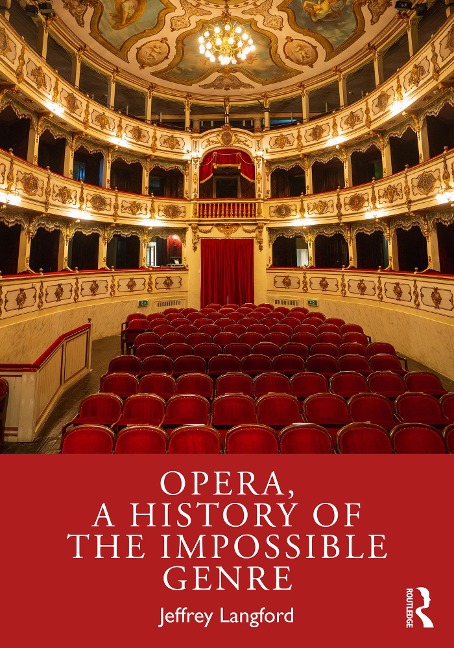
Opera, a History of the Impossible Genre offers an accessible and chronological survey of opera. Beginning in the 16th century, each chapter hones its focus on a representative opera and composer, and provides discussion on historical and political context. With further reading lists, key term definitions, and composer biographies to support learning, this book covers the fundamental elements of the genre, including: subject matter, musical structure, aria and ensemble forms, singing styles, orchestra, and the structure of the libretto. The book will also help readers develop an appreciation of opera as a form of musical entertainment, which, despite seemingly insurmountable financial, philosophical, and artistic hurdles, has overcome the "impossible" to become one of the most popular and thrilling types of music heard on stage today. Opera, a History of the Impossible Genre is an approachable undergraduate textbook for students of opera and survey courses.
Jeffrey Langford is Associate Dean for Doctoral Studies at the Manhattan School of Music in New York, NY. He is author of A History of the Symphony (Routledge, 2019) and Evenings at the Opera (Amadeus Press, 2011).
1 First steps toward a new genre ; 2 Claudio Monteverdi, the first genius; 3 The rise of Italian opera seria; 4 French opera of the 17th and 18th centuries; 5 The birth of comic opera; 6 Gioachino Rossini, a bridge to the 19th century; 7 Gaetano Donizetti, a master of Italian Romantic opera; 8 Giuseppe Verdi, Part I: Italian opera in revolution; 9 The rise of German Romantic opera; 10 Hector Berlioz and 19th-century French grand opera; 11 Charles Gounod and French opéra lyrique; 12 Russian opera, Part I: Modest Mussorgsky and the nationalist style; 13 Russian opera, Part II: Pyotr (Peter) Ilyich Tchaikovsky andthe cosmopolitan style; 14 Giuseppe Verdi, Part II: The final years; 15 Bizet, Puccini, and the rise of verismo opera; 16 Richard Strauss and the changing styles of symphonic opera; 17 Claude Debussy and Impressionism in opera; 18 Alban Berg and the problem of atonal opera; 19 Béla Bartók, a 20th-century nationalist; 20 Benjamin Britten and 20th-century operatic conservatism; 21 Igor Stravinsky and neoclassical opera; 22 Minimalist opera; 23 Opera today: A sample
Dieses eBook wird im PDF-Format geliefert und ist mit einem Adobe Kopierschutz (DRM) versehen. Sie können dieses eBook mit allen Geräten lesen, die das PDF-Format und den Adobe Kopierschutz (DRM) unterstützen.
Zum Beispiel mit den folgenden Geräten:
• tolino Reader
Laden Sie das eBook direkt über den Reader-Shop auf dem tolino herunter oder übertragen Sie das eBook auf Ihren tolino mit einer kostenlosen Software wie beispielsweise Adobe Digital Editions.
• Sony Reader & andere eBook Reader
Laden Sie das eBook direkt über den Reader-Shop herunter oder übertragen Sie das eBook mit der kostenlosen Software Sony READER FOR PC/Mac oder Adobe Digital Editions auf ein Standard-Lesegeräte mit epub- und Adobe DRM-Unterstützung.
• Tablets & Smartphones
Möchten Sie dieses eBook auf Ihrem Smartphone oder Tablet lesen, finden Sie hier unsere kostenlose Lese-App für iPhone/iPad und Android Smartphone/Tablets.
• PC & Mac
Lesen Sie das eBook direkt nach dem Herunterladen mit einer kostenlosen Lesesoftware, beispielsweise Adobe Digital Editions, Sony READER FOR PC/Mac oder direkt über Ihre eBook-Bibliothek in Ihrem Konto unter „Meine eBooks“ - „online lesen“.
Schalten Sie das eBook mit Ihrer persönlichen Adobe ID auf bis zu sechs Geräten gleichzeitig frei.
Bitte beachten Sie, dass die Kindle-Geräte das Format nicht unterstützen und dieses eBook somit nicht auf Kindle-Geräten lesbar ist.