Und dann auf "Zum Home-Bildschirm [+]".

Stöbern
genialokal zum Startbildschirm hinzufügen
Installieren Sie die genialokal App auf Ihrem Startbildschirm für einen schnellen Zugriff und eine komfortable Nutzung.
Installieren Sie die genialokal App auf Ihrem Startbildschirm für einen schnellen Zugriff und eine komfortable Nutzung.
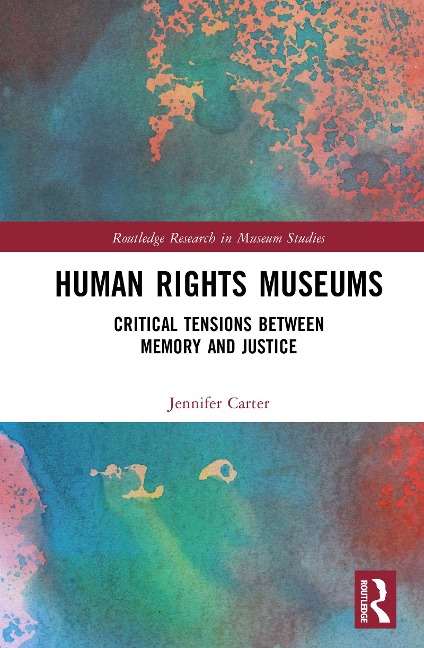
Human Rights Museums presents case studies that trace how calls for historical and social justice, and the commensurate rise of a rights regime have led to the emergence of a new museological genre: the human rights museum. Presenting innovative field research conducted in new and emerging human rights museums across Asia and Latin America, the book adopts a broad museological approach. It does so by including national and community museums, as well as public and private museological initiatives, within its purview. Drawing on in-depth case studies about museums in Taiwan, Japan, Paraguay and Colombia - all discussed within their political and cultural contexts - the book examines the paradigmatic shift that has occurred within the museum field in the wake of the larger global transformations that have shaped contemporary geo-politics over the last 50 years. The diversity of geographical and political contexts, and the attention to lesser-known institutions within the canon of English museum studies literature, presents readers with a valuable opportunity to learn more about innovative museological models in non-English-speaking and non-Western contexts. Human Rights Museums will appeal to academics, scholars and students of museum studies and related disciplines, and to museum professionals seeking to know more about the diverse and evolving roles of museums in contemporary society.
Jennifer Carter is Associate Professor in the Department of Art History and interfaculty graduate Museology programmes at the Université du Québec à Montréal in Canada. A core area of her research investigates the global phenomenon of human rights museology, and considers how historical and social justice are negotiated curatorially and pedagogically in cultural institutions dedicated to human rights in different geo-cultural and political contexts around the world. She earned her PhD at McGill University in Montréal and has published her research widely in English and French.
Introduction: Tracing the trajectory of rights in museums; Chapter 1. The duty of memory, the imperative of justice and the rise of human rights museums; Chapter 2. Confronting discrimination with museology: Liberty Osaka and the emergence of human rights museums in Japan; Chapter 3. Memory, symbols and rendering at the National Human Rights Museum in Taiwan: activating cultural approaches to transitional justice; Chapter 4. Human rights museums in Latin America: where memory and human rights coalesce; Chapter 5. Museums, justice and planetary change; Conclusion: reconciling memory and justice in relation to museum work; Index.
Dieses eBook wird im PDF-Format geliefert und ist mit einem Adobe Kopierschutz (DRM) versehen. Sie können dieses eBook mit allen Geräten lesen, die das PDF-Format und den Adobe Kopierschutz (DRM) unterstützen.
Zum Beispiel mit den folgenden Geräten:
• tolino Reader
Laden Sie das eBook direkt über den Reader-Shop auf dem tolino herunter oder übertragen Sie das eBook auf Ihren tolino mit einer kostenlosen Software wie beispielsweise Adobe Digital Editions.
• Sony Reader & andere eBook Reader
Laden Sie das eBook direkt über den Reader-Shop herunter oder übertragen Sie das eBook mit der kostenlosen Software Sony READER FOR PC/Mac oder Adobe Digital Editions auf ein Standard-Lesegeräte mit epub- und Adobe DRM-Unterstützung.
• Tablets & Smartphones
Möchten Sie dieses eBook auf Ihrem Smartphone oder Tablet lesen, finden Sie hier unsere kostenlose Lese-App für iPhone/iPad und Android Smartphone/Tablets.
• PC & Mac
Lesen Sie das eBook direkt nach dem Herunterladen mit einer kostenlosen Lesesoftware, beispielsweise Adobe Digital Editions, Sony READER FOR PC/Mac oder direkt über Ihre eBook-Bibliothek in Ihrem Konto unter „Meine eBooks“ - „online lesen“.
Schalten Sie das eBook mit Ihrer persönlichen Adobe ID auf bis zu sechs Geräten gleichzeitig frei.
Bitte beachten Sie, dass die Kindle-Geräte das Format nicht unterstützen und dieses eBook somit nicht auf Kindle-Geräten lesbar ist.