Und dann auf "Zum Home-Bildschirm [+]".

Stöbern
genialokal zum Startbildschirm hinzufügen
Installieren Sie die genialokal App auf Ihrem Startbildschirm für einen schnellen Zugriff und eine komfortable Nutzung.
Installieren Sie die genialokal App auf Ihrem Startbildschirm für einen schnellen Zugriff und eine komfortable Nutzung.
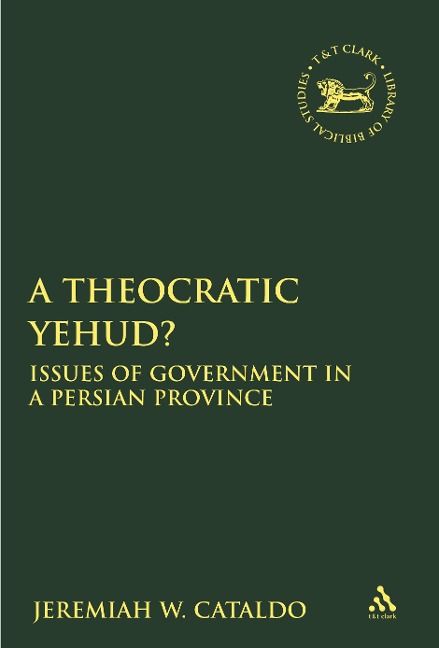
Among the variety of social-political reconstructions of Persian-period Yehud, one "consensus" stands out - one which states that the Jerusalem priesthood enjoyed a prominent level of authority, symbolized in the Jerusalem temple. Unfortunately, this leads easily into conclusions of a theocracy in Yehud. The problem, in part, is due to the immediate association of priests assumed to be authoritative with that of a theocratic governing structure.
To address this problem, at least three aspects of Yehud's governing structure(s) require further attention: (1) the social implications of a particular governing structure within a society; (2) the developments of a society leading up to that governing structure; and (3) a clearly articulated definition of the term and concept of theocracy. Since many scholars appear to depend upon a theocratic "structure" or "spirit" at some point in their discussions of Persian-period Yehud, one would usualy expect to find a clear definition of theocracy. Instead, a hasty and ill-equipped definition that seems to avoid addressing the social and political complexities is often used.
The conclusion is that no power or political vacuum appears to have existed allowing the priesthood to claim power in Yehud. The Persian empire did not allow territories to develop autonomous governing structures (Chapter 2). The social, economic, and political realms of Yehud functioned within the framework of Persian imperial administration (Chapter 3). And the term theocracy, when defined according to social-scientific requirements (Chapter 4), does not accurately describe the social-political context of Yehud during the Persian period (Chapter 5).
Jeremiah Cataldo is Associate Professor of History in the Frederik Meijer Honors College at Grand Valley State University, USA.
Introduction
CH. 1: Evidence and Interpretation
CH. 2: The Face of the Persian Empire and its Administration
CH. 3: Yahwism and the Question of Government in Yehud
CH. 4: Concepts of Theocracy
CH. 5: Was Yehud a Theocracy?
Dieses eBook wird im PDF-Format geliefert und ist mit einem Adobe Kopierschutz (DRM) versehen. Sie können dieses eBook mit allen Geräten lesen, die das PDF-Format und den Adobe Kopierschutz (DRM) unterstützen.
Zum Beispiel mit den folgenden Geräten:
• tolino Reader
Laden Sie das eBook direkt über den Reader-Shop auf dem tolino herunter oder übertragen Sie das eBook auf Ihren tolino mit einer kostenlosen Software wie beispielsweise Adobe Digital Editions.
• Sony Reader & andere eBook Reader
Laden Sie das eBook direkt über den Reader-Shop herunter oder übertragen Sie das eBook mit der kostenlosen Software Sony READER FOR PC/Mac oder Adobe Digital Editions auf ein Standard-Lesegeräte mit epub- und Adobe DRM-Unterstützung.
• Tablets & Smartphones
Möchten Sie dieses eBook auf Ihrem Smartphone oder Tablet lesen, finden Sie hier unsere kostenlose Lese-App für iPhone/iPad und Android Smartphone/Tablets.
• PC & Mac
Lesen Sie das eBook direkt nach dem Herunterladen mit einer kostenlosen Lesesoftware, beispielsweise Adobe Digital Editions, Sony READER FOR PC/Mac oder direkt über Ihre eBook-Bibliothek in Ihrem Konto unter „Meine eBooks“ - „online lesen“.
Schalten Sie das eBook mit Ihrer persönlichen Adobe ID auf bis zu sechs Geräten gleichzeitig frei.
Bitte beachten Sie, dass die Kindle-Geräte das Format nicht unterstützen und dieses eBook somit nicht auf Kindle-Geräten lesbar ist.