Und dann auf "Zum Home-Bildschirm [+]".

Stöbern
genialokal zum Startbildschirm hinzufügen
Installieren Sie die genialokal App auf Ihrem Startbildschirm für einen schnellen Zugriff und eine komfortable Nutzung.
Installieren Sie die genialokal App auf Ihrem Startbildschirm für einen schnellen Zugriff und eine komfortable Nutzung.
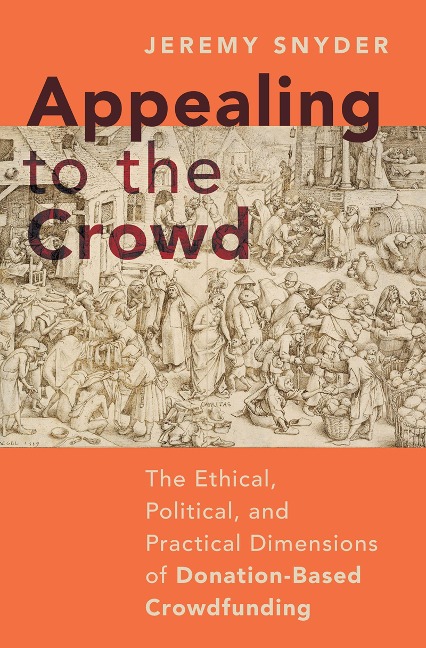
This is an open access title available under the terms of a CC BY-NC-ND 4.0 license. It is free to read on Oxford Academic and offered as a free PDF download from OUP and selected open access locations.
This book offers a close examination of the ethical, political, and practical dimensions of donation-based online crowdfunding for basic needs including medical treatment, housing, food, and education. Crowdfunding uses online platforms and social networks to raise money from friends, family, and complete strangers for a variety of projects and needs. This practice has grown massively worldwide in recent years in terms of the numbers of crowdfunding campaigns and donors, money raised, visibility, and cultural influence.
While the money raised through crowdfunding has helped millions of recipients, there is also reason for concern around how it may undermine campaigners' privacy and dignity, mirror and exacerbate social inequities, mask and deepen social injustice, defraud donors, and spread misinformation and hate. Author Jeremy Snyder places this discussion of crowdfunding in the wider historical and ethical context of giving practices. In doing so, Snyder shows that crowdfunding can repeat and exacerbate problems with traditional giving practices while creating other, new problems.
Snyder concludes by presenting nine values that should guide donation-based crowdfunding: benefit, choice, solidarity, privacy, dignity, equity, social justice, non-maleficence, and accountability. These values can help crowdfunding donors, campaigners, recipients, platforms, and policy makers preserve the good that can come from crowdfunding while addressing some of its many negative aspects.
Jeremy Snyder is a Professor in the Faculty of Health Sciences at Simon Fraser University in Burnaby, British Columbia, where he has been a faculty member since 2007. He is the author of Exploiting Hope (Oxford University Press, 2020).
Introduction Chapter One: Giving and the Rise of Crowdfunding Chapter Two: Crowding Out Privacy Chapter Three: Proving Your Worth Chapter Four: Who Gets Funded? Chapter Five: Missing and Masking Injustice Chapter Six: Crowdfrauding Chapter Seven : Misinformation and Hate Chapter Eight: Crowdfunding during a Pandemic Chapter Nine: Crowdfunding as a Mediated Practice Conclusion: Making Crowdfunding More Appealing Bibliography Index
Dieses eBook wird im PDF-Format geliefert und ist mit einem Adobe Kopierschutz (DRM) versehen. Sie können dieses eBook mit allen Geräten lesen, die das PDF-Format und den Adobe Kopierschutz (DRM) unterstützen.
Zum Beispiel mit den folgenden Geräten:
• tolino Reader
Laden Sie das eBook direkt über den Reader-Shop auf dem tolino herunter oder übertragen Sie das eBook auf Ihren tolino mit einer kostenlosen Software wie beispielsweise Adobe Digital Editions.
• Sony Reader & andere eBook Reader
Laden Sie das eBook direkt über den Reader-Shop herunter oder übertragen Sie das eBook mit der kostenlosen Software Sony READER FOR PC/Mac oder Adobe Digital Editions auf ein Standard-Lesegeräte mit epub- und Adobe DRM-Unterstützung.
• Tablets & Smartphones
Möchten Sie dieses eBook auf Ihrem Smartphone oder Tablet lesen, finden Sie hier unsere kostenlose Lese-App für iPhone/iPad und Android Smartphone/Tablets.
• PC & Mac
Lesen Sie das eBook direkt nach dem Herunterladen mit einer kostenlosen Lesesoftware, beispielsweise Adobe Digital Editions, Sony READER FOR PC/Mac oder direkt über Ihre eBook-Bibliothek in Ihrem Konto unter „Meine eBooks“ - „online lesen“.
Schalten Sie das eBook mit Ihrer persönlichen Adobe ID auf bis zu sechs Geräten gleichzeitig frei.
Bitte beachten Sie, dass die Kindle-Geräte das Format nicht unterstützen und dieses eBook somit nicht auf Kindle-Geräten lesbar ist.