
Stöbern
genialokal zum Startbildschirm hinzufügen
Installieren Sie die genialokal App auf Ihrem Startbildschirm für einen schnellen Zugriff und eine komfortable Nutzung.
Installieren Sie die genialokal App auf Ihrem Startbildschirm für einen schnellen Zugriff und eine komfortable Nutzung.
Tippen Sie einfach auf Teilen:
 Und dann auf "Zum Home-Bildschirm [+]".
Bei genialokal.de kaufen Sie online bei Ihrer lokalen, inhabergeführten Buchhandlung!
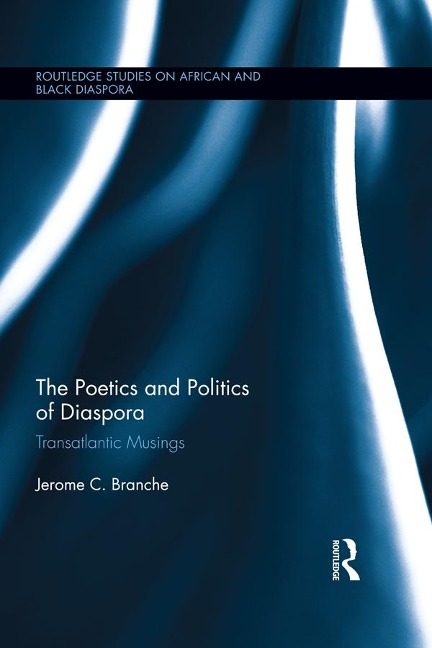
This book studies the creative discourse of the modern African diaspora by analyzing poems, novels, essays, hip-hop and dub poetry in the Caribbean, England, Spain, and Colombia, and capturing diasporan movement through mutually intersecting axes of dislocation and relocation, and efforts at political group affirmation and settlement, or "location." Branche's study connects London's multimillion-dollar riots of 2011, and its antecedents associated with the West Indian settler community, to the discontent and harrowing conditions facing black immigrants to contemporary Spain as gateway to Fortress Europe. It links the brutal massacres that target Colombia's dispossessed and displaced poor - and mainly black - "throwaway" citizens, victims of the drug trade and neoliberal expansionism, to older Caribbean stories that tell of the original spurts of capitalist greed, and the colonial cauldron it created, at the center of which lay the slave trade. In revisiting the question of what really has awaited Afro-descendants at the end of the Middle Passage, this volume brings transatlantic slavery, the making of weak postcolonial states that bleed people, and the needle's eye of racial identification together through a close reading of rappers, black radicals, dub poetry, and novelists from Europe, Africa, and the Americas. Branche at once demonstrates the existence of an archive of Afro-modern diasporan, discursive production, and just as importantly, points toward a historically-rooted theoretical framework that would contain its liberatory trajectory.
Jerome C. Branche is Associate Professor of Latin American Literature and Cultural Studies at the University of Pittsburgh.
Introduction: Malungaje: Toward a Poetics of Diaspora 1. Dislocation and Re/membering: Ndongo and D'Aguiar Write the Middle Passage 2. Dislocation and Double Consciousness in Kamau Brathwaite: The Poet as Guinea-bird 3. Speaking Truth, Speaking Power: Of "Immigrants," Immanence, and Linton Kwesi Johnson's "Street 66" 4. Exile's Half-Life, Exile's Dead End: The Conundrum of Relocation in Equatoguinean Literature 5. Marcando Territorio (Marking Territory): Location as Project and Process in Colombia. Conclusion.
Dieses eBook wird im PDF-Format geliefert und ist mit einem Adobe Kopierschutz (DRM) versehen. Sie können dieses eBook mit allen Geräten lesen, die das PDF-Format und den Adobe Kopierschutz (DRM) unterstützen.
Zum Beispiel mit den folgenden Geräten:
• tolino Reader
Laden Sie das eBook direkt über den Reader-Shop auf dem tolino herunter oder übertragen Sie das eBook auf Ihren tolino mit einer kostenlosen Software wie beispielsweise Adobe Digital Editions.
• Sony Reader & andere eBook Reader
Laden Sie das eBook direkt über den Reader-Shop herunter oder übertragen Sie das eBook mit der kostenlosen Software Sony READER FOR PC/Mac oder Adobe Digital Editions auf ein Standard-Lesegeräte mit epub- und Adobe DRM-Unterstützung.
• Tablets & Smartphones
Möchten Sie dieses eBook auf Ihrem Smartphone oder Tablet lesen, finden Sie hier unsere kostenlose Lese-App für iPhone/iPad und Android Smartphone/Tablets.
• PC & Mac
Lesen Sie das eBook direkt nach dem Herunterladen mit einer kostenlosen Lesesoftware, beispielsweise Adobe Digital Editions, Sony READER FOR PC/Mac oder direkt über Ihre eBook-Bibliothek in Ihrem Konto unter „Meine eBooks“ - „online lesen“.
Schalten Sie das eBook mit Ihrer persönlichen Adobe ID auf bis zu sechs Geräten gleichzeitig frei.
Bitte beachten Sie, dass die Kindle-Geräte das Format nicht unterstützen und dieses eBook somit nicht auf Kindle-Geräten lesbar ist.