Und dann auf "Zum Home-Bildschirm [+]".

Stöbern
genialokal zum Startbildschirm hinzufügen
Installieren Sie die genialokal App auf Ihrem Startbildschirm für einen schnellen Zugriff und eine komfortable Nutzung.
Installieren Sie die genialokal App auf Ihrem Startbildschirm für einen schnellen Zugriff und eine komfortable Nutzung.
Ihr gewünschter Artikel ist in 0 Buchhandlungen vorrätig - wählen Sie hier eine Buchhandlung in Ihrer Nähe aus:

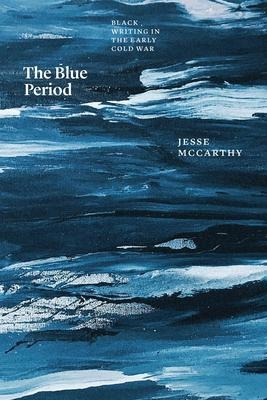
"To be a Black writer in the early years of the Cold War was to face a stark predicament. On the one hand, revolutionary Communism promised egalitarianism and lit the sparks of anticolonial struggle, but was hostile to conceptions of personal freedom. On the other hand, the great force opposing the Soviets at midcentury was itself the very fountainhead of racial prejudice, represented in the United States by Jim Crow. Jesse McCarthy argues that Black writers of this time were equally alienated from the left and the right and channeled that alienation into remarkable experiments in literary form. Embracing racial affect and interiority, they forged an aesthetic resistance premised on fierce dissent from both US racial liberalism and Soviet Communism. Ranging from the end of World War II to the rise of Black Power in the 1960s, from Richard Wright and James Baldwin to Gwendolyn Brooks and Paule Marshall and others, Jesse McCarthy shows how Black writers defined a distinctive moment in American literary culture that McCarthy calls "the Blue Period.""--
Jesse McCarthy is the John L. Loeb Associate Professor of the Humanities and Social Sciences, and director of undergraduate studies, at Harvard University. He is the editor of the Norton Library edition of W. E. B. Du Bois's The Souls of Black Folk and the first volume of Minor Notes, an anthology of African American poetry. He is also the author of Who Will Pay Reparations on My Soul? Essays, winner of the 2022 Whiting Award for Non-Fiction, and the novel The Fugitivities.