Und dann auf "Zum Home-Bildschirm [+]".

Stöbern
genialokal zum Startbildschirm hinzufügen
Installieren Sie die genialokal App auf Ihrem Startbildschirm für einen schnellen Zugriff und eine komfortable Nutzung.
Installieren Sie die genialokal App auf Ihrem Startbildschirm für einen schnellen Zugriff und eine komfortable Nutzung.
Ihr gewünschter Artikel ist in 0 Buchhandlungen vorrätig - wählen Sie hier eine Buchhandlung in Ihrer Nähe aus:

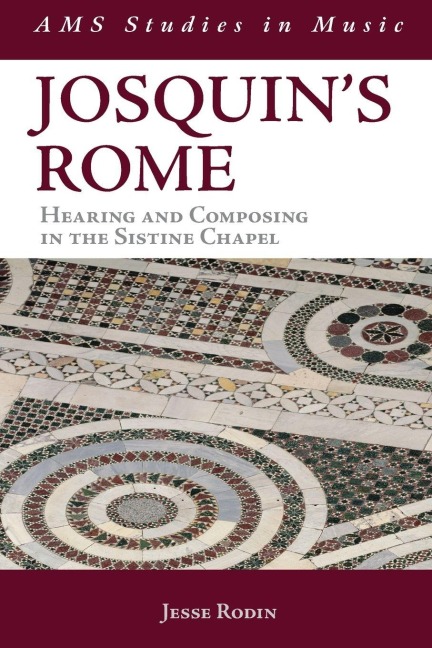
In the late fifteenth century the newly built Sistine Chapel was home to a vigorous culture of musical composition and performance. Josquin des Prez stood at its center, singing and composing for the pope's private choir. Josquin's Rome offers a new reading of the composer's work in light ofthe repertory he and his fellow papal singers performed from the chapel's singers' box. Comprising the single largest surviving corpus of late fifteenth-century sacred music, these pieces served as a backdrop for elaborately choreographed liturgical ceremonies--a sonic analogue to the frescoes byBotticelli, Perugino, and their contemporaries that adorn the chapel's walls. Author Jesse Rodin uses a comparative approach to uncover this aesthetically and intellectually rich musical tradition. He confronts longstanding problems concerning the authenticity and chronology of Josquin's music whileoffering nuanced readings of scandalously understudied works by the composer's contemporaries. The book further contextualizes Josquin by locating intersections between his music and the wider soundscape of the Cappella Sistina. Central to Rodin's argument is the idea that these pieces lived inperformance. The author puts his interpretations into practice through a series of exquisite recordings by his ensemble, Cut Circle (available both on the companion website and as a CD from Musique en Wallonie). Josquin's Rome is an essential resource for musicologists, scholars of the ItalianRenaissance, and enthusiasts of early music.
Jesse Rodin is Associate Professor of Music at Stanford University. He is the editor of a volume of L'homme armé masses for the New Josquin Edition (2014) and co-editor of The Cambridge History of Fifteenth-Century Music (2015). His articles have appeared in the Journal of the American Musicological Society, Music & Letters, Acta Musicologica, and other major journals. Current projects include a series of recordings devoted to the songs of Johannes Ockeghem and his contemporaries (Musique en Wallonie) and a monograph on form in fifteenth-century music.
- Introduction
- Part I. Toward Josquin's Style
- Chapter 1. Methodological Minefields
- Chapter 2. An Obsessive Compositional Personality
- Part II. Surveying the Soundscape: The Cappella Sistina, ca. 1480-ca. 1500
- Chapter 3. The Repertory
- Chapter 4. The Lingua Franca
- Chapter 5. A Maximalist Musical Mind: Marbrianus de Orto
- Part III. Josquin's Roman Music in Context
- Chapter 6. Super voces musicales and the L'homme armé Tradition
- Chapter 7. Intersections and Borrowings
- Appendix A. Repertory of the Cappella Sistina to ca. 1500
- Appendix B. Related Repertories: VerBC 761, BarcOC 5, and VatSP B80
- Appendix C. Three Anonymous Da pacem Motets
- Appendix D. Four Canonic Hymn Settings