Und dann auf "Zum Home-Bildschirm [+]".

Stöbern
genialokal zum Startbildschirm hinzufügen
Installieren Sie die genialokal App auf Ihrem Startbildschirm für einen schnellen Zugriff und eine komfortable Nutzung.
Installieren Sie die genialokal App auf Ihrem Startbildschirm für einen schnellen Zugriff und eine komfortable Nutzung.

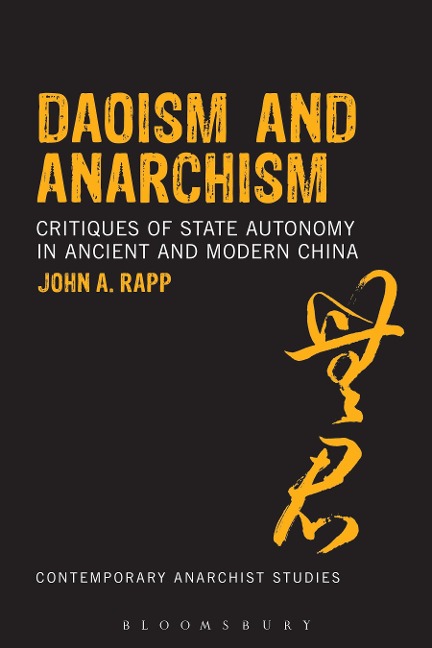
This book is available as open access through the Bloomsbury Open Access programme and is available on www.bloomsburycollections.com.
This volume in the Contemporary Anarchist Studies series focuses on anti-statist critiques in ancient and modern China and demonstrates that China does not have an unchallenged authoritarian political culture.
Treating anarchism as a critique of centralized state power, the work first examines radical Daoist thought from the 4th century BCE to the 9th century CE and compares Daoist philosophers and poets to Western anarchist and utopian thinkers. This is followed by a survey of anarchist themes in dissident thought in the People's Republic of China from 1949 to the present. A concluding chapter discusses how Daoist anarchism can be applied to any anarchist-inspired radical critique today.
This work not only challenges the usual ideas of the scope and nature of dissent in China, it also provides a unique comparison of ancient Chinese Daoist anarchism to Western anarchist. Featuring previously untranslated texts, such as the 9th century Buddhist anarchist tract, the Wunengzi, and essays from the PRC press, it will be an essential resource to anyone studying anarchism, Chinese political thought, political dissent, and political history.
John A. Rapp is Professor of Political Science at Beloit College, USA where he founded the Asian Studies program and served as chair of the Political Science department. His teaching interests include Chinese politics, Communist and post-Communist systems, comparative democracies, and Chinese and comparative political thought. He coauthored Autocracy and China's Rebel Founding Emperors (with Anita Andrew) and has published in many journals, including Anarchist Studies and the Journal of Comparative Asian Development.
Acknowledgments
PRELUDE
PART ONE: DAOISM
Chapter 1: Daoism and Anarchism
Chapter 2: Daoism and Utopianism
Chapter 3: Daoism as Utopian or Accommodationist: The Guodian Challenge to Daoist Anarchism
Chapter 4: Daoism as Anarchism or Nihilism: The Buddhist-influenced Thought of Wu Nengzi
INTERLUDE:
Chapter 5: The 20th Century Chinese Anarchist Movement
PART TWO: ANARCHISM
Chapter 6: Maoism and Anarchism
Chapter 7: Denunciations of Anarchism in the PRC
Chapter 8: Neo-Anarchist Critiques of Marxism in the PRC, Part 1: Extra Party Dissidents
Chapter 9: Neo-Anarchist Critiques of Marxism in the PRC, Part 2: Inner Party Democrats
POSTLUDE: Lessons of Daoist Anarchism
APPENDICES: Works of Daoist Anarchism
1: Zhuangzi, Chapter Nine, "Horses' Hoofs"
2: Ruan Ji, "Biography of Master Great Man"
3: Bao Jingyan, untitled tract
4: Tao Qian, "Peach Blossom Spring"
5: The Wunengzi (Master of No Abilities)
BIBLIOGRAPHY
INDEX