Und dann auf "Zum Home-Bildschirm [+]".

Stöbern
genialokal zum Startbildschirm hinzufügen
Installieren Sie die genialokal App auf Ihrem Startbildschirm für einen schnellen Zugriff und eine komfortable Nutzung.
Installieren Sie die genialokal App auf Ihrem Startbildschirm für einen schnellen Zugriff und eine komfortable Nutzung.
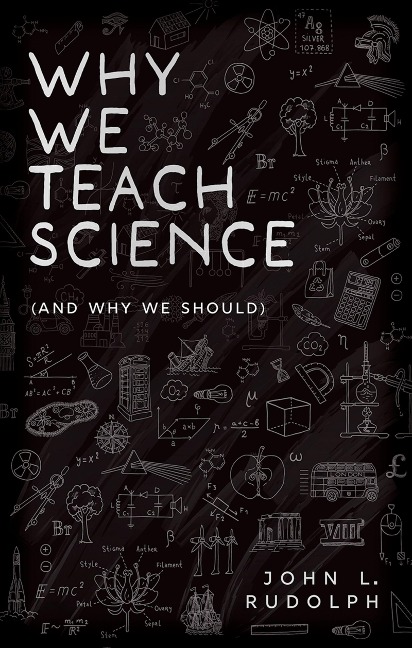
Few people question the importance of science education in American schooling. The public readily accepts that it is the key to economic growth through innovation, develops the ability to reason more effectively, and enables us to solve the everyday problems we encounter through knowing how the world works. Good science teaching results in all these benefits and more -- or so we think. But what if all this is simply wrong? What if the benefits we assume science education produces turn out to be an illusion, nothing more than wishful thinking? In Why We Teach Science (and Why We Should), former high school teacher and historian of science education John L. Rudolph examines the reasons we've long given for teaching science and assesses how they hold up to what we know about what students really learn (or don't learn) in science classrooms and what research tells us about how people actually interact with science in their daily lives. The results will surprise you. Instead of more and more rigorous traditional science education to fill the STEM pipeline, Rudolph challenges us to think outside the box and makes the case for an expansive science education aimed instead at rebuilding trust between science and the public -- something we desperately need in our current era of impending natural challenges and science denial.
John L. Rudolph is Vilas Distinguished Achievement professor in the Department of Curriculum and Instruction at the University of Wisconsin-Madison. He has affiliate appointments in the Department of Educational Policy Studies and the Robert and Jean Holtz Center for Science and Technology Studies and is the past editor-in-chief of the Wiley & Sons journal Science Education. Prior to his faculty appointment, he taught physics, chemistry, and biology in middle schools and high schools across Wisconsin.
- Introduction - What We Say - 1: The Reasons We Teach Science - What We Do - 2: The Science Education We Have - 3: Should We Be Training More Scientists? The Numbers Say No - 4: The Failure of Scientific Literacy - 5: How Well Does the Science Education We Have Actually Work? - 6: Science Education for Better Thinking and the Limits of "Doing" Science - What We Need - 7: Science Education for Building Public Trust - 8: How to Get There
Dieses eBook wird im PDF-Format geliefert und ist mit einem Adobe Kopierschutz (DRM) versehen. Sie können dieses eBook mit allen Geräten lesen, die das PDF-Format und den Adobe Kopierschutz (DRM) unterstützen.
Zum Beispiel mit den folgenden Geräten:
• tolino Reader
Laden Sie das eBook direkt über den Reader-Shop auf dem tolino herunter oder übertragen Sie das eBook auf Ihren tolino mit einer kostenlosen Software wie beispielsweise Adobe Digital Editions.
• Sony Reader & andere eBook Reader
Laden Sie das eBook direkt über den Reader-Shop herunter oder übertragen Sie das eBook mit der kostenlosen Software Sony READER FOR PC/Mac oder Adobe Digital Editions auf ein Standard-Lesegeräte mit epub- und Adobe DRM-Unterstützung.
• Tablets & Smartphones
Möchten Sie dieses eBook auf Ihrem Smartphone oder Tablet lesen, finden Sie hier unsere kostenlose Lese-App für iPhone/iPad und Android Smartphone/Tablets.
• PC & Mac
Lesen Sie das eBook direkt nach dem Herunterladen mit einer kostenlosen Lesesoftware, beispielsweise Adobe Digital Editions, Sony READER FOR PC/Mac oder direkt über Ihre eBook-Bibliothek in Ihrem Konto unter „Meine eBooks“ - „online lesen“.
Schalten Sie das eBook mit Ihrer persönlichen Adobe ID auf bis zu sechs Geräten gleichzeitig frei.
Bitte beachten Sie, dass die Kindle-Geräte das Format nicht unterstützen und dieses eBook somit nicht auf Kindle-Geräten lesbar ist.