Und dann auf "Zum Home-Bildschirm [+]".

Stöbern
genialokal zum Startbildschirm hinzufügen
Installieren Sie die genialokal App auf Ihrem Startbildschirm für einen schnellen Zugriff und eine komfortable Nutzung.
Installieren Sie die genialokal App auf Ihrem Startbildschirm für einen schnellen Zugriff und eine komfortable Nutzung.

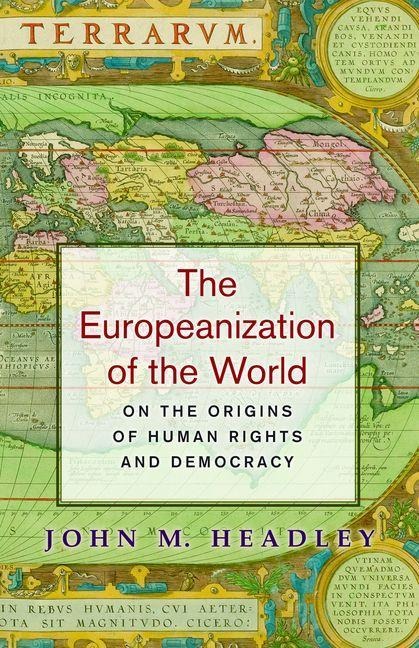

The Europeanization of the World puts forward a defense of Western civilization and the unique gifts it has bequeathed to the world-in particular, human rights and constitutional democracy-at a time when many around the globe equate the West with hubris and thinly veiled imperialism. John Headley argues that the Renaissance and the Reformation provided the effective currents for the development of two distinctive political ideas. The first is the idea of a common humanity, derived from antiquity, developed through natural law, and worked out in the new emerging global context to provide the basis for today's concept of universal human rights. The second is the idea of political dissent, first posited in the course of the Protestant Reformation and later maturing in the politics of the British monarchy. Headley traces the development and implications of this first idea from antiquity to the present. He examines the English revolution of 1688 and party government in Britain and America into the early nineteenth century. And he challenges the now--common stance in historical studies of moral posturing against the West. Headley contends that these unique ideas are Western civilization's most precious export, however presently distorted. Certainly European culture has its dark side--Auschwitz is but one example. Yet as Headley shows, no other civilization in history has bequeathed so sustained a tradition of universalizing aspirations as the West. The Europeanization of the World makes an argument that is controversial but long overdue. Written by one of our preeminent scholars of the Renaissance and Reformation, this elegantly reasoned book is certain to spark a much-needed reappraisal of the Western tradition.
John M. Headley
List of Illustrations xi
Preface xiii
Introduction 1
Chapter 1: The Renaissance Defining and Engagement of the Global Arena of Humanity 9
Imperial and Global Motifs in the Advent of the New Geography 13
The Fully Habitable World for Renaissance Europe 31
Chapter 2: The Universalizing Principle and the Idea of a Common Humanity 63
The Universalizing Process: From Christendom to the Civilization of Europeans 66
The Career of Natural Rights in the Early Modern Period 103
Chapter 3: The Emergence of Politically Constituted Dissent in the European World 149
The Initial Constituting of Political Dissent: Thomas More's Horrific Vision 154
Party and Opposition in the Eighteenth-Century Anglo-American Experience 168
Aftermath 195
Epilogue 207
Notes 219
Bibliography 243
Index 269