Und dann auf "Zum Home-Bildschirm [+]".

Stöbern
genialokal zum Startbildschirm hinzufügen
Installieren Sie die genialokal App auf Ihrem Startbildschirm für einen schnellen Zugriff und eine komfortable Nutzung.
Installieren Sie die genialokal App auf Ihrem Startbildschirm für einen schnellen Zugriff und eine komfortable Nutzung.
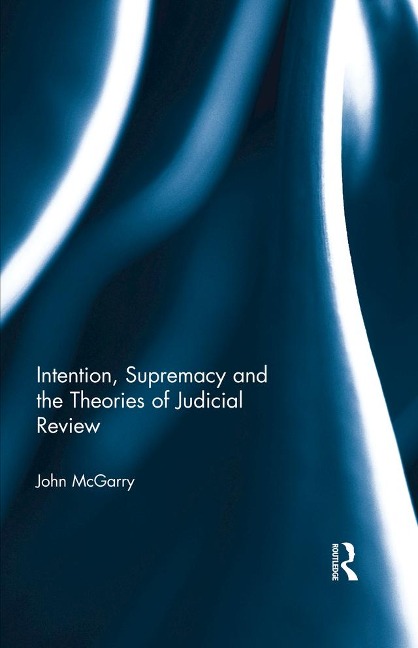
In the late 1980s, a vigorous debate began about how we may best justify, in constitutional terms, the English courts' jurisdiction to judicially review the exercise of public power derived from an Act of Parliament. Two rival theories emerged in this debate, the ultra vires theory and the common law theory. The debate between the supporters of these two theories has never satisfactorily been resolved and has been criticised as being futile. Yet, the debate raises some fundamental questions about the constitution of the United Kingdom, particularly: the relationship between Parliament and the courts; the nature of parliamentary supremacy in the contemporary constitution; and the possibility and validity of relying on legislative intent. This book critically analyses the ultra vires and common law theories and argues that neither offers a convincing explanation for the courts' judicial review jurisdiction. Instead, the author puts forward the theory that parliamentary supremacy - and, in turn, the relationship between Parliament and the courts - is not absolute and does not operate in a hard and fast way but, rather, functions in a more flexible way and that the courts will balance particular Acts of Parliament against competing statutes or principles. McGarry argues that this new conception of parliamentary supremacy leads to an alternative theory of judicial review which significantly differs from both the ultra vires and common law theories. This book will be of great interest to students and scholars of UK public law.
John McGarry is a Reader in Law at Edge Hill University, UK.
1. Introduction 2. Philosophical Hermeneutics 3. The Ultra Vires Theory and the Common Law Theory of Judicial Review 4. Themes of the Debate 5. Immanent Critique and the Theories of Juidical Review 6. The Principle of Parliamentary Sovereignty 7. The Constitutional Legitimacy of Judicial Review
Dieses eBook wird im PDF-Format geliefert und ist mit einem Adobe Kopierschutz (DRM) versehen. Sie können dieses eBook mit allen Geräten lesen, die das PDF-Format und den Adobe Kopierschutz (DRM) unterstützen.
Zum Beispiel mit den folgenden Geräten:
• tolino Reader
Laden Sie das eBook direkt über den Reader-Shop auf dem tolino herunter oder übertragen Sie das eBook auf Ihren tolino mit einer kostenlosen Software wie beispielsweise Adobe Digital Editions.
• Sony Reader & andere eBook Reader
Laden Sie das eBook direkt über den Reader-Shop herunter oder übertragen Sie das eBook mit der kostenlosen Software Sony READER FOR PC/Mac oder Adobe Digital Editions auf ein Standard-Lesegeräte mit epub- und Adobe DRM-Unterstützung.
• Tablets & Smartphones
Möchten Sie dieses eBook auf Ihrem Smartphone oder Tablet lesen, finden Sie hier unsere kostenlose Lese-App für iPhone/iPad und Android Smartphone/Tablets.
• PC & Mac
Lesen Sie das eBook direkt nach dem Herunterladen mit einer kostenlosen Lesesoftware, beispielsweise Adobe Digital Editions, Sony READER FOR PC/Mac oder direkt über Ihre eBook-Bibliothek in Ihrem Konto unter „Meine eBooks“ - „online lesen“.
Schalten Sie das eBook mit Ihrer persönlichen Adobe ID auf bis zu sechs Geräten gleichzeitig frei.
Bitte beachten Sie, dass die Kindle-Geräte das Format nicht unterstützen und dieses eBook somit nicht auf Kindle-Geräten lesbar ist.