Stöbern
genialokal zum Startbildschirm hinzufügen
Installieren Sie die genialokal App auf Ihrem Startbildschirm für einen schnellen Zugriff und eine komfortable Nutzung.
Installieren Sie die genialokal App auf Ihrem Startbildschirm für einen schnellen Zugriff und eine komfortable Nutzung.
Tippen Sie einfach auf Teilen:
 Und dann auf "Zum Home-Bildschirm [+]".
Ihr gewünschter Artikel ist in 0 Buchhandlungen vorrätig - wählen Sie hier eine Buchhandlung in Ihrer Nähe aus:

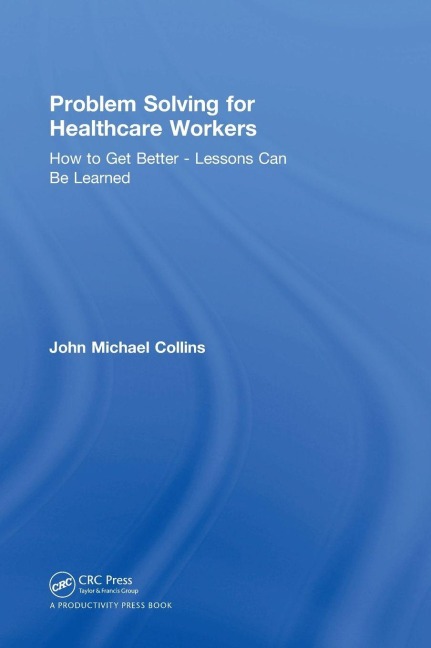
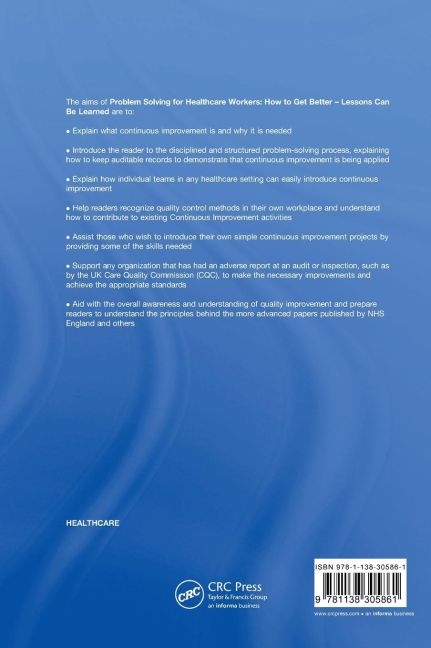
The aim of this book is to explain what continuous improvement is and why it's needed; explain how individual departments can explain how and why continuous improvement is important, and helps readers recognize quality control methods in their own workplace and understand how to contribute to existing continuous improvement activities.
Michael Collins, an industrial technologist and a past Fellow of the Institute of Quality Assurance, has spent thirty years advising businesses to make Improvements in Quality, Customer Service and overall efficiency. He is currently Principal of JM Collins and Associates a consulting firm specializing in standard setting, process improvement and the use of customer feedback to raise company and staff performance. He has advised many blue chip companies and national corporations on the application of sound quality principles when working as a Management Consultant with Price Waterhouse, now PWC. In his time as a Management Consultant he has shown over fifty businesses how to achieve certification to the relevant Quality System Standard. He has also helped many large organizations implement Total Quality continuous improvement programs.
Foreword; Preface; Prologue; Chapter 1: How lessons are learned; Chapter 2: Recent Reports; Chapter 3: 1% better at a 1000 things; Chapter 4: Be inspired: innovation throughout history; Chapter 5: Quality, Quality Assurance and Continuous Improvement; Chapter 6: Dealing with complaints; Chapter 7: Work processes, critical paths and the chain of quality; Chapter 8: Continuous improvement processes; Chapter 9: Getting started: where are you now?; Chapter 10: Quality improvement in small medical practices; Chapter 11: The problem solving processes: putting right what has gone wrong; Chapter 12: Step 1: recognizing a problem exists; Chapter 13: Step 2: understanding and defining the problem; Chapter 14: Step 3: identifying the root causes; Chapter 15: Step 4: removing the root causes; Chapter 16: Step 5: proving a permanent solution has been applied; Chapter 17: Step 6: closing the project and celebrating success; Chapter 18: Other methods to use; Chapter 19: Selecting and prioritizing projects; Chapter 20: Multiple project management; Epilogue