Und dann auf "Zum Home-Bildschirm [+]".

Stöbern
genialokal zum Startbildschirm hinzufügen
Installieren Sie die genialokal App auf Ihrem Startbildschirm für einen schnellen Zugriff und eine komfortable Nutzung.
Installieren Sie die genialokal App auf Ihrem Startbildschirm für einen schnellen Zugriff und eine komfortable Nutzung.
Ihr gewünschter Artikel ist in 0 Buchhandlungen vorrätig - wählen Sie hier eine Buchhandlung in Ihrer Nähe aus:

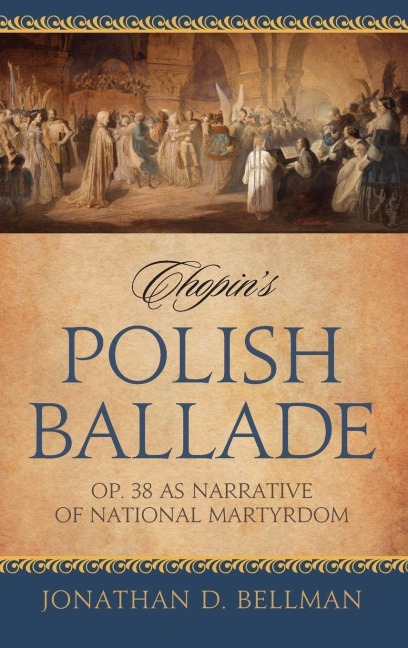
Chopin's Second Ballade, Op. 38 is frequently performed, and takes only seven or so minutes to play. Yet the work remains very poorly understood--disagreement prevails on issues from its tonic and two-key structure to its posited relationship with the poems of Adam Mickiewicz. Chopin's Polish Ballade is a reexamination and close analysis of this famous work, revealing the Ballade as a piece with a powerful political story to tell.
Through the general musical styles and specific references in the Ballade, which use both operatic strategies and approaches developed in programmatic piano pieces for amateurs, author Jonathan Bellman traces a clear narrative thread to contemporary French operas. His careful historical exegesis of previously ignored musical and cultural contexts brings to light a host of new insights about this remarkable piece, which, as Bellman shows, reflects the cultural preoccupations of the Polish émigrés in mid-1830s Paris, pining with bitter nostalgia for a homeland now under Russian domination. This vital connection to the extramusical culture of its day forms the basis for a plausible relationship with the nationalistic poetry of Mickiewicz. Chopin's Polish Ballade also solves the long-standing conundrum of the two extant versions of the Ballade, making an important point about the flexible notion of "work" that Chopin embraced.
Jonathan Bellman, a pianist and musicologist, earned his doctorate at Stanford University and is now Professor and Head of Academic Studies in Music at the University of Northern Colorado. He has published articles in a variety of musicology journals. His primary research interests include nineteenth-century musical style and performance practices, especially involving Frederic Chopin and musical exoticism.
- List of Musical Examples
- Introduction
- 1.: Two Versions, Two Keys, and Certain Poems of Mickiewicz
- Two Versions
- Two Keys
- "Certain Poems of Mickiewicz"
- 2.: Genesis of a Narrative Process
- Stories in Tones
- Amateur Program Music
- Ballad Poetry and Musical Form
- 3.: Hearing Konrad Wallenrod: Chopin's Ballade No. 1, Op. 23
- Overview and Stylistic Summary of the First Ballade
- Konrad Wallenrod: Plot and Structure
- Konrad Wallenrod as Ballade Scenario
- The Lay of Aldona's Fate
- 4.: Op. 38 and the Genre Issue
- A Formal Overview of Chopin's Second Ballade
- The Second Ballade and the Sonata Problem
- Ballade as Genre
- The Operatic Ballade to 1831
- 5.: The Polish Pilgrims and the Operatic Imperative
- A Pilgrims' Ballade; A Polish Ballade
- The Great Migration and Polish Culture in Exile
- Personal Anguish and Literary Apotheosis
- Sapienti Pauca
- 6.: Martyrdom and Exile: The Narrative of Chopin's F Major Ballade
- Internal Evidence I-The A Material: Siciliano
- Internal Evidence II-The B Material: Storm
- Internal Evidence III-The C Theme
- Op. 38 as Narrative of National Martyrdom
- Versions, Tonic Keys, and Mickiewicz Revisited
- The Forest and the Trees
- Appendix: "Ã M. F. Chopin, sur sa Ballade Polonaise," by FÃ(c)licien Mallefille.
- Bibliography
- Index